
Related videos:
The Venezuelan government updated its official report on victims from the earthquakes on June 24 this Tuesday: 3,685 deceased, according to the statement published by Jorge Rodríguez, president of the National Assembly and spokesperson for the emergency caused by the largest seismic disaster in Venezuela in over a century.
The official report also records 16,740 injured, 6,462 people rescued alive, and 17,907 without housing. Since the main earthquake, 1,076 aftershocks have been recorded, and 190 buildings have collapsed out of a total of 856 affected.
The progression of the official death toll has been consistent for almost two weeks: on June 25, only 32 deaths were reported; by June 26, this number had risen to 920; by July 1, it surpassed 2,000, and on Monday, the official count reached 3,535. The sustained increase in fatalities has raised doubts about the transparency of the Venezuelan regime in managing information.
International organizations indicate a much more severe scenario. The United States Geological Survey (USGS) projected a 42% likelihood of a final range of between 10,000 and 100,000 fatalities, while the UN and the International Rescue Committee estimate between 50,000 and 68,000 missing persons, figures that are significantly higher than those acknowledged by Caracas.
The international response has been massive. According to the official report, 4,388 rescuers from more than 15 countries have participated, along with 29,567 deployed personnel and 28,362 volunteers.
A total of 9,603 tons of food and more than eight million liters of water have been distributed, and 87 temporary camps have been set up for the displaced. In total, 86,794 families have been assisted since the onset of the emergency.
The United States announced a contribution of up to 300 million dollars and on Monday declared the end of its search and rescue operations, moving into the recovery phase. The aid arrived despite the tense diplomatic relations between Washington and Caracas.
The double earthquake —with magnitudes of 7.2 and 7.5, separated by just 39 seconds— had its epicenter near Morón, in the state of Carabobo, and affected La Guaira, Caracas, Miranda, Aragua, Carabobo, and Falcón with greater intensity.
Venezuela declared seven days of national mourning starting July 2, with flags at half-mast throughout the territory.
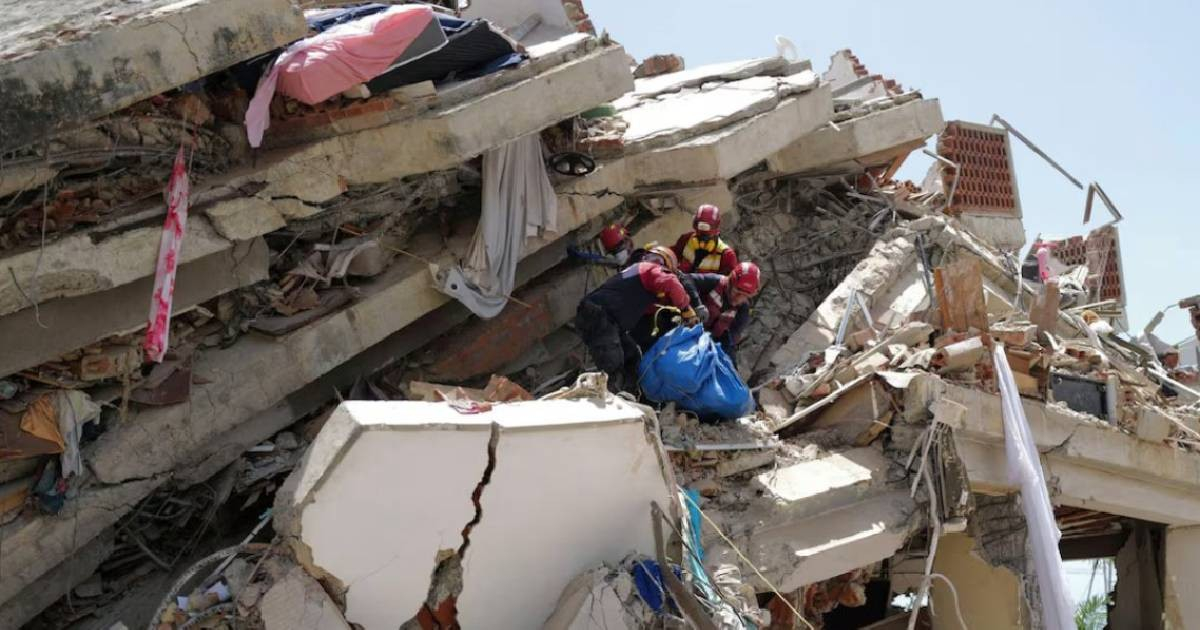
The country was already experiencing a deep humanitarian and institutional crisis before the disaster, which worsened its ability for internal response. According to RTVE, the officially recognized figure of 3,685 deaths acknowledged this Tuesday could continue to rise in the coming days, as rescue teams keep working among the rubble.
Filed under: