
Related videos:
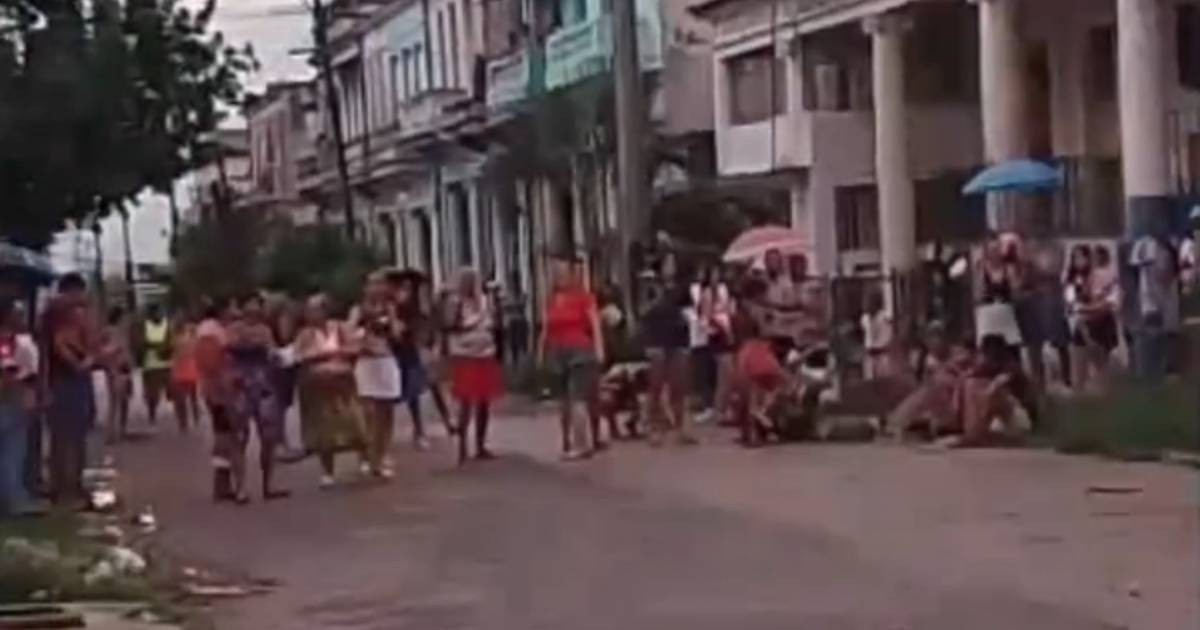
At least 24 people were arrested on Tuesday night on Luyanó Boulevard, in the Diez de Octubre municipality, after dozens of residents took to the streets to protest against the prolonged blackouts and lack of water, according to an investigation by Diario de Cuba.
All the detainees are men and of Afro-descendant heritage, according to a source from the National Revolutionary Police (PNR) unit in Aguilera, who spoke on condition of anonymity.
The protesters gathered in front of the Hijas de Galicia maternity hospital, where they clanged pots, burned trash, and blocked traffic amid a widespread blackout caused by the collapse of the National Electric System (SEN). A police convoy arrived in the area and proceeded with the arrests.
The neighborhood had been without electricity for almost two days and without water supply for around ten when the protest erupted.
"Before the fall of the SEN, we had already experienced more than 40 hours of blackout and 10 days without a drop of water, without trucks or anything. It's every person for themselves. We can't continue living like this, which is why we protest and bang pots and pans until our demands are addressed," stated a resident identified as Zenia.
The wave of arrests has overwhelmed the capacity of the Aguilera police unit. An internal source revealed that the station has more than 30 detainees linked to the recent protests, forcing the use of cells designated for women and common areas of the holding cells.
"We already have more than 30 detainees in the unit, which is a critical figure," the official stated.
For this Thursday, an urgent transfer of 14 of those detainees to Valle Grande prison was planned. “Aguilera cannot accommodate even one more detainee. We are overwhelmed with this issue of the protests,” the same source added.
Luyanó has joined a growing list of Havana neighborhoods where protests have been met with large-scale police operations. In recent days, residents of Jaimanitas, La Hata, and Alamar also staged protests and reported police cordons and internet disruptions.
Among the documented cases is that of Elías Heli González Palma, a resident of the Sevillano neighborhood, who remains in provisional detention accused of public disorder for participating in protests using pots and pans from inside his own home.
The protests in Luyanó occur five years after July 11, 2021, when the neighborhood was one of the iconic sites of the largest social uprising recorded in Cuba in decades.
The current trigger is the worst energy crisis in the country's recent history: the SEN completely collapsed on July 6, its seventh total blackout in 18 months, leaving over 9.6 million people without electricity.
Repression extends in parallel to the protests. Justicia 11J documented at least 220 public demonstrations during June, while the Cuban Conflict Observatory recorded 107 street protests that month, a historical record, with 82 concentrated in Havana.
According to data from the NGO Prisoners Defenders, Cuba reached a record of 1,306 political prisoners, including 40 minors, 16 of whom are held in adult prisons.
Filed under: