Related videos:
The Cuban-American historian Ada Ferrer made a devastating historical comparison this Saturday: Cuba in 2026 reminds her of the reconcentration ordered by the Spanish general Valeriano Weyler in 1896, one of the deadliest policies in the colonial history of the island. “It has been 30 years of collapse. The country is destroyed,” she stated in an interview published by El País from New York.
"I believe that during Weyler's reconcentration. He was the Spanish captain general who, during the wars of independence, wanted to deny the rural population's support to the Cuban rebels. They took those people from the fields and placed them in towns where there was not enough food, shelter, or hygiene, resulting in the deaths of many. From time to time, I think about that. But this moment is the worst in the last few decades, even worse than the Special Period. We have been enduring this for 36 years, and this crisis follows over three decades of people knowing that they need foreign currency to survive; it is a crisis layered on top of a very deteriorated system, which makes it worse. It’s 30 years of collapse. The country is destroyed," said Ferrer in an interview with Carla Colomé.
Ferrer insisted that "a national dialogue is what should have happened a long time ago in Cuba, but it hasn't."
"A dialogue that includes people from here and there, dissidents, the Government, people from the left or the right, where there is a plurality of experiences and perspectives. That is what I want, but I don't believe it is possible. People are so entrenched in their positions that, if the Government calls for that dialogue, some will resist participating, and if the dissidents call for dialogue, the Government will resist," he elaborated.
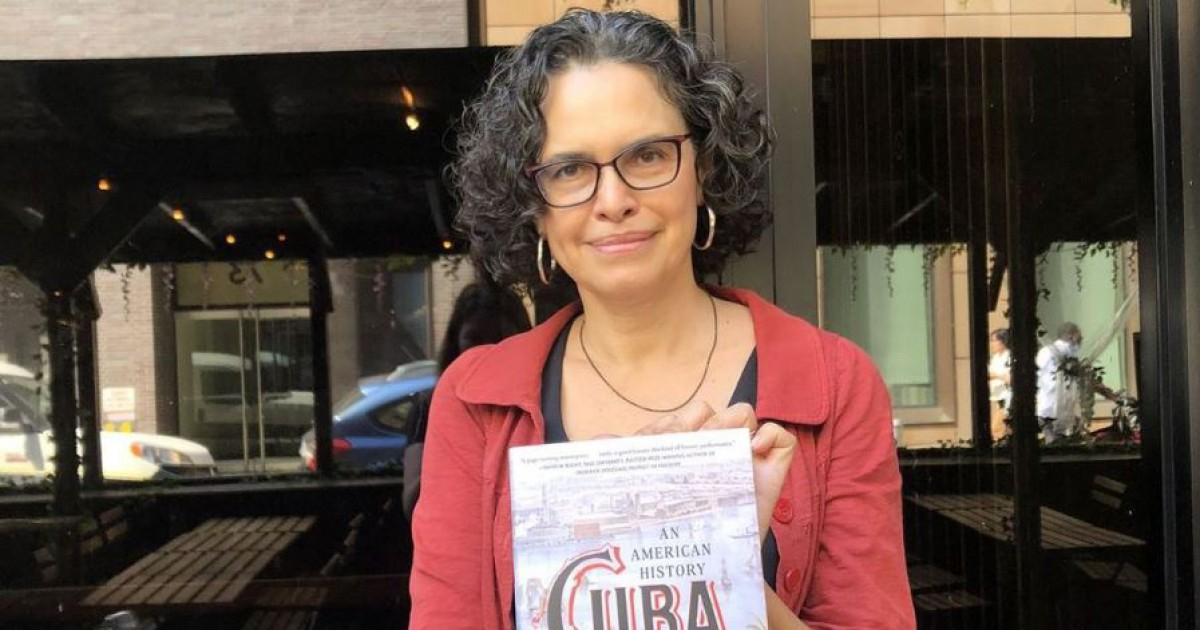
The reconcentration policy of Weyler, decreed on February 16, 1896 during the Cuban War of Independence, forced the relocation of hundreds of thousands of peasants to areas controlled by the Spanish army. It resulted in between 170,000 and over 300,000 deaths from hunger and disease, up to 10% of the island's population. That Ferrer, winner of the 2022 Pulitzer Prize for her book Cuba: An American History and a professor at New York University, references this episode to describe the current situation in Cuba reveals the seriousness with which she assesses the ongoing crisis.
The context surrounding his words is one of unprecedented collapse since the special period. The fall of Nicolás Maduro in January 2026 eliminated the subsidized supply of Venezuelan oil that accounted for two-thirds of Cuban energy imports. On March 5, 2026, the Antonio Guiteras thermoelectric plant collapsed, leaving 68% of the island without electricity simultaneously. Power outages have extended to between 22 and 30 hours daily.
In that scenario, the Cuban Conflict Observatory reported 1,311 protests in May 2026, the highest monthly figure since July 11, 2021, with demonstrations escalating from pot-banging to garbage fires and barricades in Santiago de Cuba and Centro Habana.
Ferrer does not limit himself to diagnosis. In May 2026, he published an open letter to Miguel Díaz-Canel in the New York Times, demanding that he initiate a genuine dialogue process. "Sovereignty cannot be eaten," he wrote, questioning the regime's use of that argument while the population lacks the most basic necessities. In the interview with El País, he reiterated that demand: "A national dialogue is what should have happened a long time ago in Cuba."
The historian also rejects the idea that the Cuban crisis can be reduced to ideological trenches. "People often talk about Cuba in slogans: whether you are against or in favor, who left and who didn't. It all boils down to that. But that is not the true story of Cuba," she stated. For Ferrer, the real history lies in the separated families, in ordinary people trying to survive: "What matters most is not the ideological aspect; it is family connection and the human condition."
That perspective runs through her new book, The Guardian of My Family: Memoirs of an Immigrant's Daughter (Simon & Schuster, 2026), in which she reconstructs her own story: she was born in Havana in 1962 and emigrated at just 10 months old in her mother's arms, who left behind a nine-year-old son because the child's father did not grant permission for their departure. The letters that brother, Poly, wrote to their mother reached her as late as 1979.
The interview also addresses the end of the so-called "Cuban migration privilege" in the United States. Ferrer notes that his own nephew was detained in the center known as "Alligator Alcatraz," a stark contrast to the welcome his family received upon arriving in 1963. The massive protests in Centro Habana and the rest of the island reflect that the patience of the population has its limits, something Ferrer already warned in his letter to Díaz-Canel: "If you offer nothing but a ruinous and hopeless continuation, then the time has come. The time, at the very least, for a genuine national dialogue."
Filed under: