Related videos:
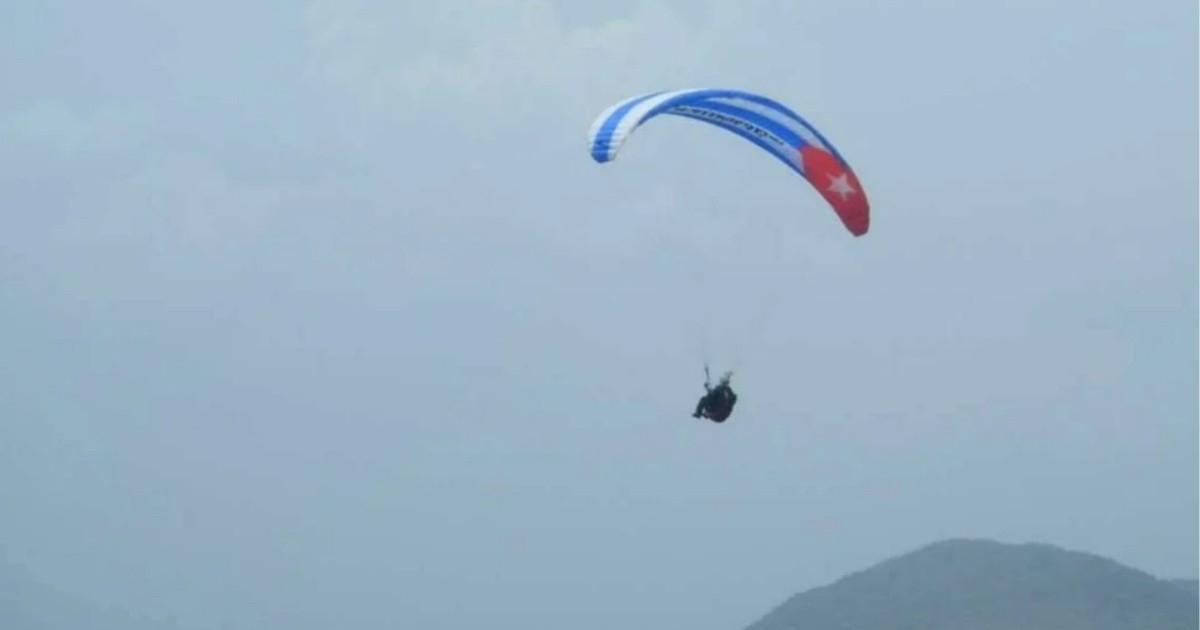
Cuban aviation authorities have determined that a sudden change in wind caused by a storm cloud was the direct cause of the tandem paragliding accident that resulted in the death of 12-year-old Joel Alejandro Suárez Sánchez on Saturday, July 4, on the Isle of Youth, as reported by the Cuban News Agency (ACN).
An investigative commission from the Civil Aviation Institute of Cuba (IACC) and the Aviation Club of Cuba (CAC) traveled to the island on Tuesday, July 7, to assess the legal, technical, and safety aspects of the case.
According to the report from the ACN, the commission examined the scene of the incident, heard testimonies from individuals who were present during the event, and reviewed the information previously gathered by law enforcement agencies, in order to establish a sequence of events that led to the tragic outcome.
The minor, a resident of the Abel Santamaría neighborhood, was taking a tandem flight with a pilot from the CAC when the accident occurred. The flight took off around 4:00 p.m. and involved a route along the hills, parallel to the coast, landing on the sand.
The investigation found that "after traveling part of the planned route, and at an altitude of about 50 meters over the mountains, a sudden change in wind occurred that abruptly lifted the paraglider, pushing it upward and to the east, towards the sea."
According to the report, "violent currents" generated by a storm cloud in the center of the island collided with the western slope of the Sierra de Caballos, moved upward toward the east, and pushed the paraglider—who was flying over Playa Paraíso—toward the sea, forcing an emergency landing about 500 meters from the shore.
Upon falling into the water, the pilot tried to free himself from the harnesses and lost control of the passenger, who disappeared before help arrived. The boy's body was located on Sunday, July 5, around 12:30 p.m., after more than 20 hours of searching.
The weather conditions in the area had been reported as "good" before the flight, which did not anticipate the sudden turn that triggered the tragedy.
However, the investigation also revealed serious irregularities that increased the risk. The flight was not a routine sports activity: an unauthorized commercial flight line had been improvised charging 3,000 Cuban pesos per person, without the CAC having managed or obtained authorization from the Ministry of Tourism to operate on the island.
Moreover, the pilot —although experienced as an athlete— did not have tandem pilot certification nor was he authorized for commercial flights, as he was still in the certification process. Additionally, the required documentation for this type of activity was not completed, which prevented the minor's relatives from providing valid informed consent.
Citing the statement from the investigative commission, the ACN noted that "the use of life vests, established by the Cuban Aeronautical Regulations for operations near the coast, could have made the difference between the fatal outcome of the flight and the survival of the passenger."
The CAC suspended all free flight activities on the Isle of Youth until the analysis is complete and assured that no revenue from that unauthorized commercial operation entered its finances.
The tragedy also sparked a controversy regarding the club's safety record. Its president, René González Sehwerert, issued a statement on Sunday, July 5, declaring that this was the "first fatality of the CAC in 15 years" with over 60,000 jumps completed, and defended the pilot's decision arguing that "the team could drag both if not released."
That version was denied by the aeronautics community and by the page "Lovers of Cuban Aviation", which documented at least four previous deaths related to aerial sports under structures associated with the club between 2022 and 2023, pointing to a pattern of institutional opacity in the handling of accidents.
Public order authorities continue to investigate the circumstances of the case and maintain contact with the club's management, while the Cuban Parachuting Federation stated that "the air sports community is in mourning."
Filed under: