Related videos:
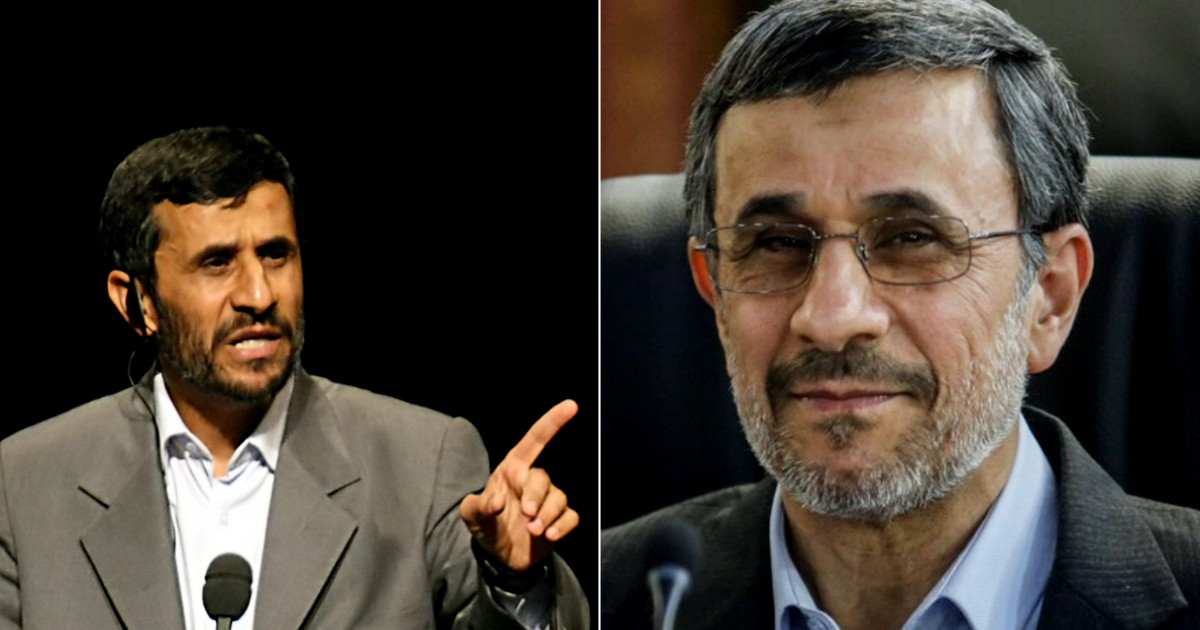
The former Iranian president Mahmoud Ahmadinejad is under house arrest after Iranian authorities discovered his secret contacts with Israel and the Mossad,
According to an exclusive investigation by the New York Times published this Monday, the individual known as 'The Man of a Thousand Bullets' —due to his alleged involvement in the execution of political prisoners— is reportedly under the custody of the intelligence wing of the Islamic Revolutionary Guard Corps (IRGC).
The revelation occurs amid an active armed conflict between the United States, Israel, and Iran, with fragile negotiations and heightened tensions following the suspension of the ceasefire on July 8.
According to the investigation, signed by four journalists from the Times who cite American and Iranian officials on the condition of anonymity, Israel carried out an undercover operation for years to recruit Ahmadinejad as an intelligence asset with a final goal: to install him as the new leader of Iran after the overthrow of the regime.
One of the most striking episodes of that operation occurred in early 2024, when a high-ranking official of the Hungarian government asked the rector of the Ludovika University of Public Service in Budapest, Gergely Deli, to invite the former president to a conference on climate change that would serve as a façade for secret meetings with Israeli intelligence.
"You have two enemies, and if those enemies want to talk to each other, the best thing you can do is help them communicate," Deli told the Times, explaining why he accepted the role despite the risk to his reputation.
The then director of the Mossad (Israel's intelligence service), David Barnea, personally traveled to Budapest in 2024 to meet with Ahmadinejad, according to former U.S. officials. Shortly thereafter, the Mossad informed the CIA that it had established contact with the former leader.
In the following years, Israel secretly paid money to Ahmadinejad for housing and travel expenses, and its operatives met with him on several occasions abroad, including a second trip to Budapest in June 2025, just days before the onset of the war. His IRGC bodyguards reported that on at least two occasions he slipped away from his escort to hold extended meetings.
The plan culminated on February 28, 2026, the first day of the war between the United States and Israel and Iran, when an Israeli airstrike hit Ahmadinejad's complex in Tehran, destroying the building housing his bodyguards and his armored vehicle. According to four high-ranking Iranian officials, a black Peugeot driven by Mossad operatives picked him up from the chaos and transported him to a secret safe house within the country.
However, the plan failed. Ahmadinejad was displeased with the operation and disillusioned by the Israeli proposal to restore him to power. He left the safe house under circumstances that are still unclear.
He did not reappear in public until Monday, July 7, when he briefly attended the funeral of Ayatollah Ali Khamenei, visibly guarded, with his head bowed and flanked by what appeared to be security guards. The other two living former presidents, Hassan Rouhani and Mohammad Khatami, were not invited to the ceremonies.
According to a former advisor of his, Abdolreza Davari, Ahmadinejad's motivation was not economic: "He has money; he has a vast economic network. He would do it for power. He wants to be at the forefront of power."
Sources close to the former president told the Times that he had confided to his inner circle that, if he returned to power, Iran would recognize Israel and normalize relations under the Abraham Accords promoted by President Donald Trump.
Tamir Hayman, former head of intelligence for the Israel Defense Forces, confirmed in May during the television program "Firing Line" on PBS that the regime change plan involved "a sequence of very, very unique special operations that had to take place. And Ahmadinejad was part of that sequence."
The Mossad did not respond to requests for comment from the Times, and Ahmadinejad's spokesperson, Ali Akbar Javanfekr, also declined to comment. Iran has not officially confirmed the house arrest, so its exact situation remains unverified.
Filed under: