Related videos:
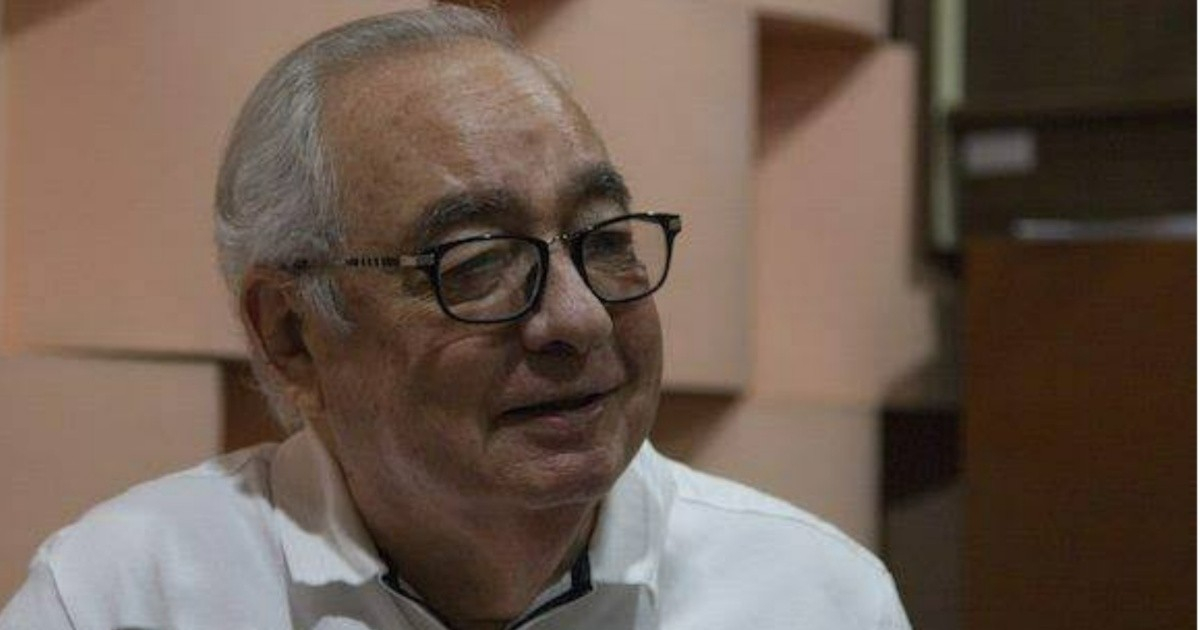
Miguel Díaz-Canel expressed his condolences this Monday for the passing of the veteran regime diplomat Raúl Roa Kourí, who died on Sunday at the age of 90, through a message posted on his Facebook account.
"We were deeply saddened to learn of the passing of Raúl Roa Kourí, who honored his two surnames, already inscribed in the history of Cuba for his extraordinary contributions to independence, culture, medicine, and diplomacy, with an admirable intellectual and diplomatic work," wrote the Cuban leader.
Díaz-Canel extended his condolences to the widow of Roa Kourí, identified as Lilita, as well as to his daughters, grandchildren, friends, and colleagues from the core of the Communist Party of Cuba in the UNEAC (Union of Writers and Artists of Cuba), from whom he said he had received "valuable insights into the complex reality of the country."
The message concluded with a commendatory phrase: "Raúl Roa Kourí acted as a Cuban patriot until the last day of his life."
Roa Kourí was born on July 9, 1936, in Havana, which means he passed away just four days shy of his 90th birthday.
He was the only son of Raúl Roa García, known as the "Chancellor of Dignity," who served as the Minister of Foreign Affairs of Cuba from 1959 to 1976.
The timing did not go unnoticed: the death of Roa Kourí occurred seven days after the 44th anniversary of his father's passing, which took place on July 6, 1982.
The news was announced by Juan Antonio Fernández Palacios, Cuba's ambassador to Belgium and the European Union, who remembered him as "the astute intellectual and diplomat, cultured in speech and possessing a brilliant mind."
Roa Kourí dedicated more than three decades to the Cuban foreign service. His longest-held position was that of ambassador to the UN in New York, a role he served for 14 years. He also held diplomatic roles in Prague, Paris, Rome, Mexico City, Brasília, and Santiago de Chile, and was the ambassador to the Holy See, deputy minister of Foreign Affairs, and permanent secretary for issues related to the Council for Mutual Economic Assistance.
He mastered five languages—Spanish, English, French, Italian, and Portuguese—and left behind a literary legacy that includes titles such as The Battle in Geneva (1989), In the Torrent —Casa de las Américas Prize 1999— and Memory of Various Worlds (2012).
In his final years, he presided over the Honorary Chair "Raúl Roa García" at the Higher Institute of International Relations, a breeding ground for the regime's diplomacy in Cuba, which in June 2026 was upgraded to the status of a University, just a month before his death.
The board of directors of that chair described his passing as a "significant loss for Cuban diplomacy and for all of us who had the privilege of knowing his exemplary dedication to service, his integrity, his wisdom, and his steadfast commitment to the preservation and dissemination of the thoughts and work of Raúl Roa García."
Filed under: