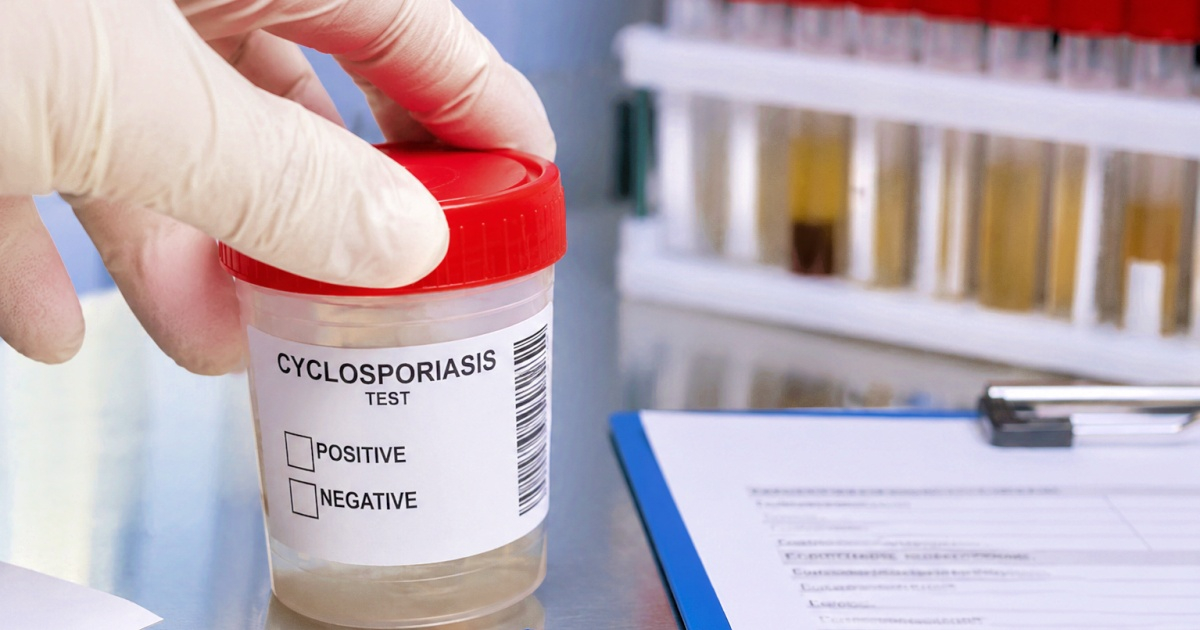
U.S. health authorities are facing one of the most severe outbreaks of cyclosporiasis in recent years.
According to the update published this Monday by the Centers for Disease Control and Prevention (CDC), as of July 13, there have been 1,645 confirmed domestic cases of the disease, while over 5,100 additional cases are under investigation.
Ello raises the total number of confirmed or suspected cases to nearly 7,000 nationwide.
The disease has spread to 34 states, with 141 hospitalizations recorded and no deaths reported.
The CDC recognizes that the actual figures are higher.
“The true number of sick individuals in this multistate outbreak is likely greater than reported, and the outbreak may not be confined to the states with known cases,” the agency stated.
A sprout that keeps growing
The federal agency warns that there is a delay of approximately six weeks between the onset of symptoms and the official report.
“We anticipate that the case count will continue to rise as data is received,” they warn.
Patients range in age from two to 95 years, with a median age of 44 years, and 56% are women.
The median onset date of symptoms was June 22.
Michigan is the most affected state.
Its Department of Health and Human Services reported 2,640 specific cases as of Monday—a number not included in the federal count because it encompasses probable cases that are still under analysis—which represents a 69% increase in just three days and the highest figure ever recorded in that state within a single year.
Additionally, 440 cases were reported in people who fell ill during trips abroad, with 20 hospitalizations among them.
Taco Bell under scrutiny
One of the elements that has garnered the most attention is the investigation surrounding the fast food chain Taco Bell.
According to a report from the Washington Post citing sources familiar with the case, federal and state authorities are investigating whether the chain contributed to the outbreaks, especially in southeastern Michigan.
As a precautionary measure, some branches voluntarily removed lettuce, onion with cilantro, pico de gallo, and guacamole.
The company clarified its position:
"While authorities continue their thorough review, Taco Bell has voluntarily and temporarily removed certain ingredients from some restaurants as a precautionary measure. We will continue to closely monitor the situation and follow the guidance of public health authorities."
Investigations by the CDC and the Food and Drug Administration (FDA) remain ongoing.
What is cyclosporiasis and how is it transmitted?
Ciclosporiasis is a gastrointestinal disease caused by the microscopic parasite Cyclospora cayetanensis, which infects the small intestine when consuming fresh food or water contaminated with human feces.
It is not transmitted from person to person.
Symptoms appear between two and 14 days after exposure and include frequent watery diarrhea—sometimes described as explosive—loss of appetite, weight loss, nausea, and fatigue.
Without treatment, they can last for weeks.
Dr. Sohaib Imtiaz, medical director of People Inc., noted that "health officials suspect that the outbreak is linked to contaminated raw fresh products, with investigators actively tracing possibilities such as bagged salad mixes, fresh herbs like cilantro or basil, raw berries, and green onions."
How to protect yourself?
The CDC recommends specific preventive measures and emphasizes that "it is important to wash products thoroughly even if they are labeled as pre-washed."
Among the main recommendations: wash hands and fruits under running water before consuming them, scrub firm-surfaced vegetables with a brush, and refrigerate cut food within a maximum of two hours.
The parasite cannot be eliminated with common disinfectants; only cooking destroys it. The treatment of choice is the antibiotic trimethoprim-sulfamethoxazole (Bactrim or Septra), administered for seven to ten days.
The CDC announced that it will publish updates more frequently than in previous seasons.
Until last week the outbreak in Florida had already accumulated dozens of cases across 25 counties, with the highest numbers in Lee, Miami-Dade, and Broward.
Related videos:
Filed under: