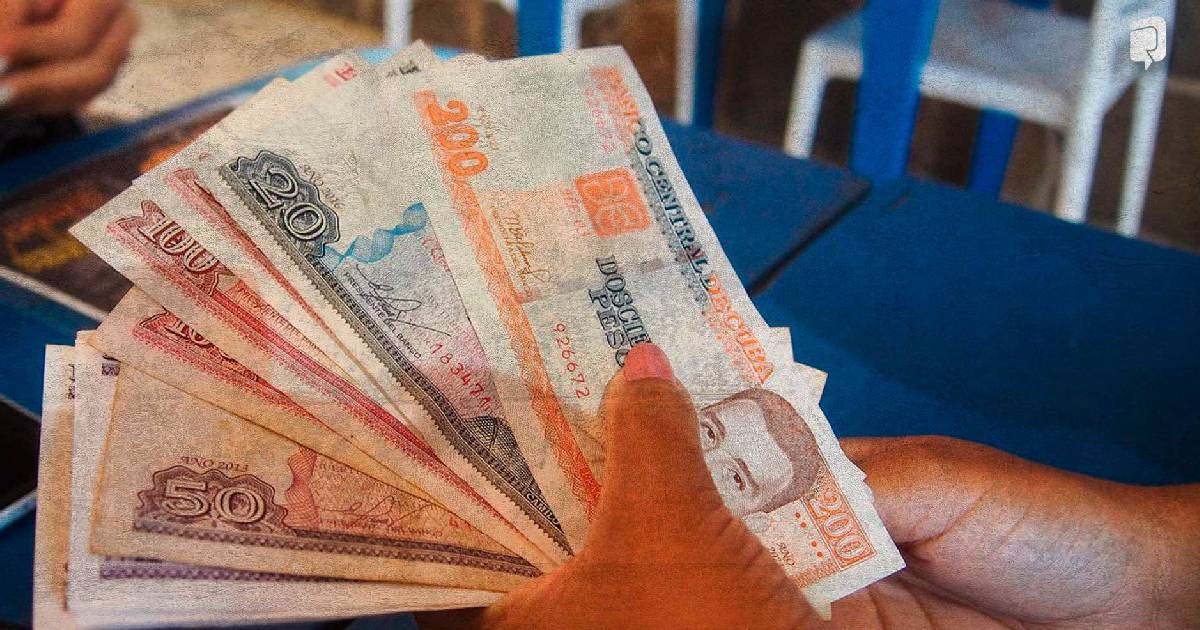
Cubans from various provinces are expressing their outrage that state banks only allow them to withdraw 500 pesos in cash per transaction, an amount that is insufficient to purchase basic food items or medication, and in many cases, they can only make a withdrawal once a week after being assigned a time slot.
According to a report by citizen journalist Reinaldo Abreu Milián published in El Espirituano, the Banco Popular de Ahorro (BPA) in Sancti Spíritus has implemented a prior appointment system for cash withdrawals, with a limit of 500 pesos per customer.
The user must go to the branch, obtain a ticket, and wait for the assigned day—which may be weeks later—to withdraw that amount, as long as there is electricity service and funds available in the bank.
A reader in Sancti Spíritus reported that she managed to secure an appointment for August just to be able to withdraw the money from a received transfer, which illustrates the extent of the wait.
"Every day, the situation at the banks for withdrawing money is becoming more difficult. Now they give you an appointment, and you can only withdraw 500 pesos when it's your turn, which doesn't solve anything. To make matters worse, with so many hours of blackouts, everything becomes more complicated. This is the end; we live worse each day," stated Carlos Vegas Mena, a resident of Serafín Sánchez Street in the capital of Sancti Spíritus.
The issue is not limited to Sancti Spíritus. Daysi Silveira, from Jagüey Grande (Matanzas), reported on Facebook that retirees were supposed to receive their payments on the 20th of the month, but by the 8th, they had still not received anything.
"Where is the money for the retirees? A bunch of thieves," he wrote, also pointing out that he has a disabled son to support.
In San Antonio de los Baños (Artemisa), a Cuban woman identified as Liss Karla La Loba published a video denouncing that the bank only allows her to withdraw 500 pesos once a week, which is insufficient to buy medication and food for her sick mother. "I go to the bank to withdraw money, and the only thing they allow me is 500 daily. And when you get there, they tell you no, that it’s once a week and with 500 pesos, my sister, here you can't eat," she stated.
More than 80% of the residents of Sancti Spíritus receive their salaries and pensions through magnetic cards, but most businesses refuse electronic payments, making cash essential. This contradiction, documented in the collapse of Cuban banking, traps citizens with digital balances that they cannot convert into goods.
The situation also creates a black market for appointments: people queue to secure them and then resell them at inflated prices. In Morón (Ciego de Ávila), citizens must pay 500 pesos to a middleman just to obtain a number and be able to collect their salary. In Santiago de Cuba, the fees for converting transfers into cash reach up to 50%.
The banking collapse has structural roots. The Metropolitan Bank of Havana reduced its withdrawal limit from 5,000 to 3,000 pesos in June 2026 and suspended appointment reservations. The Granma government acknowledged that same month that it did not have the funds to pay the pensions of over 111,000 retirees.
Only 3.77% of transactions in Cuba are digital, three years after mandatory banking was mandated by law.
Even the officialist singer-songwriter Raúl Torres expressed his discomfort last Sunday on Facebook: "Today, when I learned that the bank is handing out only 500 pesos per customer, my friend, it made my throat tight. It's not resentment, it's pain."
The Central Bank of Cuba announced new banking measures to be implemented gradually starting on August 3, 2026, but citizens see no immediate solution to a crisis that leaves them without access to their own money.
Related videos:
Filed under: