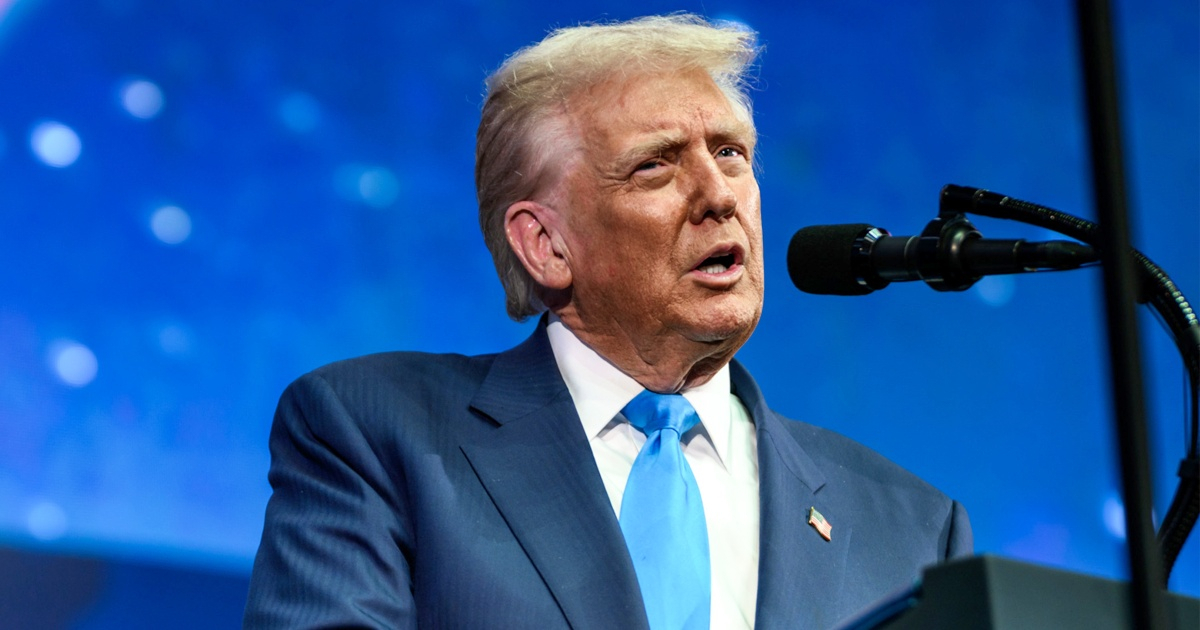
Donald Trump addresses the nation tonight in a prime-time speech that, according to sources familiar with the matter cited by ABC News, will revolve around the alleged fraud in the 2020 presidential elections and declassified intelligence reports regarding alleged foreign interference in those elections.
The speech is scheduled for 9:00 PM Eastern Time.
Trump announced the speech last Monday via his social media, without revealing the content, but indicating that it was about “very important news.”
What Trump has revealed
In statements made on Tuesday in the Oval Office, the president provided some hints without committing to the details.
“Thursday will be a very important day, because without free and fair elections, there is no country. We will also discuss other matters. But... it will be a very important announcement,” he stated.
When journalists directly asked him if the message would be related to the voting machines, Trump chose to be reserved: “It will address that topic, and we will also have a couple of other things to say. But I prefer to keep it to myself.”
The White House Press Secretary, Karoline Leavitt, did not clarify any mysteries.
"The truth is that nobody knows yet what President Trump will ultimately say, which is why everyone should stay alert," he stated in a statement.
The electoral fraud of 2020, the expected central axis
Several U.S. media outlets agree that the speech will include references to newly declassified intelligence reports that, according to the White House, would reveal alleged plans by foreign countries to interfere in the elections.
Trump has maintained since November 2020, without presenting conclusive evidence, that the elections of that year -won by Joe Biden- were fraudulent, claims rejected by electoral authorities, courts, and bipartisan reviews.
To prepare the ground, Trump appointed Bill Pulte, a 38-year-old loyal ally with no experience in national security, as Acting Director of National Intelligence, with the mission of declassifying documents related to the 2020 elections.
However, during the first Trump administration, intelligence officials themselves determined that the interference by Iran, China, and Russia in 2020 would not have changed the election outcome.
The Supreme Court halted part of Trump's electoral offensive last June, and the SAVE America Act -which requires documentary proof of citizenship to vote— remains stalled in the Senate.
The opposition asks networks not to broadcast the speech
The Democratic Representative Alexandria Ocasio-Cortez was one of the most critical voices.
“I don't think we should contribute to the spread of lies about our elections. I believe we have an ethical obligation not to disseminate information that undermines our elections, which is not based on evidence or facts,” said Ocasio-Cortez in statements reported by The Hill.
Democratic leaders have also accused Trump of trying to exert control over the electoral system, and have questioned the recent firing of two Democratic members of a federal agency responsible for overseeing the impartiality of the electoral processes.
Iran and immigration, shadows over the discourse
Beyond the elections, the shadow of Iran will inevitably loom over the address.
The U.S. launched a fourth consecutive night of attacks against Iranian targets last Tuesday, and the administration formally notified Congress of the resumption of hostilities, granting Trump 60 more days without needing legislative approval.
About Iran, Trump was blunt in an interview with Fox News: “They want to reach an agreement, but every time they do, they break it.”
A survey by Economist/YouGov reveals that 65% of Americans want an immediate agreement to end the conflict, and 57% believe that going to war was a mistake.
An adverse political context
The speech comes at a time of mounting problems for the White House. According to the average of polls from analyst Nate Silver, 57% of Americans disapprove of Trump's management, while only 40% approve of it.
According to that same survey, Democrats lead the generic ballot by a margin of 5.5 points ahead of the November congressional elections.
Analysts consulted by The Hill question the actual impact that a presidential speech can have in the age of social media.
"It's almost like a repetition, even though the content is different. The difference between appearing on Air Force One to speak with journalists or appearing to give an important speech is irrelevant to most people. It's simply Trump speaking," noted Tobe Berkovitz, an emeritus professor at Boston University specializing in political communication.
Related videos:
Filed under: