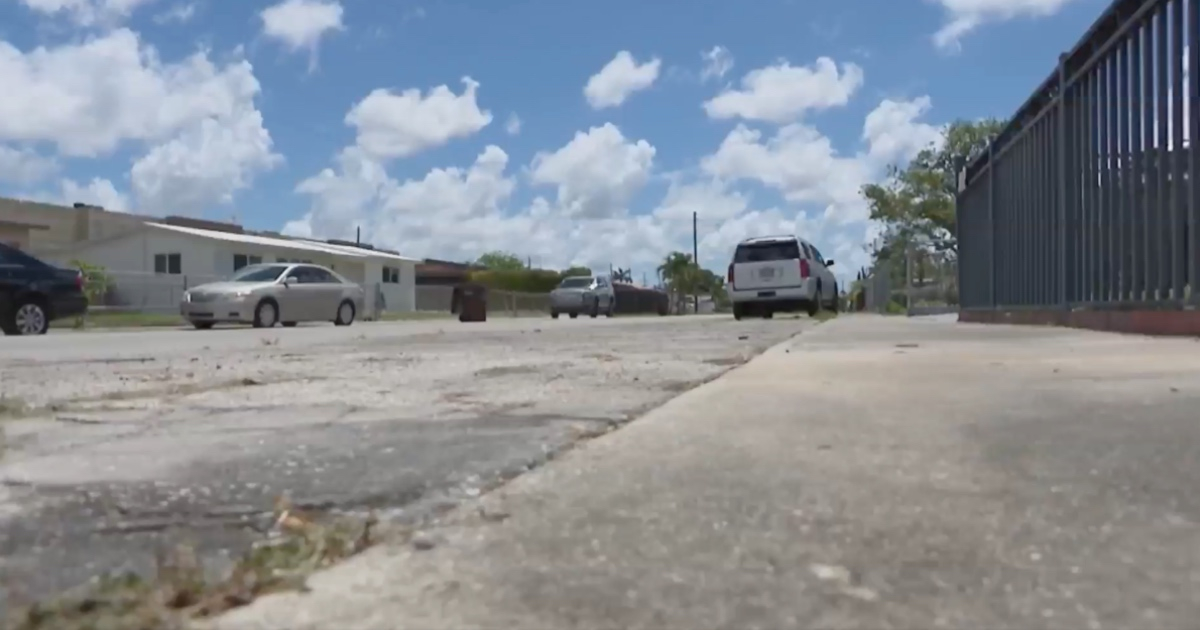
The Vice Mayor of Hialeah, Carlos Zogby, announced this Thursday that the city will temporarily suspend fines imposed on property owners for having asphalt in the strip between the sidewalk and the street in front of their homes.
Zogby also promised to explore financial assistance programs for those who cannot afford the required repairs, as reported by Telemundo 51.
Around 200 households have received notices or fines for violating an ordinance requiring grass in that area - known as swale - instead of pavement.
For many residents, complying with the regulation can represent costs of thousands of dollars.
"Don't panic": the message from the deputy mayor
Zogby came out to calm the spirits in a public interview with a direct message.
"Don't panic. We don't want to stress any of our residents. We understand that, in some cases, those conditions already existed when they purchased the house or inherited that issue," he stated.
The official also ruled out the most feared consequences:
"We are not going to take anyone's house. We are not going to file a lawsuit against anyone's property."
Among the announced measures, property owners will receive at least six additional months to comply, with the possibility of extensions.
The city will also seek scholarships and government programs, with special attention to the elderly and individuals facing financial hardships.
An old ordinance, a new application
The question most frequently asked by the neighbors is why the city started notifying them now.
Zogby clarified that the regulation is not an initiative of the current administration: “This ordinance was established in the year 2000, long before Mayor Bryan Calvo. What is happening now is the gradual enforcement of it.”
The technical basis is the Stormwater Ordinance of 2018, which prohibits paving the swales because asphalt prevents water from infiltrating the soil.
“The problem is that there’s nowhere left for it to drain,” Zogby summarized, recalling that during the electoral campaign, the neighbors themselves complained about puddles that remained for days after light rains.
However, Hialeah residents have reported that the city conducted inspections at the time of purchasing their homes without indicating any irregularities, which makes the situation particularly unfair for those who acquired properties with the swale already paved.
The real cost for the neighbors
Resident Yarima González estimated that complying with the ordinance would cost her around 7,000 dollars.
"Basically remove all the cement from the front of my house, put in grass, make a new driveway... when I got the estimate, it came out to about 7 thousand dollars," he explained in previous statements to the aforementioned media outlet.
Another owner, Carlos Rodríguez, who has been in his home for seven years, received a notification regarding pavement that had already existed when he purchased it.
"Why now? That's the question, why now?" he questioned. "I don't think it's fair for the owner to have to pay for it," he added.
Fines start at 100 dollars, but can escalate up to 500 dollars per day of non-compliance.
If not paid, they become liens on the property with an interest rate of 12% per year, which can hinder future sales or refinancing.
A lawyer warns: "You don't have to pay."
The lawyer Ari Pregen, specialized in defense before the Special Magistrate of Hialeah in code compliance cases, argues that property owners have strong arguments to challenge the penalties, as the swale legally belongs to the public right-of-way.
"It’s almost like double taxation. You have to pay to maintain the swale and then the city fines you for it," stated Pregen, who was emphatic: "You should not have to pay."
Despite the announced concessions, Zogby made it clear that the city does not abandon the enforcement of the regulation in the long term.
"Over time, we do want there to be compliance, because otherwise, the problem of flooding and puddles will not be resolved."
Related videos:
Filed under: