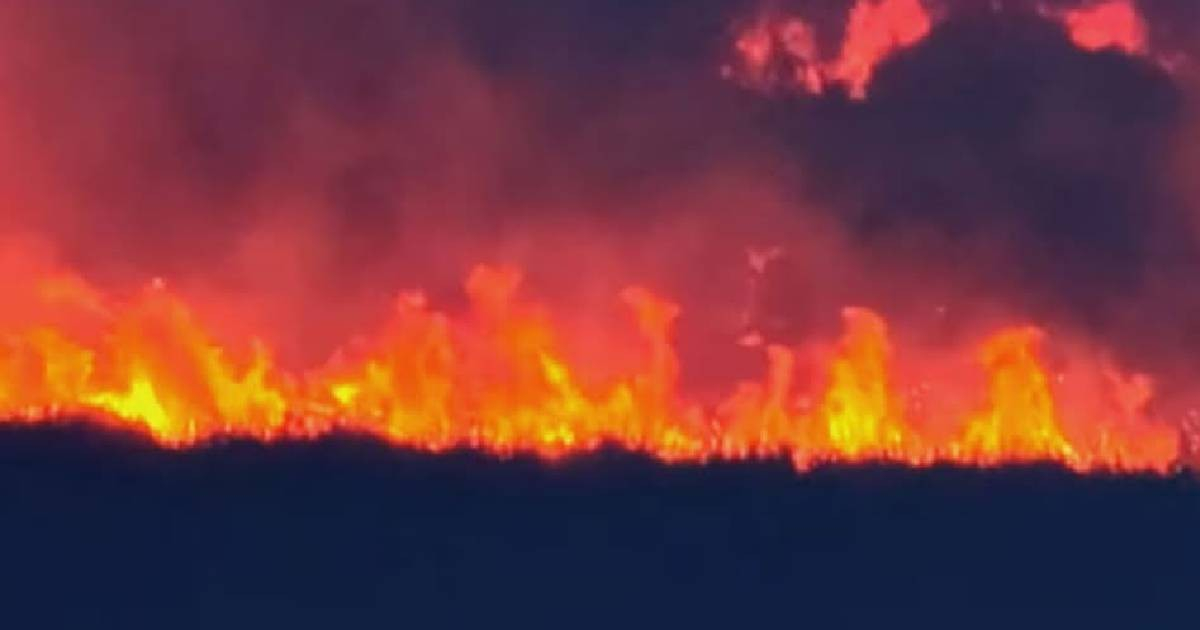
Recent rainfall has been crucial in slowing the spread of the wildfire that has been affecting the Everglades west of Broward County, Florida, since Thursday, and by Saturday, it reached a containment level of 95% after consuming 6,750 acres of vegetation without impacting any residential areas.
According to information from the Florida Forest Service reported by Telemundo 51, the fire —known as the Mile Marker 40 Fire— began on Thursday evening near mile marker 40 west of U.S. 27, in the heart of the Everglades, and in its early hours recorded 0% containment.
The progress in control was accelerated throughout Saturday: at 7:40 in the morning, the fire was 30% contained, affecting 6,000 acres; by 11:00 AM, the figure rose to 50% with 6,500 acres; and by noon, the Florida Forest Service reported 90% containment with 6,750 acres burned.
At 1:30 PM, CBS Miami raised that percentage to 95%, marking a drastic turnaround from the initial stages of the fire.
The flames were visible from areas in the northern part of Weston and from I-75 and US 27 roads, although the fire remained contained within the Everglades and did not directly affect any populated areas.
No injuries, evacuations, or closures of major roads associated with the fire were reported.
Steve Davis from the Everglades Foundation warned that without the recent rains, the fire would have been much more severe, given the precipitation deficit the region has accumulated: June 2026 recorded only 50% or less of the typical average rainfall in South Florida, and July has also been below average.
The organic soil of the Everglades, exceptionally dry, allowed the fire to penetrate deeply into the organic layer, making containment efforts difficult from the outset.
This fire occurs within the framework of an exceptionally severe fire season in the Everglades that has turned southern Florida into a high-risk area during 2026.
Ninety-nine percent of the state is experiencing drought conditions, with 85% at "severe" level or worse, according to the National Meteorological Service, amid a historic drought lasting over 18 months, exacerbated by the La Niña phenomenon and the absence of tropical cyclones in 2025.
Since January 2026, nearly 2,000 wildfires have burned approximately 120,000 acres across the state, with recent incidents such as the Quarry 2 in June —which consumed nearly 15,900 acres in northwest Miami-Dade— and the Mile Marker 39 Fire in August 2025, which burned 42,000 acres and triggered air quality alerts in Broward.
Authorities continue to monitor the area as efforts to achieve complete containment of the fire are concluded, which has remained confined to the Everglades and has not directly affected any populated areas.
Related videos:
Filed under: