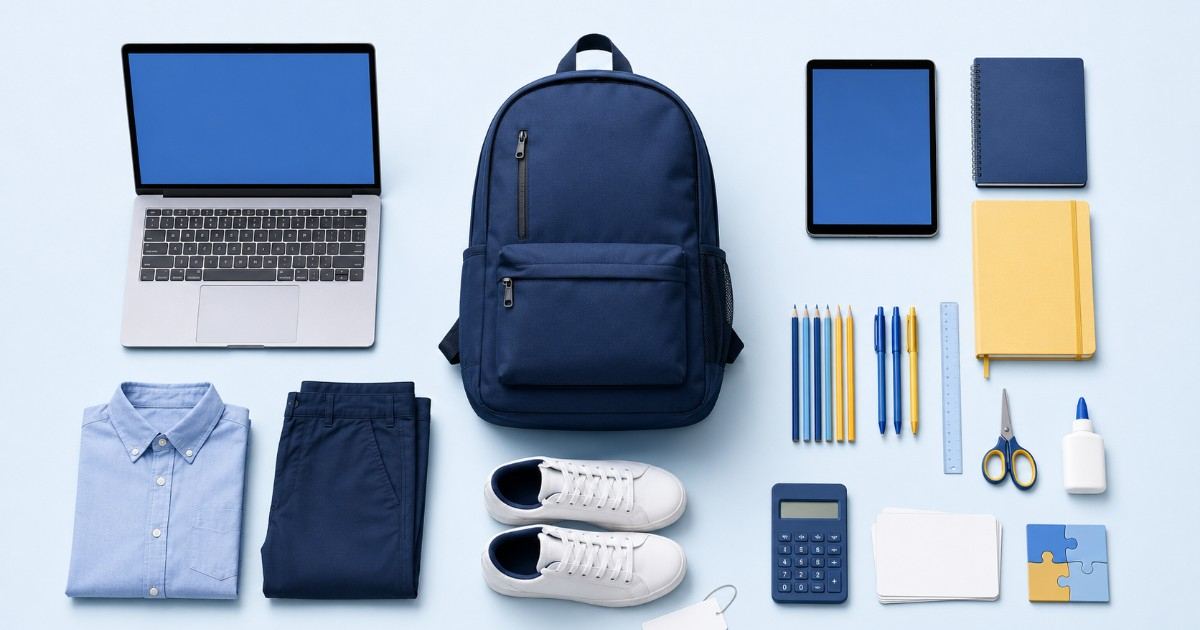
Florida kicks off its annual tax exemption period for back-to-school this Monday, a consecutive 32-day window during which thousands of families can purchase clothing, supplies, educational materials, and computer equipment without paying sales tax, as confirmed by the state's Department of Revenue.
The period will extend until Thursday, August 20, making it the longest in the recent history of the program and the first to start in July, following a date adjustment approved by the state Legislature through bill HB 7031E.
The exemption covers four main categories of products with specific price limits.
In terms of clothing and accessories, garments such as clothing, footwear, backpacks, bags, wallets, and diaper bags priced at $100 or less per item are tax-free, including jeans, jackets, dresses, socks, underwear, sports uniforms, and even graduation gowns.
The school supplies priced at $50 or less are also covered: pens, pencils, erasers, crayons, notebooks, folders, lunchboxes, markers, scissors, glue, rulers, staplers, protractors, and compasses, among others.
Educational materials and puzzles priced at $30 or less are also included in the exemption, a category that encompasses educational cards, memory games, interactive books, building blocks, and toys designed to teach reading or math.
Finally, personal computers and accessories priced at $1,500 or less are exempt when purchased for non-commercial domestic or personal use: laptops, tablets, desktop computers, e-readers, keyboards, mice, monitors, printers, headphones, microphones, webcams, and non-recreational software.
The exemption applies to both physical stores and online purchases, as long as the order is accepted by the seller during the validity period, and there is no limit on the number of items that can be purchased, provided that the individual price of each does not exceed the corresponding limit.
In contrast, the exemption does not apply to mobile phones, video game consoles, digital media receivers, computers intended for commercial use, briefcases, suitcases, watches, jewelry, and umbrellas.
It also does not apply to items sold within theme parks, entertainment complexes, public lodging establishments, or airports.
Amanda Bevis, representative of the Florida Retail Federation, highlighted the positive impact of making the tax holiday a permanent event in the state's statutes: "This allows retailers to plan ahead, not just for their sales, but also for their marketing and promotions."
Bevis also emphasized the benefit for consumers: "Now they can combine the available offers in stores with the additional tax savings provided by the holiday."
The program, which was offered for the first time in 1998 as a period of just seven days with exemptions only for clothing priced at $50 or less, has been approved annually for decades with varying durations between three and 14 days, and in 2009 it was not held at all.
In 2025, with the same price limits in effect this year, legislative economists projected a total savings for consumers of approximately $217 million, a figure that serves as a reference to estimate the scope of the 2026 edition, for which legislative staff did not prepare an official projection.
Related videos:
Filed under: