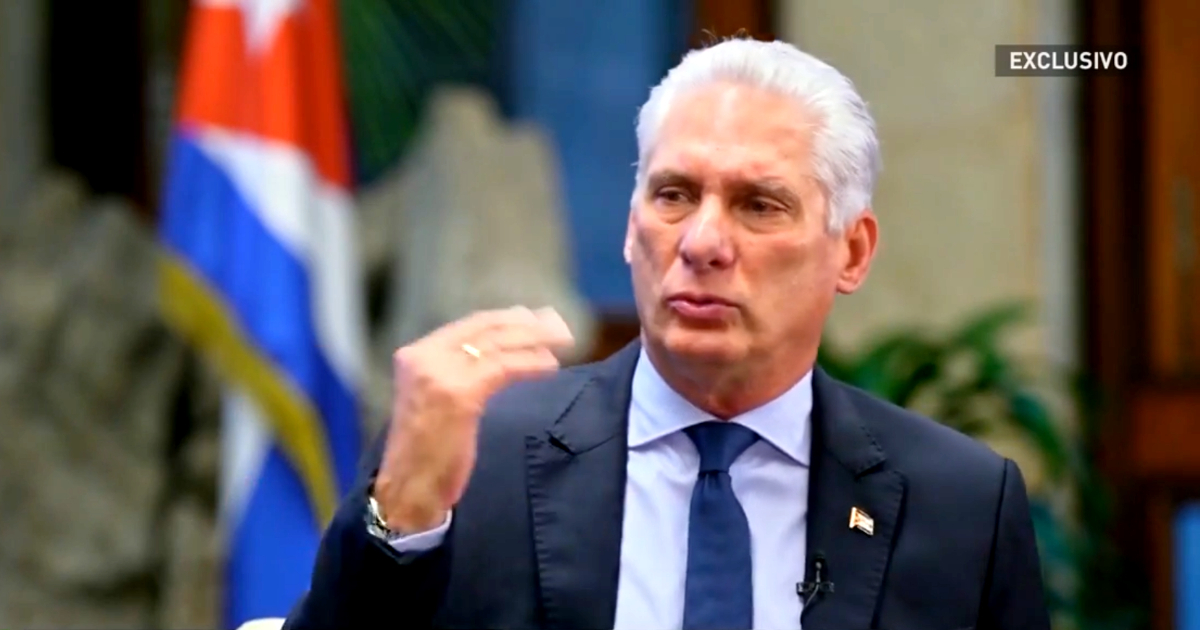
The publication by CiberCuba on the statements made by Miguel Díaz-Canel regarding the new economic transformation package sparked a lively discussion among readers on Facebook.
The central idea defended by the ruler —that economic reforms will always be under the control of the Communist Party of Cuba (PCC) and will not imply a political opening— was met with an overwhelming majority of critical reactions.
Among the hundreds of comments, a shared sentiment prevailed: many users believe that the announced measures are unlikely to bring about real change while the political system remains intact.
The phrase that was repeated the most, in various forms, was precisely that it is "more of the same", an expression used by numerous readers to summarize their perception of the new economic program.
"The same dog with a different collar," wrote one of the participants, while another summarized the official announcement with the comment: "The movie is called: More of the Same".
An important part of the reactions questioned the Communist Party's continued reservation of absolute control over the process. Several readers pointed out that any attempt at reform will be doomed to failure if the political organization that has led the country for decades maintains its monopoly on decision-making.
One of the most supported comments stated that "any reform under the PCC will bear the stamp of failure in capital letters", while another concluded that Díaz-Canel had just "declared the failure of the reforms" even before they were implemented.
Other readers insisted that the problem does not solely lie in economic measures, but also in the lack of institutional and political changes. Some called for the holding of a plebiscite so that citizens could freely decide the model of the country they desire.
In that same vein, several comments rejected the continuation of the single-party system and questioned whether the new measures could generate trust among potential investors.
"With those premises, he should wait seated," a user quipped. Another added that "that’s how he will be waiting for investors," casting doubt on whether foreign entrepreneurs would choose to risk capital in an environment where the PCC maintains absolute control over the rules of the game.
The distrust regarding the announcement was also reflected in those who interpreted the reforms as an attempt to attract investment without changing the functioning of the system. Some comments even suggested that the new measures would only serve to capture economic resources without providing sufficient guarantees to those investing in the Island.
Another group of participants focused their criticism on the government's insistence on continuing to defend socialism despite the deep crisis the country is facing.
How long, and how many surnames will be given to this socialism? asked a reader, referring to the expression used by Díaz-Canel to build "Cuban-style socialism".
That same comment stated that the authorities continue to try to "gloss over the failure" with new definitions instead of acknowledging the mistakes accumulated over decades.
There were also those who resorted to humor to respond to the official speech. One of the most shared messages compared the phrase "Cuban-style socialism" to "the dish of a menu: without water, without electricity, without anything", alluding to the energy crisis and the daily difficulties faced by the population.
Other readers used short phrases filled with irony such as "I can already imagine the final result", "speechless", "I don't know whether to laugh or cry", or simply "no more".
Religious references also appeared repeatedly. Several users requested God's intervention for the situation in the country to change, with comments like "May God have mercy on us" or "God, stretch out your hand", reflecting the sense of despair expressed by the participants.
Some readers also recalled the famous phrase attributed to Albert Einstein about the madness of repeating the same actions while expecting different results. One commentator adapted this idea to argue that insisting on the same economic model is a sign of "shamelessness," while others agreed that the government is once again trying formulas that, in their opinion, have already proven ineffective.
Although the dominant tone was clearly critical of the regime, there were also humorous interventions, resigned comments, and even remarks about the photographs used to illustrate the news, reflecting the usual diversity of conversations on social media.
Overall, the reactions indicate that Díaz-Canel's announcement found little credibility among a significant portion of the readers who participated in the debate.
Most of the comments not only questioned the content of the economic reforms but also the fact that the government itself presents the Communist Party as the guarantor of the process after more than six decades of directing the national economy.
Far from conveying confidence, the leader's statements reinforced among many readers the perception that the new measures represent a limited relaxation of the economy without any changes in the political structure of the country.
For many of those who commented on the post from CiberCuba, the message can be summarized in a phrase that ultimately became the central theme of the debate: "more market, but the same control".
Related videos:
Filed under: