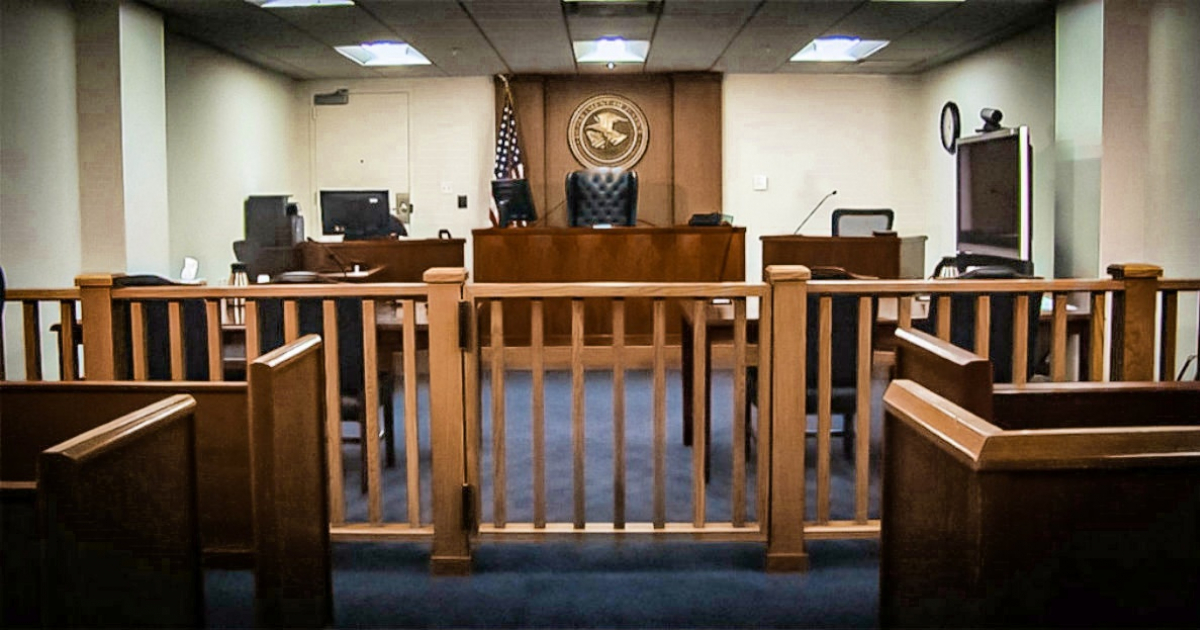
A federal district judge based in Boston blocked on Tuesday the policies of the Donald Trump administration that canceled work permits and hindered asylum applications for thousands of beneficiaries of Temporary Protected Status (TPS), according to reports from U.S. media.
The magistrate Nathaniel Gorton - appointed by former Republican President George H.W. Bush - issued an emergency order valid until August 5, on which date he will decide whether to convert the suspension into a long-term measure.
The lawsuit that originated the ruling
The legal action was filed on July 1 by a coalition that includes the National TPS Alliance, the Venezuelan Association of Massachusetts, the Asylum Seekers Advocacy Project (ASAP), and the Service Employees International Union (SEIU), represented by the legal organization Democracy Forward.
The lawsuit claims that the U.S. Citizenship and Immigration Services (USCIS) applied the new rules retroactively and without public notice or a comment period, violating the Administrative Procedure Act.
The conflict has its roots in the so-called "Great and Beautiful Law" (One Big Beautiful Bill Act), enacted by Trump in July 2025, which for the first time imposed an annual fee of $100 to apply for asylum and restricted work authorizations for TPS beneficiaries.
Judge Gorton allowed the government to continue collecting that fee, but prohibited USCIS from revoking work permits or penalizing those who have not paid while the litigation is ongoing.
Who benefits?
The measure protects asylum seekers from all countries and specific groups of TPS beneficiaries.
Haitians with valid permits will be able to keep them until November 2026, when the last renewal of TPS approved by the Biden administration expires.
For Venezuelans, the relief is more limited: it reaches only between 5,000 and 10,000 people who renewed their TPS before February 5, 2025, according to the Venezuelan American Caucus.
The order also halted the revocation of work permits for TPS beneficiaries from El Salvador, Sudan, and Ukraine, who would have lost their permits starting on July 22.
For Cubans—who do not have an active TPS in 2026—the decision halts the automatic cancellation of work permits due to non-payment of the annual fee for those with pending asylum applications.
“The court's decision ensures that thousands of families do not lose their livelihoods or their peace of mind while the legality of these policies is determined,” stated Skye Perryman, president and CEO of Democracy Forward.
Adelys Ferro, executive director of the Venezuelan American Caucus, noted that "the most important aspect of this decision is the impact it has on asylum seekers who had pending cases and who were going to lose their work permits or even face expedited deportation for not having paid the new annual fee of 100 dollars."
A temporary relief in a broader battle
This order is part of an extensive legal dispute against Trump's immigration agenda.
On July 16, a judge rejected the government's attempt to restore the freeze on immigration procedures, forcing USCIS to continue processing cases.
However, the Supreme Court has supported the Executive in its most controversial initiatives: on June 25, it authorized the government to end TPS for approximately 350,000 Haitians and over 6,000 Syrians, with a vote of six to three.
The most critical date on the horizon is September 9, when the TPS designation for El Salvador expires, a country with more than 170,000 beneficiaries and approximately 150,000 American children with at least one parent under that status.
"The ruling provides some relief for families, but it does not answer the question that thousands of parents and children are asking: Will our family be able to stay united?" an activist asked.
"After more than two decades contributing to this country, families deserve certainty, not another chapter of uncertainty," stated José Palma, coordinator of the National Alliance for TPS.
Related videos:
Filed under: