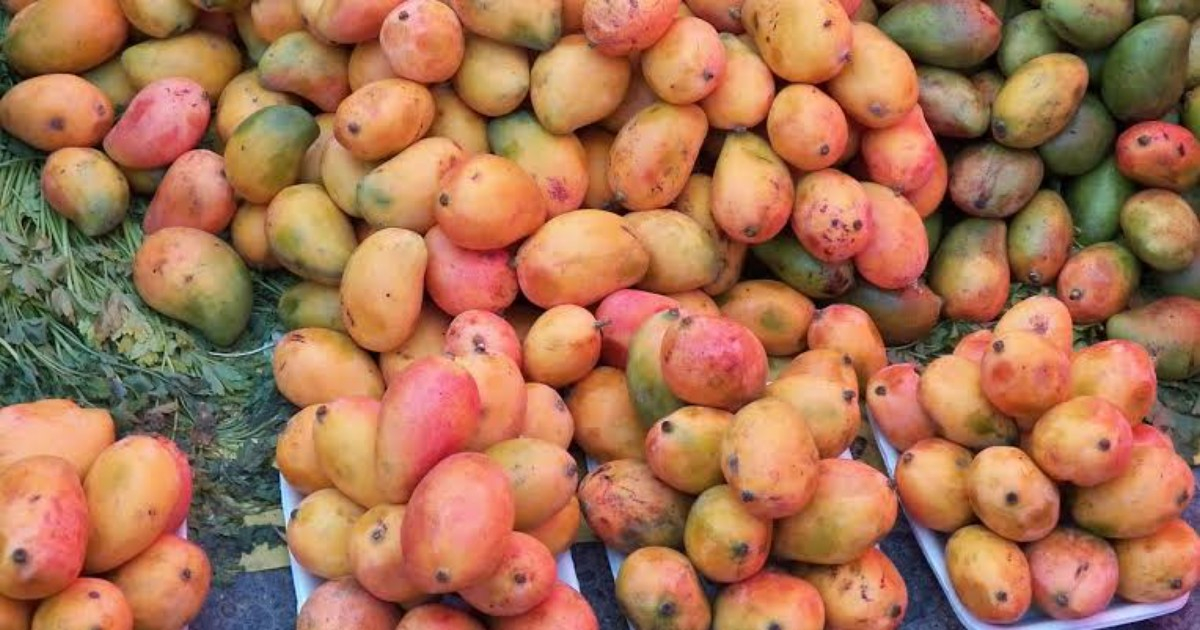
With the trees in South Florida laden with fruit — a season that in 2026 extended into late July and August due to a winter freeze that delayed the peak production — thousands of Miami-Dade residents are faced with a question that returns every summer: is it legal to take mangos from the neighbor's tree? The short answer is no, although the law has important nuances that are worth knowing.
According to an article published in the Access Miami section of El Nuevo Herald, the Miami-Dade Code of Ordinances prohibits the taking, removal, or damage of plants, fruits, or nursery products from any private or public property without the owner's consent.
Whoever does this may receive a civil fine of $200 or face criminal charges, as warned by the County Sheriff’s Office in a video posted on social media this month. Trespassing onto another person's property to pick fruit worsens the situation: it may constitute burglary, a crime punishable in Florida by up to 60 days in jail.
The Sheriff's Office was direct in its message: "If the tree is planted on private property, the fruit belongs to the owner. If you have any doubts, always ask for permission before picking it."
However, the scenario changes when the branches of the neighbor's tree invade your own property. Attorney Michael Gulisano, from Gulisano Law in Palm Beach, explains that the legal precedent Gallo v. Heller —resolved in 1987 in Miami-Dade— establishes that a neighbor has the right to trim any vegetation that crosses onto their property. Following that logic, if a branch loaded with mangoes extends into your yard, you can trim it and keep the fruit without violating the county ordinance.
"If it is legally allowed to cut a branch with fruit that invades your property, I see no legal reason to claim that you cannot collect the fruit instead of pruning the branch to the property line," Gulisano pointed out.
The stance of the Miami-Dade police is more restrictive: they posted on social media that the fruit always belongs to the owner of the tree, without considering situations where branches invade neighboring property. Gulisano disagrees: "The Miami-Dade police are not made up of lawyers. However, since they enforce the law, I believe it's better to err on the side of caution."
The lawyer David Barman, a business law professor at Florida International University (FIU), draws a clearer line: "If the fruit falls in your yard or on the sidewalk, it is definitely yours. If it's on the branch of your neighbor's tree but hangs over your fence, it is still your neighbor's fruit. If you take it before it falls, it is theft."
The incidents related to mango thefts are common in the area. This month, two thieves were caught on camera on July 7 and 13 jumping over the fence of a property belonging to a resident identified as "Wilfredo" in Miami, using fruit pickers to take the mangos. The owner stated that he will not file charges but wanted to make it clear that entering someone else's property to steal mangos "is not right."
The 2026 season also brought a tragedy: Lucrecia Cardozo, 56 years old, died on July 21 after falling from a ladder while picking mangos in Miramar, Broward.
In light of such legal ambiguity, Gulisano's advice is as simple as it is effective: "To avoid misunderstandings, I would simply suggest talking to your neighbor. I would like to think that most people wouldn't mind if you take fruit from a branch that hangs over your property." Barman sums it up with a maxim that applies beyond just mangoes: "Be kind, and if your tree has plenty of fruit, be a good neighbor and share it. And if you want fruit, don't assume you can just take it; ask first."
Related videos:
Filed under: