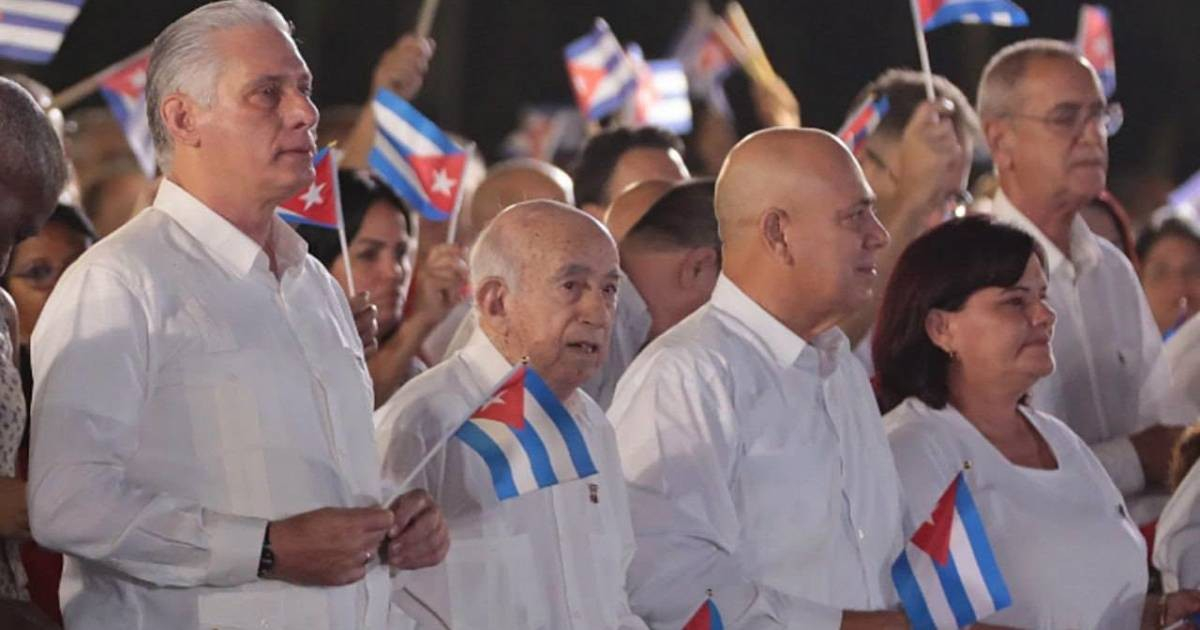
After the regime commemorated the 73rd anniversary of the assault on the Moncada Barracks with an official event in Pinar del Río this Sunday, Cuban writer Yanier H. Palao published a reflection on social media that offers a radically different perspective on the significance of that date for present-day Cuba.
In a text shared on Facebook, the author transitions from personal memory to political disillusionment, concluding with a desire that resonates with the longing of many Cubans both on the island and abroad: to move beyond the revolutionary epic and build a country where the priority is to live better.
Palao, born in Holguín in 1981 and residing in Quito, Ecuador, recalled a visit he made years ago to the Ciudad Escolar 26 de Julio in Santiago de Cuba, the former Moncada Barracks transformed into one of the main symbols of the Revolution.
"At that time, the myth of the Revolution had already faded for me; it almost didn't exist, but I felt a thrill being in that place, part of Cuba's history. Santiago de Cuba always inspires emotion," he wrote.
However, that excitement quickly gives way to a critical assessment of the revolutionary legacy.
"What was hope has turned into disappointment. What was rebellion is now betrayal; what was a heroic act has transformed into misfortune, hunger, misery, deaths, prisoners, desperation, as if instead of a revolution, a curse has progressively begun," he stated.
The writer also proposes a change in the symbolic reference for the country. Instead of July 26, he considers that July 11, 2021—date of the historic popular protests across the island—represents a hope for the future of Cuba.
"I hope we have another date to celebrate very soon, for example, July 11," he wrote.
The publication concludes with an image that encapsulates the country it desires.
"I hope that very soon Cuba will have less heroism and more food, more dreams, more returns, and that we can all dance together under an unrelenting sun to the rhythm of a conga, whether in Santiago de Cuba or Havana."
The reflection was published after Miguel Díaz-Canel led the main event for the anniversary of Moncada, where he once again blamed the United States for the crisis that the island is experiencing and called upon "the inventiveness, creativity, and joy of the Cuban people" as a response to economic difficulties.
Palao's words also align with a day marked by new issues in the electrical system. The Antonio Guiteras thermoelectric plant went offline from the National Electroenergetic System during the early hours of this Sunday, in another episode of the energy crisis affecting the country.
The comedian Ulises Toirac also reacted to the date with irony by posting the phrase "it’s always the 26th", referring to the blackouts and the ongoing difficulties faced by Cubans.
Palao concluded his message with another reflection on the future of the island, expressing his hope that the next great national symbol will not be linked to a new revolutionary epic.
"Over time, the dying myth will give way to another myth of hope for Cuba, which we hope will not be as mythical, nor as revolutionary, nor as liberating, and will not serve as an example of anything," he concluded.
Related videos:
Filed under: