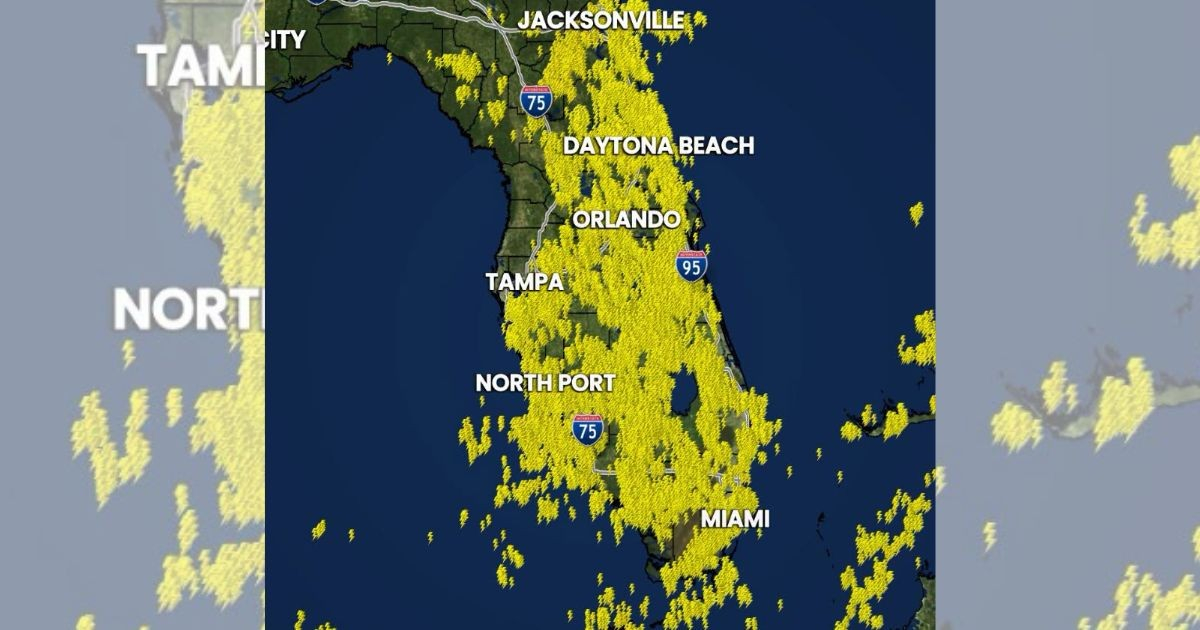
A map published by meteorologist Matt Devitt revealed that over 80,000 lightning strikes struck the state of Florida during Saturday and Sunday, due to intense storms that affected nearly the entire state.
Devitt described the phenomenon on Facebook with a powerful statement: "Florida definitely lived up to its reputation this weekend with an electrifyingly large number of impacts caused by severe storms on Saturday and Sunday."
The map, filled with yellow lightning icons, displays a very dense concentration of strikes along the central corridor of the state, from Jacksonville in the north to the Keys in the southernmost point, passing through Daytona Beach, Orlando, Tampa, North Port, and Miami.
The consequences were not limited to the visual spectacle. In North Palm Beach, for example, a lightning strike hit a melaleuca tree around two in the afternoon on Sunday, causing a minor gas leak and a break in a six-inch water main.
Teams from Seacoast Utility Authority, Florida Public Utilities, and Florida Power & Light responded to the incident, along with firefighters and Public Works personnel from North Palm Beach.
The incident over the weekend is part of an extraordinary electrical activity season for 2026.
By early July, Florida had already surpassed one million lightning strikes for the year, with over 200,000 recorded in just one week, according to data from Devitt himself.
On Sunday, just hours before publishing the map of 80,000 lightning strikes, Devitt also warned about golfers who were defying storms in Venice, Florida, with a straightforward message: "No game of golf is worth getting struck by lightning."
Florida leads the nation in lightning-related deaths between 2016 and 2025, with 51 fatalities, according to the National Lightning Safety Council. Texas ranks second with 21 deaths in the same period.
Ninety percent of the electrical discharges in the state occur between June and September, and all 67 Florida counties experience thunder and lightning activity throughout the year, making every summer a high-risk season for residents and visitors.
Related videos:
Filed under: