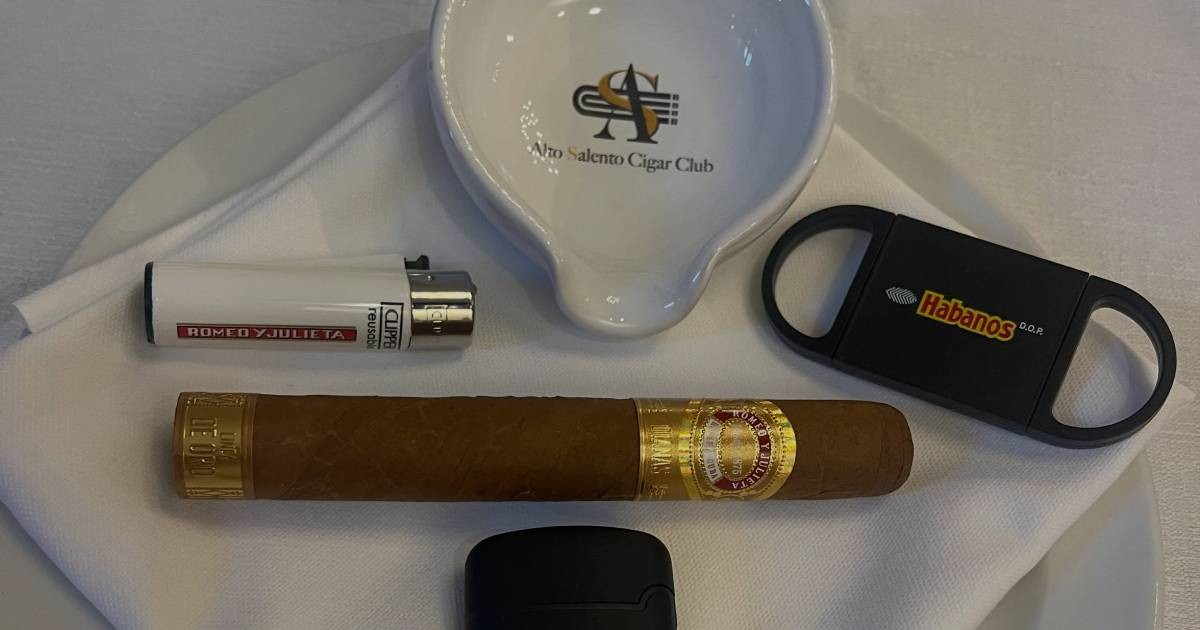
The deep energy and fuel crisis currently affecting Cuba is impacting one of the island's most emblematic products and one of its main exports: cigars. International retailers assert that the market is facing one of the worst supply crises in recent decades, according to a report published by the New York Post.
Among those feeling the impact is Manu Harit, a cigar specialist based in London, whose business relies almost entirely on Cuban cigars. The merchant states that for months he has been unable to meet the demand of his customers.
"I have been telling my clients: 'Listen, I haven't been able to get them for months,'" he confessed.
The figures reflect the extent of the shortage. Harit explained that at the beginning of the year, he placed an order for £45,000, around $60,000, but only received goods valued at £5,000.
"In recent months, they have sent very little inventory," he lamented.
Soaring prices and an industry with no room for maneuver
The shortage is already evident in the international market. According to Harit, a cigar that cost around 20 pounds a decade ago can now be sold for 160 pounds, increasing its price eightfold.
The specialist attributes a significant part of the problem to the structure of the Cuban tobacco sector itself, which is entirely controlled by the State.
Habanos S.A., the company that monopolizes the global marketing of Cuban cigars, is 50% owned by the Cuban state, while the main brands—such as Cohiba, Montecristo, Partagás, Romeo y Julieta, and Trinidad—are part of that centralized system.
"There is no alternative... All the brands have been nationalized," Harit explained.
Without fuel, there are no cigars
The logistical crisis has become one of the main obstacles to production.
The tobacco fields of Pinar del Río, responsible for 70% to 80% of Cuban tobacco, rely on the supply of fuel to transport workers, raw materials, and finished products.
"All the farms and plantations are a couple of hours from Havana, and it requires oil and trucks to get there," explained the trader.
Harit recounted the case of a taxi driver who spent 14 hours in line to buy gasoline and ended up paying 350 pounds for just two and a half gallons of fuel, solely to be able to travel to a factory and pick up several boxes of cigars.
In addition to the ground difficulties, there is the collapse of air cargo transport. Many shipments must be made by sea, but numerous operators lack the temperature and humidity conditions required for the cigars during transit, which has resulted in the loss of part of the inventory.
In June, one of the largest distributors of cigars in the world announced that it would impose a surcharge of 6.5% on all its orders due to the rising costs of transporting cigars out of Cuba.
A problem that extends throughout the market
The consequences are already visible in various countries.
The Habanos Festival, one of the main international events in the sector, was definitively canceled on July 21, marking only the second interruption in its history, following the cancellations caused by the pandemic in 2020 and 2021.
The distributor Phoenicia T.A.A. Cyprus Ltd., one of the largest official distributors of cigars, began applying a surcharge of 6.5% on all its orders starting June 23 due to the increase in transportation costs.
In Canada, several specialty stores reported since March that they had not received new shipments from Cuba since December 2025.
The shortage has also fueled the illegal market. In July, the Spanish Civil Guard dismantled a clandestine workshop in Valencia dedicated to producing counterfeit habanos, where 33,840 cigars and over 637,000 fake rings from brands like Cohiba and Punch were seized.
Consumers buy what they find
In the face of uncertainty, many fans are stockpiling supplies whenever they find products available.
"I have smoked Cohiba my whole life and now I can't find it. There's nothing like it," declared a U.S. consumer who typically purchases his cigars in the United Kingdom to the New York Post.
In high purchasing power markets like Dubai and Riyadh, some buyers purchase up to 12 boxes at once, equivalent to around 300 cigars, to ensure availability for months.
When the newspaper asked Harit when the supply could be restored, the merchant acknowledged that he didn't have an answer.
Regarding the rise of imitations seeking to exploit scarcity, he was emphatic: "They will never replace the original."
Related videos:
Filed under: