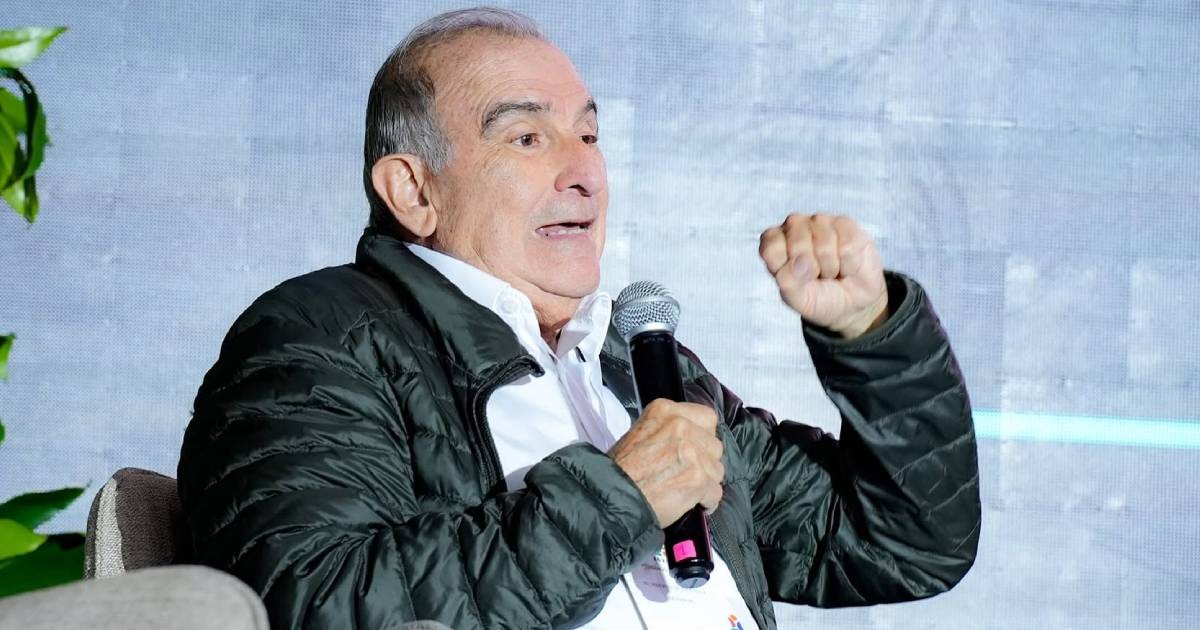
The former Vice President and former Minister of Foreign Affairs of Colombia, Humberto de la Calle Lombana, who led the government delegation in the peace negotiations with the FARC, described the decision of elected President Abelardo de la Espriella to sever diplomatic relations with Cuba as a "mistake" on Wednesday.
De la Calle, who led the for nearly 44 months, defended the role played by Cuba as a guarantor country and host of that process, drawing on his direct experience in the talks.
"I believe it is a mistake to sever ties with Cuba. The current government of the Island does not promote the revolution in Colombia. That is a thing of the past. Instead, Cuba has been essential in the quest for peace between us," he wrote on his X account.
The former negotiator also stated that he can attest to the role played by Havana during the peace process.
"I can attest to the professionalism, integrity, and diplomatic seriousness of the Cuban government in the discussions to end the conflict with the former FARC," he stated.
De la Calle also rejected that the authoritarian nature of the Cuban government is a sufficient reason to break diplomatic relations.
"The argument that it is a dictatorial government does not withstand the slightest analysis, not because one defends that government, but because with that reasoning, Colombia would have to sever ties with countless countries. The characteristics of a regime are not what determine the usefulness of diplomatic relations with different nations," he stated.
With an ironic tone, the politician anticipated the criticisms that his stance could generate.
"They will call me a fool again. It doesn't matter. I suggest more reflection."
The decision of De la Espriella
The announcement comes two days after Abelardo de la Espriella announced the severing of diplomatic relations with Cuba and Nicaragua, which he referred to as "tyrannies," along with the closure of 14 Colombian embassies as part of a reorganization of foreign policy.
"In my government, there will be no ties whatsoever with tyrannies," declared the elected president, who will take office next August 7 in Cali.
The response from Havana did not take long to arrive. The Ministry of Foreign Affairs of Cuba deemed the decision "unjustified" and accused De la Espriella of acting in "subordination to the aggressive policy of the United States."
A decision that sparks debate
The future Colombian government has shown a close alignment with the administration of President Donald Trump. On July 15, elected Vice President José Manuel Restrepo met in Washington with Secretary of State Marco Rubio as part of an official mission called "La Patria Milagro." Following De la Espriella's electoral victory in June, Rubio was also one of the first international leaders to publicly congratulate him.
De la Calle is not the only figure who has called for a reconsideration of the break with Cuba. On Tuesday, Rodrigo Londoño, former commander of the FARC, known as "Timochenko", also did so, defending the role played by the island during the peace negotiations.
The diplomatic history between both countries records instances of diplomatic breaks. Colombia suspended relations with Cuba in 1961 and did so again in 1981, during the government of Julio César Turbay Ayala, following accusations of Cuban support for the guerrilla movement M-19. On both occasions, diplomatic ties were restored years later.
Related videos:
Filed under: