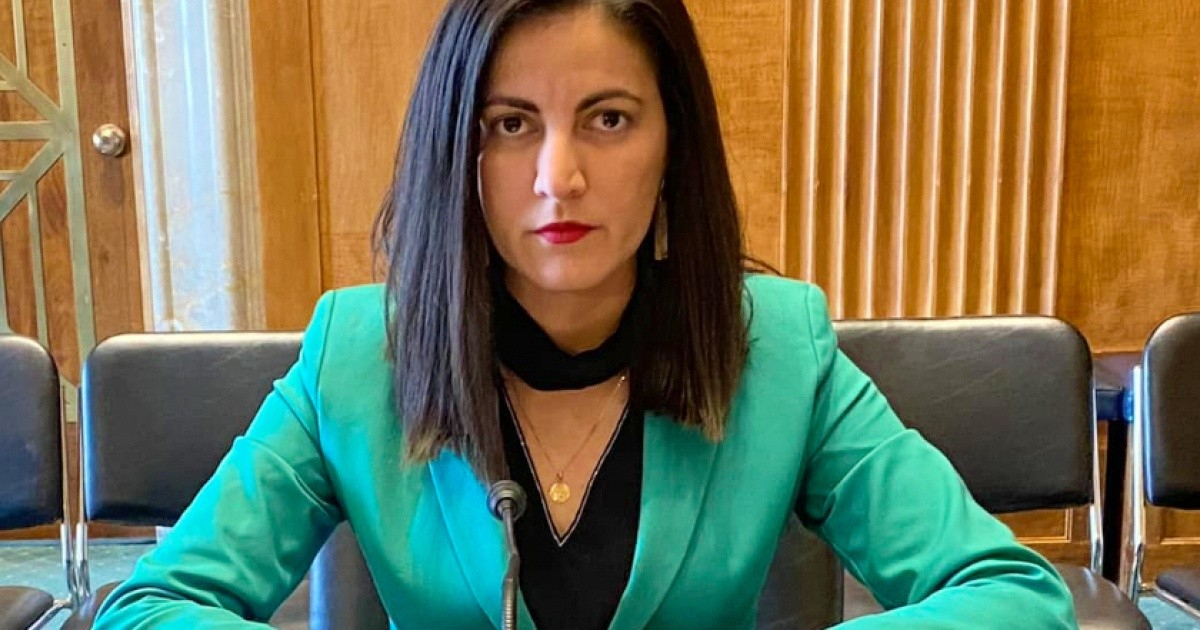
The commissioner of the Inter-American Commission on Human Rights and activist Rosa María Payá responded this Thursday to former Colombian president Ernesto Samper Pizano following a message on X in which he defended Cuba's role in the peace processes in Colombia.
Samper, who governed Colombia from 1994 to 1998, stated that “if it hadn't been for Cuba, Colombia would not have been able to glimpse peace with the FARC nor attempt it with the ELN,” and urged that Colombia refrain from participating in what he called “this vandalistic process” against the island, referring to international sanctions.
Payá refuted that argument and responded, "If it hadn't been for the Cuban regime, the ELN would not have been founded."
In a post on X, the activist recalled that the origins of the guerrilla group are directly linked to the Cuban Revolution: in 1962, Colombian students sponsored by Fidel Castro's government formed the José Antonio Galán Brigade in Cuba, the original core of that armed organization.
Regarding the Cuban doctors that Samper presented as a symbol of solidarity, Payá was equally direct: "If the Cuban regime had not existed, Cuban doctors would not have to endure slave-like working conditions abroad and could choose where to work without the dictatorship taking up to 90% of their salary and their passports."
He also refuted the argument regarding COVID-19 vaccines. According to Payá, it was the regime itself that rejected the doses offered by the United States through the UN, which resulted in Cuba recording one of the highest estimated excess mortality rates from COVID-19 in relation to its population.
The activist expanded on her assessment of the humanitarian crisis on the island: "Between the years 2021 and 2024, while Maduro was sending tens of thousands of barrels of oil daily to the island, it is estimated that the Cuban population decreased by approximately 2 million people (~20% of the population). It is not just the exodus; it is also the deaths."
Payá also pointed out against GAESA, the military conglomerate that controls the Cuban economy: "It operates like a private company of the Castros, with billions of dollars in foreign accounts. These are resources stolen from the Cuban people, and not a cent is used to alleviate the humanitarian disaster."
A report on GAESA published by the BBC documented assets of at least $17,894 million as of March 2024.
The exchange occurs at a time of high diplomatic tension between Colombia and Cuba. On July 27, the elected Colombian president Abelardo de la Espriella announced the complete break of diplomatic relations with Cuba and Nicaragua, labeling them as "tyrannies."
The Cuban regime responded labeling the measure as "hostile and unfounded."
Payá positively evaluated that decision: "Stepping away from dictators, as President De la Espriella announced, is an act of solidarity," and urged other governments on the continent to follow that example.
Samper reserved a final message for him without ambiguity: "Defending the criminals in power in Cuba is not only an offense to their victims; it is complicity."
And he closed with a direct request to the former president: "Now that you know, you could modify your version (not the reality): out of respect for the truth, for the Cubans and for the Colombians."
Related videos:
Filed under: