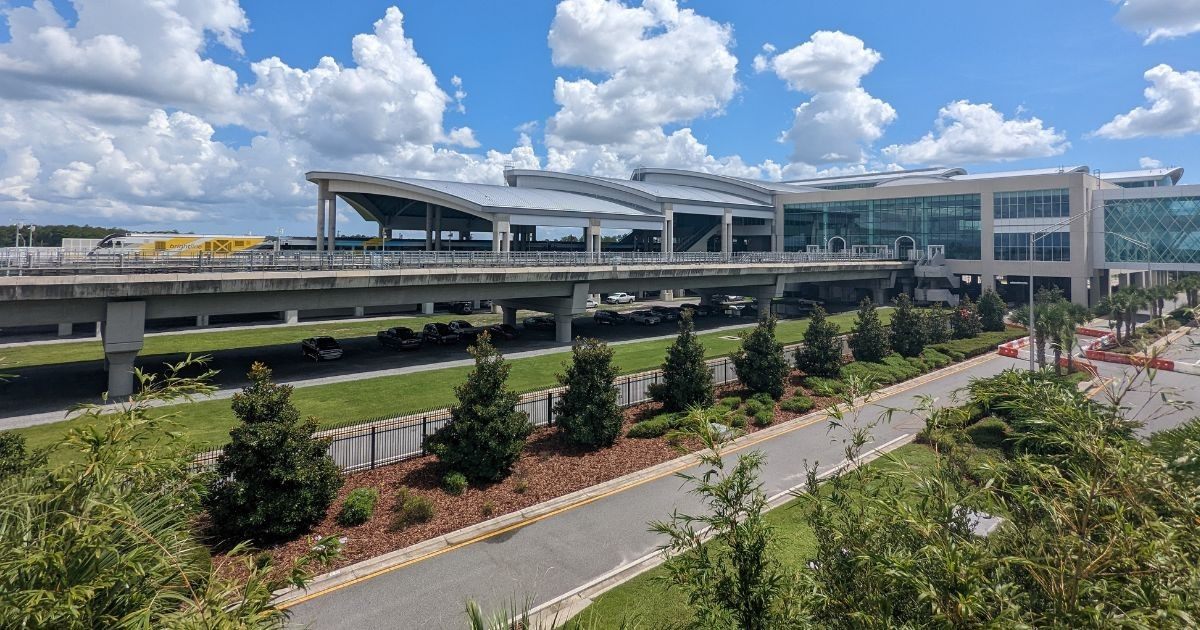
The Orlando International Airport (MCO) established itself as the busiest airport in Florida in 2025, ahead of those in Miami and Fort Lauderdale, according to the annual report from the Airports Council International–North America (Airports Council International–North America, ACI-NA), published last Monday.
MCO received 57,675,573 passengers last year, an increase of 0.8% compared to 2024, while Miami International Airport (MIA) ranked second in the state with 55,314,661 passengers.
Fort Lauderdale-Hollywood recorded 32,208,419 passengers, a decrease of 8.5% compared to the previous year.
Nationally, Orlando climbed from ninth to seventh place among the busiest airports in the United States, in a year when overall air traffic in North America fell by 0.7%.
The growth of MCO was primarily driven by international tourism: the airport recorded an increase of approximately 8% in travelers from abroad, with nearly 8.5 million international passengers in 2025.
The opening of three new non-stop routes —Paris, Munich, and Madrid— directly contributed to that surge.
Domestic traffic, on the other hand, dropped slightly by 0.4%.
Lance Lyttle, executive director of the Greater Orlando Aviation Authority (GOAA), the government agency that manages the airport, noted that the figures for 2025 are "a reflection of the continuous growth and global appeal of central Florida."
"They also demonstrate why it is important to adopt a strategic vision focused on improving customer service and addressing critical infrastructure needs," he added.
The six airports that surpassed MCO in the national ranking were Atlanta (Hartsfield-Jackson, with 106.3 million passengers), Dallas Fort Worth (85.6 million), Chicago O'Hare (84.8 million), Denver (82.4 million), Los Angeles (73.7 million), and New York's John F. Kennedy (62.6 million).
The GOAA emphasized that "the ranking of the airport as the busiest in Florida demonstrates the strong demand in the region and reinforces Orlando as a preferred destination for visitors, connections, and business investment."
MCO offers more than 170 non-stop destinations, including routes to Cuba, and is the only airport in the United States connected to an intercity high-speed train service (Brightline), linking Orlando with Miami and south Florida since 2023.
The airport covers an area of 11,605 acres, making it the fourth largest commercial airport in the country by land area, and it generates a regional economic impact exceeding $41 billion annually, according to official data from the GOAA.
The outcome of 2025 comes as MCO progresses in its ambitious strategy "Elevating MCO", supported by a capital improvement program of approximately $5.9 billion.
The plan includes the expansion of Terminal C, a new baggage handling system for terminals A and B, an additional 8,000 parking spaces, and aims to achieve a five-star rating from Skytrax, with targets set for 2030 and 2035.
In 2023, MCO had reached its historic record of 57,735,720 passengers, a figure it nearly matched in 2025 with 57,675,573 travelers, but was unable to surpass.
Related videos:
Filed under: