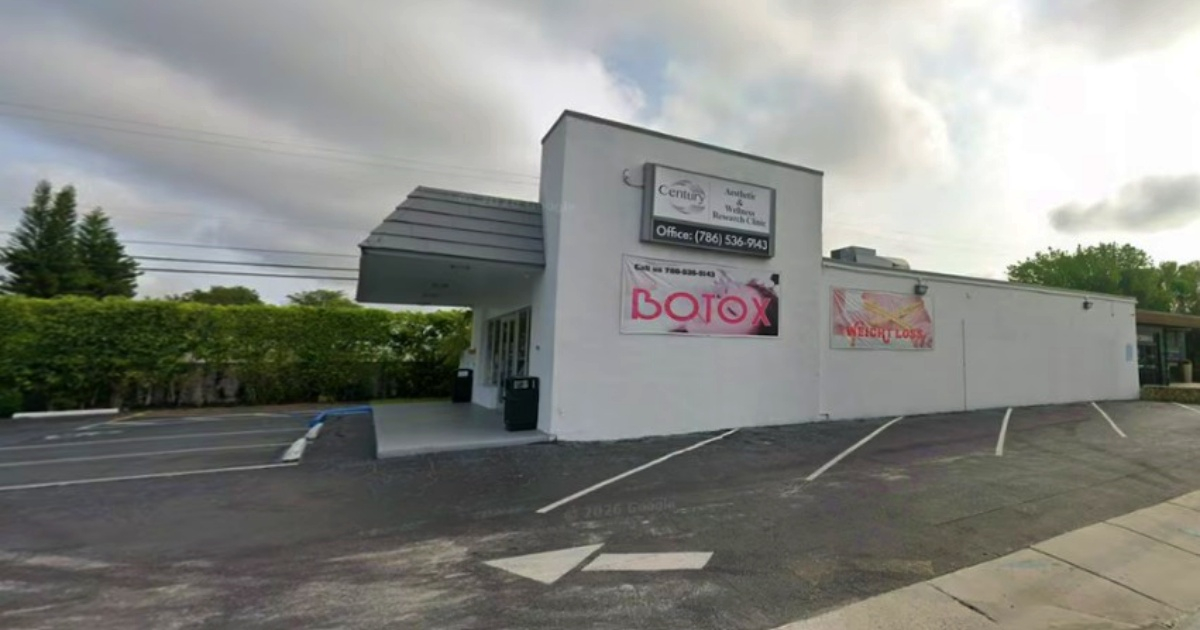
Osmel Núñez, 36 years old and owner of a medical aesthetics clinic in Miami, was arrested on July 24, accused of processing over 1.1 million dollars in fraudulent transactions by using the identities of deceased individuals, according to a report by local press.
The scheme was developed in just six weeks through the medical financing program CareCredit, issued by Synchrony Bank, and left the entity with an estimated loss of nearly $894,000.
Six weeks, 165 transactions, and 99 deceased
Núñez operated Century Research and Aesthetics, a medical aesthetics business in Miami.
In August 2025, she opened a commercial account with Synchrony Bank and linked it to her personal account at Bank of America, without recording any activity until May 13, 2026.
Between May 14 and June 22, the account processed 165 sales through 116 CareCredit accounts, accumulating over 1.1 million dollars.
Of those accounts, 99 belonged to deceased individuals, according to the arrest report.
Synchrony transferred approximately $1,056,343 to the Century Research account before reporting its loss at around $893,654.
The investigation that exposed him
It was Synchrony Bank itself that detected the irregular activity and initiated the investigations.
The vice president of Special Investigations for the entity arrived at the Century Research and Aesthetics facilities to inquire. An employee informed him that Núñez was unavailable because "he had just returned from a trip to Italy with his family."
On July 22, investigators formally interviewed Núñez, who maintained that “all transactions had been conducted at the clinic and that each account holder had attended the establishment to receive treatment.”
However, he was unable to present concrete evidence to support that version, which led to his arrest two days later.
Three charges and potentially severe penalties
Núñez faces three charges:
- organized fraud involving an amount of $50,000 or more.
- first-degree robbery of $100,000 or more.
- aggravated fraudulent use of identity information of deceased individuals.
This last offense is classified in Florida under the statute 817.568, with penalties that can reach mandatory minimums of five to ten years in prison when the fraud exceeds 100,000 dollars or involves 30 or more identities of deceased individuals.
The public report "does not specify how Núñez allegedly obtained the personal data or access to the accounts of the deceased," nor does it clarify how much money was blocked or recovered.
Another case at the epicenter of medical fraud in Florida
South Florida has one of the highest rates of medical fraud in the United States.
In June 2026, the Department of Justice announced a historic operation against healthcare fraud that charged 455 defendants nationwide for more than 6.5 billion dollars in false claims, with 12 defendants alone in the Southern District of Florida.
Núñez's case stands out for its mechanism: instead of billing insurance companies like Medicare or Medicaid for services not provided, the accused allegedly took advantage directly of CareCredit accounts belonging to deceased individuals, which remain active if family members do not notify the bank.
Related videos:
Filed under: