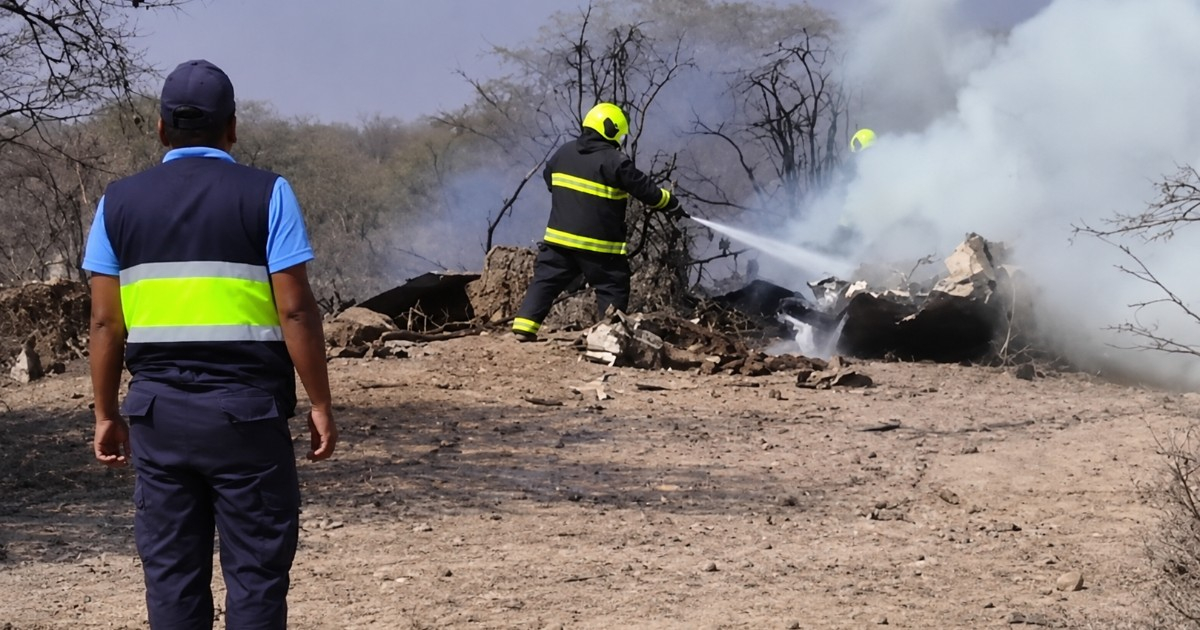
A small aircraft from the Peruvian company Aerodiana crashed this Saturday in the area of Pueblo Viejo, in southern Peru, while conducting a sightseeing flight over the Nazca Lines, resulting in 13 fatalities: 11 tourists and two crew members, as reported by the EFE agency.
The aircraft had departed from the Pisco air terminal shortly after noon local time, headed for the geoglyphs located in the desert of the Ica region, one of the country's major tourist attractions.
According to the tour guide Juan Valdivia, who witnessed the event, "the aircraft had apparently completed its flight path and was approaching the Nazca airport when it lost communication with the control tower, and another small plane in the same area saw the accident."
After the impact, the aircraft caught fire. There were no survivors.
The provincial municipality of Nazca confirmed the incident in an official statement and expressed its "deep sorrow" for the victims.
The police cordoned off the area while waiting for the on-duty prosecutor and the aviation authorities, who are responsible for determining the causes of the accident.
The identity and nationality of the passengers had not been officially confirmed in the initial reports, although some media outlets preliminarily indicated the possible presence of Italian tourists among the victims.
The accident occurred one day after the Ica region recorded an intensification of the Paracas winds, measured by the National Service of Meteorology and Hydrology (Senamhi) at up to 50 kilometers per hour in Pisco, which caused a sandstorm in the area on Friday.
The authorities have not confirmed whether the weather conditions directly influenced the incident.
The municipal statement indicated that "the investigation of the accident and the oversight of aviation operations fall under the purview of the competent authorities, who will determine the causes and responsibilities in accordance with the law."
This accident is the deadliest recorded in the area in recent years and adds to a documented history of mishaps in tourist flights over the geoglyphs: in February 2022, seven people died, including three Dutch and two Chileans; in 2010, six were killed in the crash of a Cessna 206; and in 2008, five French tourists lost their lives.
The Nazca Lines, declared a UNESCO World Heritage Site in 1994, are geoglyphs created between 200 B.C. and 600 A.D. that span approximately 450 km² in the southern Peruvian desert and can only be fully appreciated from the air.
Related videos:
Filed under: