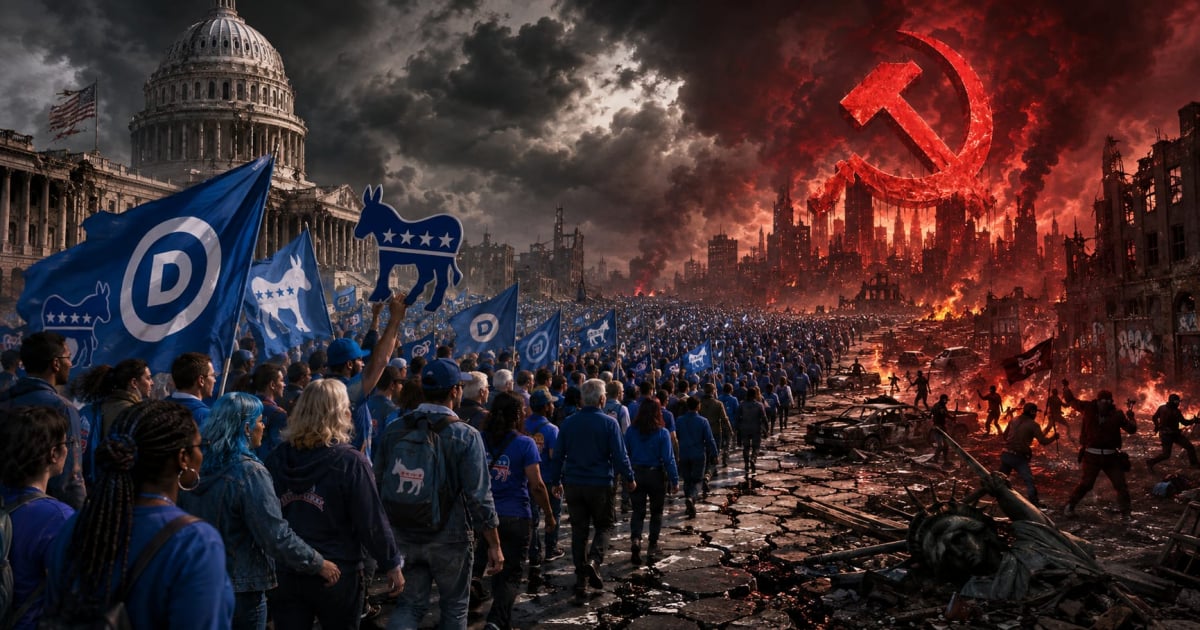
The Democratic Party of the United States is increasingly leaning towards extreme left positions and this should seriously concern all Americans, regardless of their political affiliation. The best evidence is not only found in the speeches of its most radical figures, in campaigns against private enterprise, or in the growing hostility towards certain traditional values of the nation. It is also evident in the limited support received for a recent declaration of principles called “Promise to America.”
The document, promoted by Democratic Congressmen Tom Suozzi and Adam Gray, includes assertions that, until just a few years ago, would have been considered completely normal within either of the two major American parties. Its signatories declare that they are capitalists, not socialists; that they seek security, not anarchy; that they believe in responsibility, not recklessness; that they want a government that solves problems rather than creates them; that they are moderates, not extremists; and that they take pride in the United States, not shame in their country.
What sensible democrat could reject such principles?
It is not an extremist platform or a radical partisan statement. On the contrary, it is a set of coherent, positive ideas deeply connected to the values that made the United States great: economic freedom, individual responsibility, respect for the law, political moderation, patriotism, and trust in democratic institutions.
However, the statement has been publicly supported by only fifteen Democratic figures: ten members of the House of Representatives and five congressional candidates. This is an incredibly low number for a party that has hundreds of lawmakers, governors, mayors, candidates, and national leaders.
The vast majority of Democratic politicians should have signed a document like this immediately. The problem is not only that many have not done so, but what that silence may signify. Are they uncomfortable declaring themselves capitalists? Do they fear publicly stating that they are proud of the United States? Do they consider it controversial to advocate for security, order, fiscal responsibility, and moderation?
Not signing the document does not necessarily mean that every Democratic leader rejects all of its principles. Some may cite tactical reasons, lack of knowledge about the initiative, or disagreements with certain formulations. However, when such a fundamental statement receives such limited support, it becomes inevitable to wonder where the party is heading: Quo vadis Democrats?
In recent decades, increasingly influential sectors of the Democratic Party have replaced traditional democratic liberalism with a discourse that portrays capitalism as a form of oppression; the police as an enemy of society, borders as something morally questionable, and American patriotism as an expression of arrogance or intolerance.
These positions are no longer found only in small university groups. They have infiltrated electoral campaigns, political organizations, media, and party structures.
The United States needs a strong, democratic, and responsible Democratic Party. A great nation does not benefit when one of its two main parties moves toward the extremes. Democracy requires political alternatives, debate, and balance, but it also needs a shared commitment to the essential foundations of the system.
American capitalism, with its flaws and the ongoing need to correct mistakes, has generated prosperity, innovation, and opportunities like no socialist system ever has or ever will. Public safety primarily protects the most vulnerable. National pride does not mean denying historical mistakes, but rather recognizing that the United States remains an exceptional nation due to its Constitution, its freedoms, and its capacity for renewal.
That only fifteen Democratic figures have publicly signed this declaration is a cause for concern. The issue is not that there are differences between Republicans and Democrats; that is natural and healthy. What is troubling is that fundamental principles of the nation seem to have become uncomfortable or controversial issues within one of its major parties.
The Democratic Party must decide whether it wants to reclaim its moderate and patriotic tradition or continue moving toward a radical left that could distance it from millions of Americans. What is at stake is not only the future of a political organization but also the stability, prosperity, and greatness of the United States.
Related videos:
Filed under:
Opinion article: Las declaraciones y opiniones expresadas en este artículo son de exclusiva responsabilidad de su autor y no representan necesariamente el punto de vista de CiberCuba.