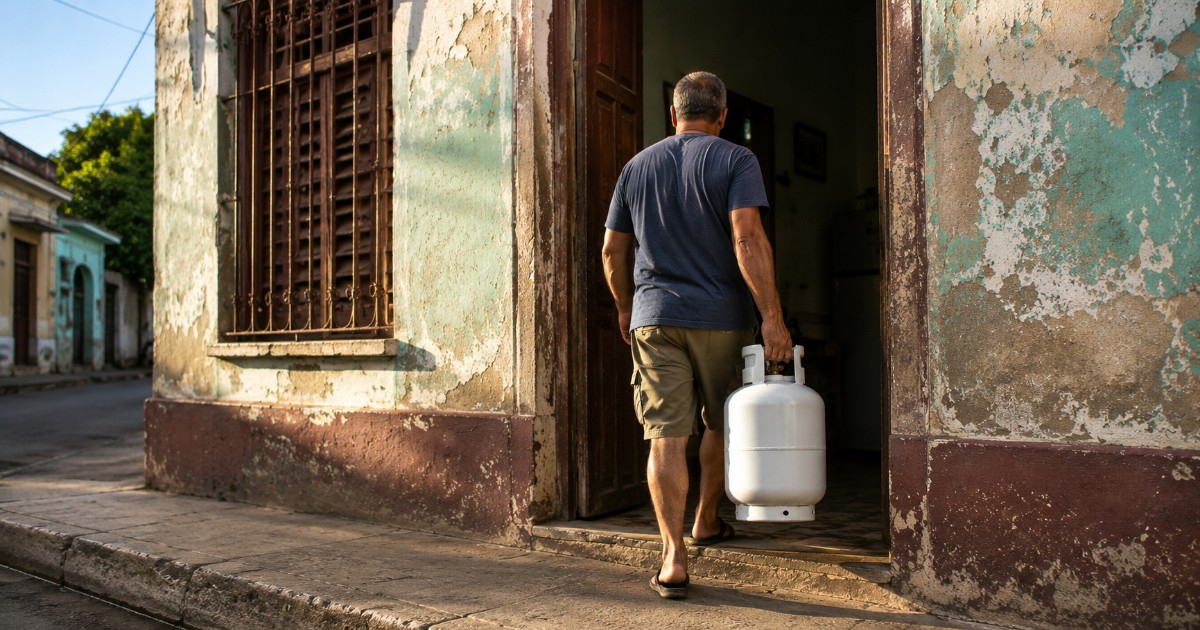
A Cuban alerted on Facebook about an alleged scam involving individuals posing as liquefied gas sellers on WhatsApp to steal personal information and clone their victims' accounts.
In the report, she describes how she contacted a Cuban number identified on WhatsApp, which offered bottled liquefied gas for sale in dollars.
Upon expressing interest, the Cuban account requested his address, identity card number, and phone number in order to prepare a supposed "pre-contract." Minutes later, he received a message from a number in the United States.
"The other brazen scammer tells me that she is the boss of the little bullets and that she will send me the invoice number. I should receive a call from her, and a six-digit number will appear on my screen, which I should copy and tell her, as it is the invoice number," he recounted.
The complainant immediately identified the deceit: "It seems that the one from here and the one from there are working together. When they ask you for all your information, I imagine it’s to get into your account."
The described procedure aligns with a form of fraud aimed at obtaining the verification code for WhatsApp, which allows the registration of an account on another device and impersonates someone's identity to their contacts. A commenter on the post summed it up bluntly: “That’s for cloning WhatsApp”.
Several people in the comments confirmed that they were victims of that scam. The Cuban insisted on action from the authorities, both on the island and abroad: "Let the one over there be pursued by Interpol and the one here by Cuban justice."
A scam that feeds off the gas crisis in Cuba
This type of fraud arises in the context of an extreme fuel crisis in Cuba. Since January 2026, CUPET suspended the distribution of liquefied gas in most provinces of the country due to a lack of supply.
The government set the official price of liquefied gas in July 2026 at 350 Cuban pesos for a 10 kg canister, but in the informal market, those same canisters are being resold for between 10,000 and 70,000 pesos. Desperation drives many Cubans to seek alternatives on social media, where scammers are waiting.
CUPET issued alerts in May and June 2026 regarding fake websites and accounts impersonating their identity to sell supposed balitas in dollars, with prices almost identical to those in this scam.
The Bank of Credit and Commerce (Bandec) also warned in April that no legitimate process requires sharing the WhatsApp verification code.
The comments on the Facebook post were overflowing with outrage and advice. "We all know about the needs we have concerning liquefied gas, and sometimes we fall into the hands of these unscrupulous people out of desperation," wrote the complainant herself.
Several users warned about the coordinated pattern among accomplices inside and outside of Cuba. The most common recommendation among those who reacted to the report was clear: "Do not provide any information through that channel. Conduct any process directly with the agency or through a means you are familiar with and that is truly secure."
Related videos:
Filed under: