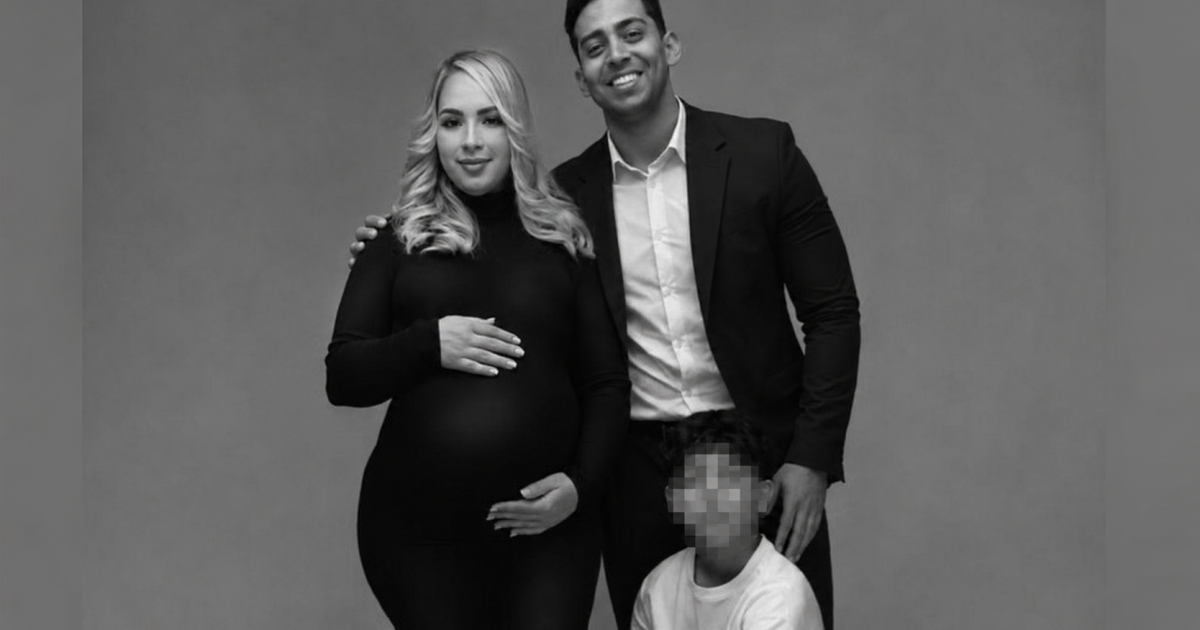
This Friday, Dairon Fuentes, the young Cuban I-220A, who had been imprisoned in Texas after requesting voluntary departure and being returned to the United States because Cuban authorities did not accept his entry into the Island, arrived in Havana. He landed at José Martí airport on the flight that carried 127 Cubans deported from the U.S. This time, he was indeed allowed to enter his country, as confirmed by his wife to CiberCuba.
Her name is Ailyn Hernández, and she is left alone in the United States, caring for a 24-day-old baby that the couple just had, and for their older child, who is 11 years old. Hernández is a resident, and her only hope is that by next year at the latest, her I-130 petition submitted for her husband two years and five months ago will be approved.
Ailyn Hernández was working and driving a car beyond the 36 weeks of a pregnancy she spent almost entirely alone because Dairon Fuentes was detained in Texas on December 4, 2025, during a routine appointment with ICE (Immigration and Customs Enforcement). After seven months in detention, he requested voluntary departure from the United States to avoid accumulating a deportation record and to be able to reunite with his family in the future. However, despite having no criminal record, he was unfortunate in that the Cuban immigration authorities refused to accept him, and he was returned to prison in Texas.
She met her youngest son, a newborn, thanks to a family friend who took Ailyn and her baby to the detention center after the young mother was discharged from a hospital where she had been treated for postpartum complications.
The circumstance is that Dairon Fuentes entered the United States before Ailyn Hernández. She arrived later with their eldest son (who is now 11 years old), and at the border, they were granted parole, allowing them to apply for the Adjustment Act. In contrast, he received an I-220A and was detained during a routine appointment with ICE last Christmas.
Despite the painful family separation, Ailyn Hernández finds comfort in the fact that her husband was granted voluntary departure, as other detainees who were with him in prison were deported. She feared that things would get complicated and he would ultimately be sent to Africa.
This Friday, she called USCIS to inquire about her husband's I-130, and they told her that if they haven't responded by this date in 2027, she can file a complaint.
"The officer who gave my husband the documents told him that he could come back with a visa whenever he wanted," states Ailyn Hernández in remarks to CiberCuba.
"Today my husband arrived in Havana. It's really tough, but at least he retained the voluntary departure, and now we just have to wait with faith for the I-130 approval process. At least they didn't send him to Africa, as I see they're doing. He was accompanied by a young man who entered in 2023 with a 2-year parole, who was never granted bail and chose not to continue and signed his deportation," Hernández noted.
This Thursday, the first flight of deportees sent by the United States to Liberia landed at the Roberts International Airport in Harbel, just outside Monrovia, under an agreement allowing the African country to accept up to 1,200 migrants from third countries over the next 12 months. Dairon Fuentes was fortunate not to be included in that flight, which has confirmed the presence of Cubans.
Related videos:
Filed under: