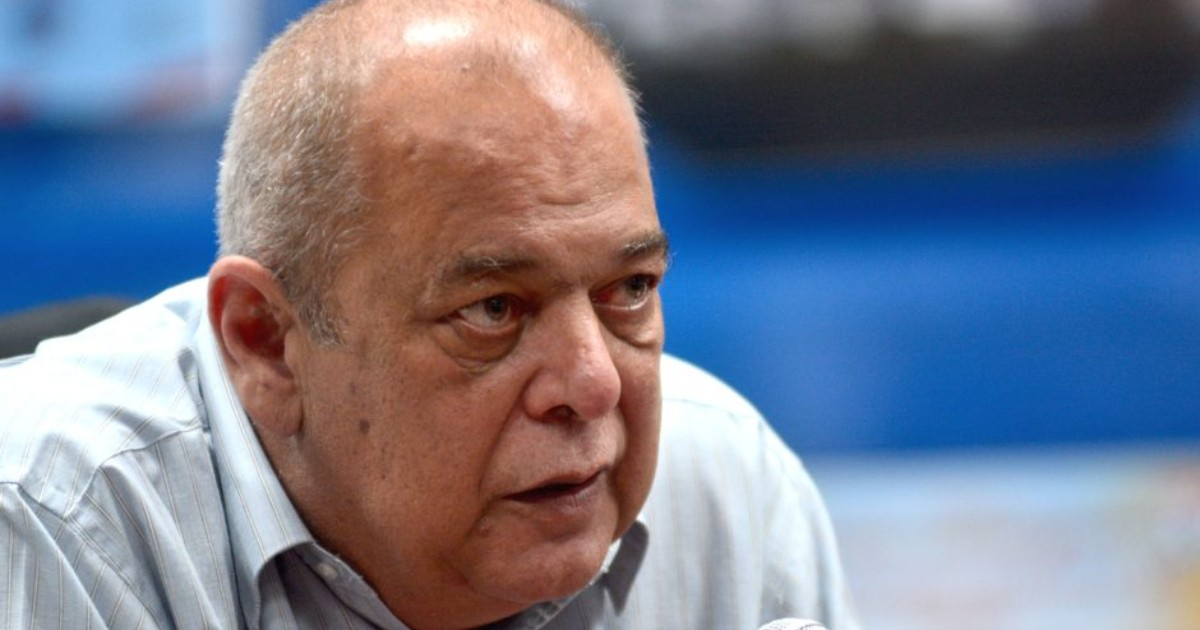
A Cuban woman demanded that the Minister of Energy and Mines, Vicente de la O Levy, publicly explain which electrical circuits in Havana are prioritized and why some have service while others experience outages lasting over 30 hours.
Elizabeth González Aznar, a resident of the La Lisa municipality, directed her complaint this Wednesday to both De la O Levy and the director of the Electric Company of Havana and asked other Cubans to support her if they agree.
"I would like that just as the distribution and addresses of the different blocks and more recently the circuits for the blackouts were published, they also publish which circuits are non-interruptible or prioritized and the reasons they are prioritized," he wrote.
González called for "clarity and transparency" regarding the criteria used to determine those priorities, after experiencing a huge disparity in service distribution in his own area.
"For me, it is bewildering to be without electricity for more than 30 hours and then have it for just two, while observing near my home a circuit that never shuts off and not knowing the reasons behind that decision," he stated.
The woman pointed out that she understands that certain circuits remain protected when supplying essential facilities, such as hospitals, but questioned those cases where residents cannot identify any service of that nature.
As he explained, the lack of information fuels speculation among neighbors about possible privileges.
"From there arise the musings or speculations among the people about the motives, whether it's for money or for the names of those who live there," he noted.
The Havana resident stated that she has already raised the issue with the Municipal Committee of the Communist Party in La Lisa, the Municipal Assembly, and the Local Business Unit of the electrical service in the area, but she said she has always received the same response: “superior decision.”
Is that information secret? Why can't the public know which prioritized circuits have direction? he questioned.
For González, publishing that information would also allow citizens to detect and report possible irregularities: "A circuit that remains on due to corruption or favoritism, is electricity taken away from another, and that's not fair, at least not to me, I won't stand for it," he stated.
He also rejected the possibility that the residence of officials could become a reason to prioritize a circuit: "I don't see why if a minister lives in a certain place, that should be a prioritized circuit. Why?" he asked.
The report also mentions a story that, according to González, is circulating among residents of San Agustín, in La Lisa, about a circuit that allegedly remains active because individuals connected to personal security live there.
The author herself stated that she was unaware of even the number of that circuit and did not provide any evidence to confirm that version.
"What importance does that companion have over a doctor on duty who saves lives, or a worker on shift at a factory?" he questioned.
González also requested explanations regarding the differences between the circuits that are subject to blackouts.
According to his testimony, while some receive only two hours of electricity, others can get up to eight hours of service, and when he calls 18888, the response is that the latter are "prioritized," without any explanation given.
He also demanded that a clear mechanism be established for reporting possible irregularities, stating that the available phone numbers, including 18888, clarify that their function is solely to provide information.
The Cuban noted that it would be "painful" to use justifications to declare a circuit as unquenchable in order to benefit certain individuals: “So where is the socialism that the president insists is not being renounced?” she asked.
At the end of his publication, he requested that the complete list of prioritized circuits and the reasons for maintaining that status be disclosed.
González stated that he recalled previously seeing a figure of 92 circuits and requested that the authorities clarify and update the actual number.
The complaint comes after numerous reports of significant disparities in the distribution of power outages across Havana.
In June, for example, a resident of Playa reported 40 consecutive hours without electricity while the block in front of her home had experienced less than 16 hours without service.
Other residents of Havana then claimed that there were circuits that were practically never disconnected.
Doubts increased when the Electric Company abandoned the management of block power outages in July and began managing them individually by circuits.
Suspicion about possible irregularities has been particularly strong in La Lisa.
At the beginning of August, residents of San Agustín reported that their electricity was deliberately cut off and accused workers of diverting it to other users.
The reports of inequality predate even the current system of circuits.
In May, residents of Havana reported that certain areas remained powered while others endured blackouts of over 12 hours, and several users attributed this discrepancy to the presence of officials or influential individuals.
Related videos:
Filed under: