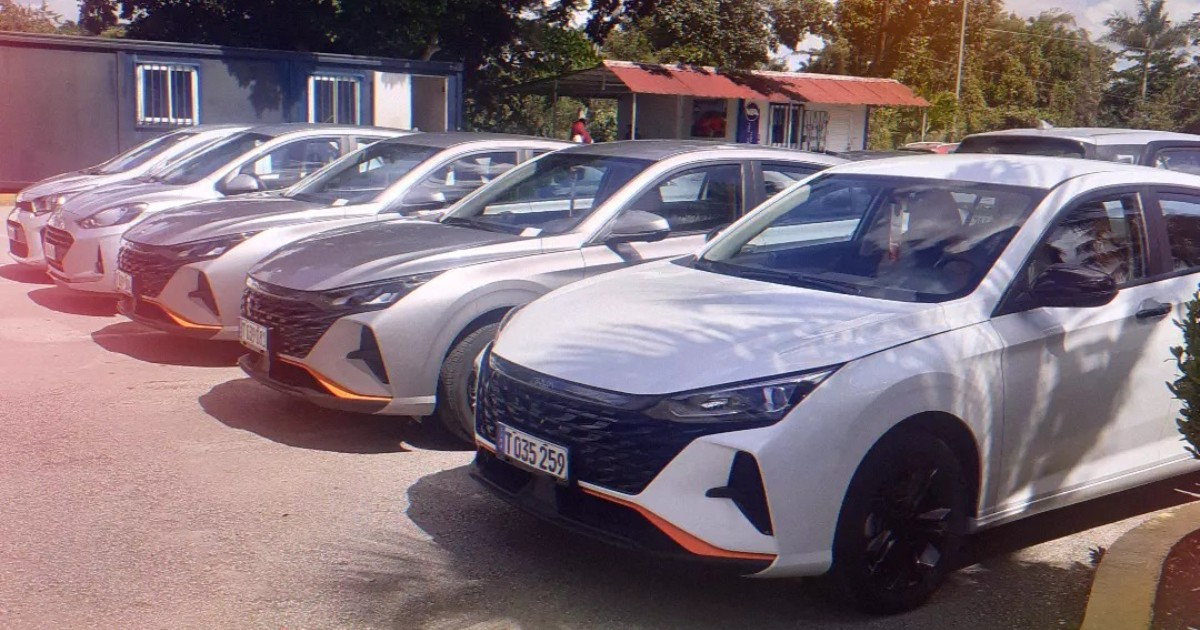
The vehicles from Transtur declared as technically retired due to accidents or deterioration may be sold in Cuban pesos (CUP) within the replacement process, provided they retain certain components deemed essential, even if they have damages or lack other parts.
The Facebook page of Servicios Automotores S.A. (SASA) outlined this Wednesday the established requirements for these vehicles and explained that the procedure aims to allow units that previously ended up disassembled to be reclaimed by the individuals who purchase them.
According to the entity, the current mechanism derives from a previous procedure that only authorized the change of the body, without the engine or transmission.
Following requests from the community, the process has been adjusted to allow for the delivery of Transtur vehicles declared as technically obsolete that can be restored by their new owners.
The purpose, according to the publication, is that anyone who can assume the necessary investment to recover the car has the opportunity to obtain "a more modern vehicle than those currently owned".
SASA acknowledged that the condition of the available units can be very poor, as some have significant damage due to accidents, others are incomplete, and there are also cases with failures in major components such as the engine, transmission, or air conditioning system.
In light of this reality, the minimum requirements for a vehicle to be commercially sold under this procedure have been standardized, regardless of the technical condition of some of its parts.
The entity clarified that, for the purposes of this process, it considers a "complete vehicle" to be the combination of body, engine, and transmission.
Among the elements that can never be absent, even if they are faulty, are the engine and the transmission with their internal components, the transmissions, and the components of the suspension and steering systems, including both axles.
The cabin must also be complete and include the seats, the steering wheel, the instrument panel, and the original electrical controls and under-dash of the vehicle.
The components of the brake system must be completely present, even if one of them may be damaged.
The bodywork must also retain all its panels, parts, and pieces, except for those that have been completely lost as a result of the accident.
Instead, the absence of certain components will not hinder the sale of the car.
In that category, SASA included the alternator, starter motor, and air conditioning components such as the compressor, condenser, evaporator, and interconnecting pipes.
The lack of injectors, spark plugs, coils, sensors, fuel gauges, front, rear, or side lights, tires, bumpers, cables, and other components of the electrical system, as well as windshields or broken glass during an accident, will not hinder the marketing.
The publication also includes among those pieces an element identified verbatim as "Clanes," without providing any further description or clarification of that term.
Customers will be entitled to receive up to two allocation opportunities among the available vehicles at that time for the service.
When a person receives an assignment via email, they will be able to download photographs and the unit completion model as a reference.
SASA insisted, however, that the interested party must inspect the vehicle in person before accepting.
The entity recommended that those without knowledge of mechanics or the automotive sector come accompanied by someone with experience, so they can make an independent decision on whether to accept the first option or wait for the second and final available assignment.
The most important warning comes after completing the transaction: once the acceptance document has been signed, the vehicle has been invoiced and paid for, "there is no right to a refund".
SASA also does not assume the obligation to sell to the buyer any missing or damaged parts or components that were absent or in poor condition at the time of purchasing the car.
The sale in national currency of recoverable vehicles originating from tourism is not a completely new measure.
In 2024, the government announced that SASA could sell cars from the tourism system in CUP or other entities that were declared non-marketable but potentially recoverable.
The regulations stipulated that vehicles that had been technically retired but deemed recoverable could be allocated for resale in Cuban pesos, through a ranking organized by the authorized entity.
More recently, at the beginning of August, the regime published a new regulatory package on the buying, selling, importing, assembling, and recovering of vehicles, as part of a broader reform of the Cuban automotive market.
The clarification now published by SASA specifically focuses on the minimum conditions that damaged or accidented vehicles from Transtur must meet in order to be assigned and sold within the replacement process.
Related videos:
Filed under: