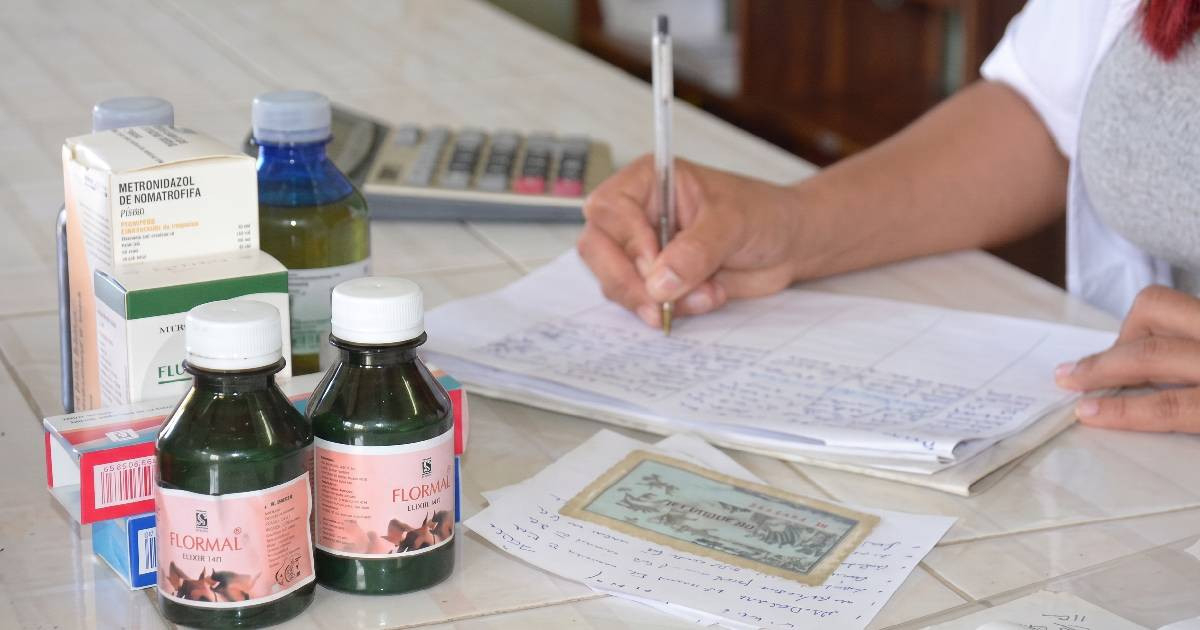
The Cuban regime launched in Havana Farma Joven, a project promoted by the Communist Youth Union (UJC) to distribute donated medicines from international solidarity brigades among the capital's population, as reported this Friday by the state media Juventud Rebelde.
The initiative is part of the Community Youth Network and operates through two channels: a WhatsApp group where beneficiaries send their medical prescriptions or cards to request medications, and door-to-door visits across the capital.
The active community first aid kits in the popular councils serve as a territorial distribution channel, while the team of volunteers is divided between digital platform managers and those responsible for physical deliveries, the latter mostly being students or recent graduates from Medical Sciences.
"We have a WhatsApp group where people reach out to us with their medical prescriptions or the medication card to request medications, but we also make visits and deliver medications to any neighbor who needs them," stated Leanet Proenza del Hoyo, a fourth-year Design student and project coordinator.
The program prioritizes care for elderly individuals who have lost access to their usual treatments.
"Patience and empathy are essential, as we primarily serve elderly people," Proenza del Hoyo noted, describing the main reward as "the gratitude of the grandparents who confess that they did not have access to their treatments and can now stabilize — at least as much as possible — their health."
Far from being a structural solution, Farma Joven is just another palliative within a pharmaceutical crisis that the regime itself has acknowledged as severe.
In April 2026, 461 out of the 651 medications from the National Basic List were missing in state pharmacies, which means that more than 70% of essential drugs were unavailable.
The deficit is evident across all provinces: in Villa Clara, there were 368 out of 636 medications missing; in Sancti Spíritus, over 300; and in Ciego de Ávila, the shortage reached 457 when accounting for logistical restrictions. BioCubaFarma acknowledged in July 2026 difficulties in ensuring the supply of nearly 300 of the 395 medications it was supposed to provide to the national healthcare system.
In the face of that collapse, international donations have become the daily support for hospitals and patients.
The Landless Workers' Movement of Brazil delivered 7.6 tons of medications to the Hermanos Ameijeiras Clinical Surgical Hospital in early August; Bahamas donated pediatric oncology drugs; and a Chilean group supplied the Juan Bruno Zayas Alfonso hospital in Santiago de Cuba.
On August 23, the Hermanos Cordové Pediatric Hospital in Manzanillo received medications and sanitary materials from solidarity organizations.
Farma Joven integrates into that emergency ecosystem alongside independent initiatives such as "Giving is Giving," which has been active for more than five years and requested public assistance to continue operating in March 2026.
The difference is that the new project carries the official seal of the UJC, indicating that the regime is attempting to politically capitalize on the distribution of foreign humanitarian aid through its youth structure.
With the start of the upcoming school year approaching, the project faces the immediate challenge of recruiting volunteers and increasing its outreach, prioritizing those who do not have smartphones or access to the internet.
Related videos:
Filed under: