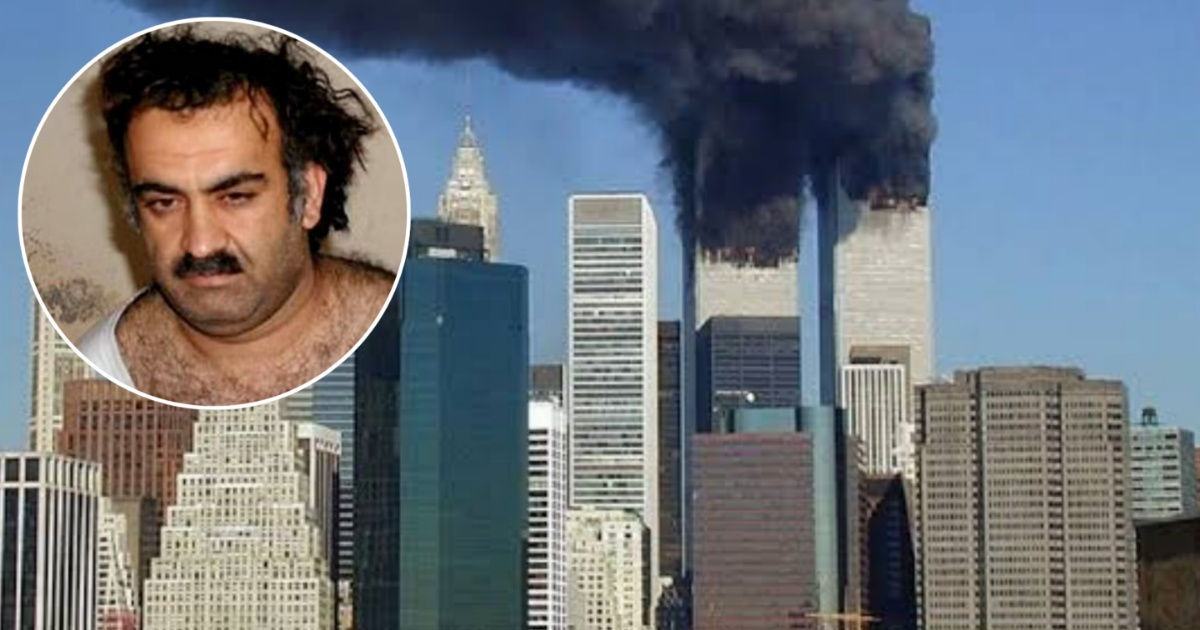
A U.S. military judge dismissed on Friday the confession made by Khalid Sheikh Mohammed, the alleged architect of the September 11, 2001 attacks, to FBI agents nearly twenty years ago, concluding that it was not made voluntarily, as confirmed by The New York Times.
Colonel Michael Schrama, the judge in the case, ruled in a 45-page decision that the interrogations conducted over four days in January 2007 at the Guantánamo prison were inadmissible as evidence.
The decision represents a significant setback for the prosecution, which considered those statements to be the most important element of its case.
In the conclusion of his ruling, cited by The New York Times, Schrama wrote: "The prosecution has not been able to prove, by a preponderance of the evidence, that Mr. Mohammed's statements to the FBI were voluntary."
The judge identified a "continuous psychological conditioning and severe coercion by the CIA" as a determining factor that extended up to the moment of the FBI interrogation.
He also noted that Mohammed did not receive the Miranda warning about his right to remain silent nor did he have access to a lawyer before being interrogated.
So far, the judge's ruling mentioned by The New York Times has not been made public.
Mohammed was captured in Pakistan in 2003 and held for years in secret CIA facilities, where he underwent 183 sessions of waterboarding and other techniques widely regarded as torture.
In 2006, he was transferred to Guantánamo, where he remains detained in maximum-security facilities.
U.S. authorities accuse him of having proposed the idea of the attacks to Osama bin Laden and of having overseen the operation that resulted in the deaths of nearly 3,000 people in New York, Pennsylvania, and the Pentagon.
The retired FBI agent Frank Pellegrino, who conducted the interrogations in 2007, defended the voluntariness of the confession to CBS News : "I couldn't have made it any clearer that he didn't have to talk to me."
However, he acknowledged that the legal determination was up to a court: "Now, if that fits what is legally required, based on other activities, a court has to decide."
Amid delays and complications
The case has accumulated more than two decades of delays and procedural complications. In 2024, Mohammed and two co-defendants reached plea agreements to avoid the death penalty, but the then Secretary of Defense Lloyd Austin revoked them.
A military judge reinstated them months later, although an appeals court annulled that decision again in July 2025.
The process is conducted before a military commission, not a federal civil court, which has led to additional controversies over the years.
Just one day before the ruling on the confession, Judge Schrama had set the trial date for June 5, 2028, with Mohammed and three co-defendants —Walid bin Attash, Mustafa al-Hawsawi, and Ali Abdul Aziz Ali— as the accused, according to the case report.
If convicted by the military tribunal, Mohammed could face the death penalty.
The prosecutor in the case, Rear Admiral Aaron C. Rugh, told the New York Times that the government will make "a decision on whether to appeal in the near future," with a five-day deadline to do so. The suppression of the confession leaves the prosecution without its strongest evidence less than two years after the trial began, in a process that identified new victims of the World Trade Center in 2023 through advanced DNA testing, with approximately 1,100 individuals still remaining unidentified.
Related videos:
Filed under: