The legal team of Nicolás Maduro filed a motion before the federal court for the Southern District of New York to dismiss the charges of drug trafficking and narco-terrorism he faces in the U.S., arguing sovereign immunity as a sitting president and the illegality of his capture, as reported by Reuters.
The mentioned agency states that the case will test “the willingness of U.S. courts to apply international law in criminal cases,” a historically challenging area for such arguments.
The defense strategy
The main lawyer for Maduro, Barry Pollack, builds his strategy on two pillars: the doctrine of personal immunity ratione personae and the alleged illegality of the operation that led his client to a cell in Brooklyn.
This doctrine, recognized by the International Court of Justice, protects heads of state in the exercise of foreign criminal jurisdiction while they are in office, for both official and private acts.
However, the argument faces a significant legal hurdle: the United States has not recognized Maduro as the legitimate president of Venezuela since 2019, which considerably weakens his claim in U.S. courts.
The precedent Noriega
The most relevant precedent in American law is the case United States v. Noriega, in which the Eleventh Circuit Court of Appeals rejected the immunity of the former Panamanian dictator Manuel Noriega with an argument identical to the one faced by Maduro today: Washington never recognized him as a legitimate ruler.
Analysts from the organization Due Process of Law Foundation describe the case as a clash between the customary international law of personal immunity and the U.S. policy of non-recognition.
Regarding the argument about the illegality of the capture, U.S. courts have historically rejected the notion that alleged violations of international law necessitate dismissing a criminal charge.
Imprisoned since January
Maduro was captured in Caracas on January 3, 2026 during the U.S. military operation “Absolute Resolution” and transferred to the Metropolitan Detention Center in Brooklyn, where he remains alongside his wife Cilia Flores.
In his first appearance before federal judge Alvin Hellerstein, Maduro pleaded not guilty and referred to himself as a "prisoner of war," insisting that he had been "kidnapped."
Both are facing charges of narcoterrorism, conspiracy to import cocaine, and related weapons offenses, with a potential sentence of life imprisonment.
This is not the defense's first legal maneuver.
In February, Pollack filed a motion citing violations of due process due to the blocking of funds for legal representation, a hurdle that was resolved in April when the Department of the Treasury authorized the Venezuelan government to pay the lawyers' fees.
Messages from the Cell
While his defense fights the legal battle, Maduro has maintained communication with the outside world from Brooklyn.
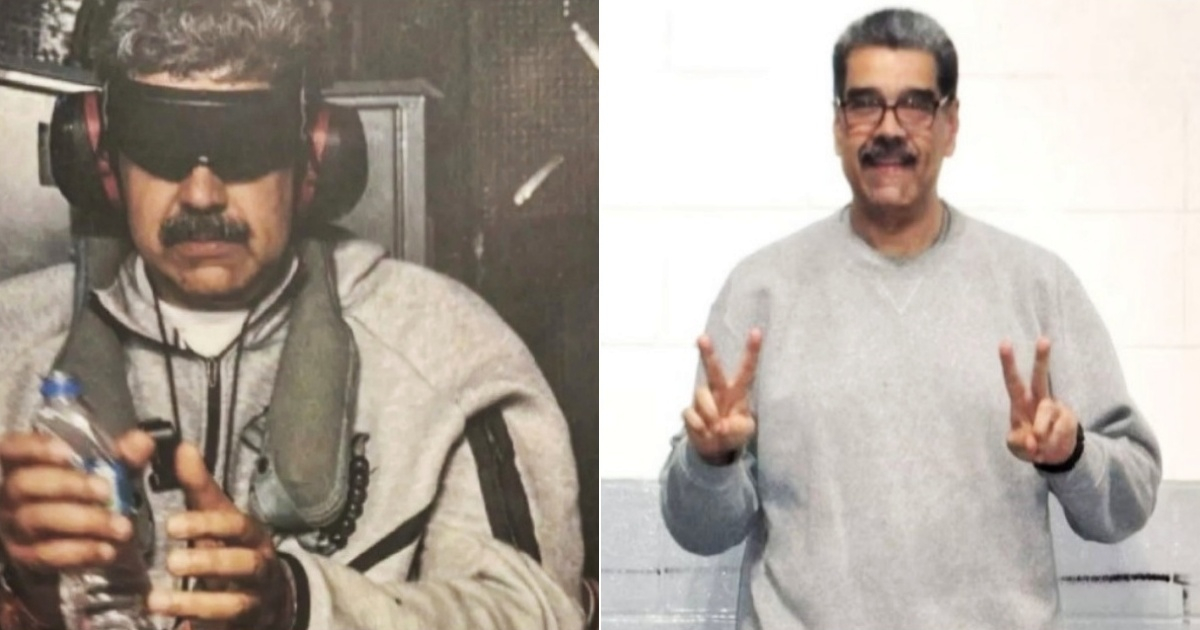
On Tuesday, he published his first known photographs from inside the prison —taken on June 25— in which he appears smiling, wearing a gray tracksuit and making the "V" sign for victory.
"I want you to know that we are steadfast," he wrote in the message that accompanied the images.
In August, he also sent a message from prison in favor of dialogue: "We welcome any path of dialogue that helps consolidate peace, coexistence, and interaction among Venezuelans."
He remained silent, however, about the oil agreement announced by the Trump administration with the government led by Delcy Rodríguez, which grants the United States majority control over more than 65 billion barrels of Venezuelan reserves.
If the motions to dismiss are unsuccessful, the trial against Maduro and Flores is currently scheduled for June 1, 2027 before the Southern District Court of New York.
Related videos:
Filed under: