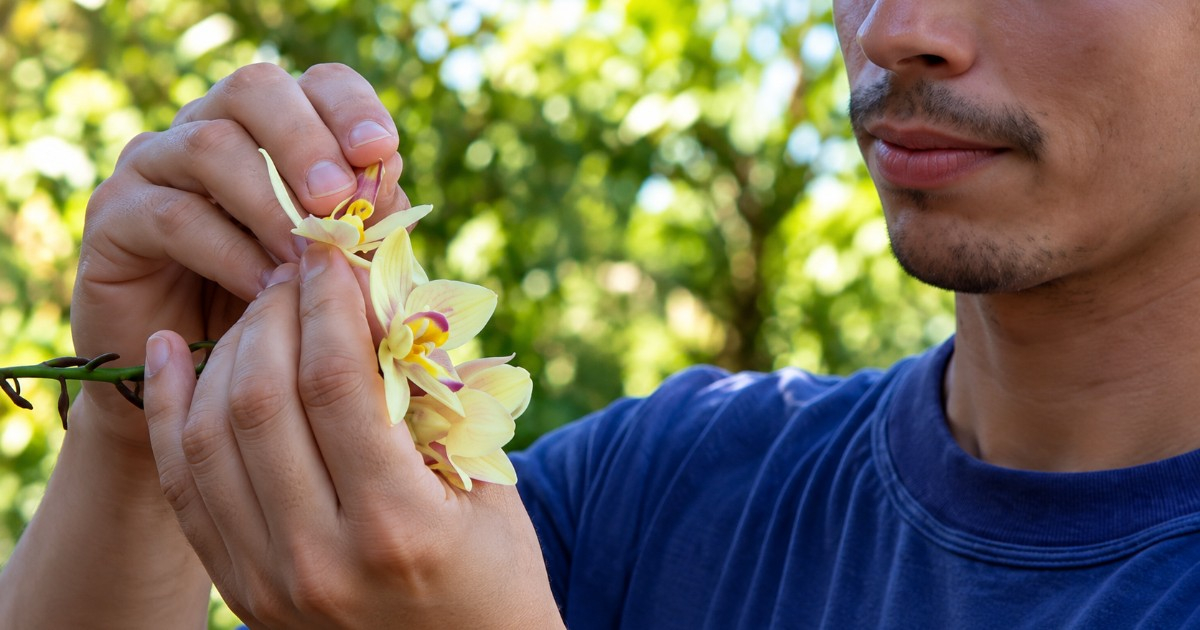
Amidst blackouts, scarcity, and the destruction of the urban landscape in Cuba, agronomist Lorenzo Suárez Guerra maintains a greenhouse at his home in San Miguel del Padrón, on the outskirts of Havana, housing over 100 species and hybrids of orchids.
The news agency Reuters described that garden as an "urban oasis" amid the crisis on the island. "Each flower is different. Their colors, their sizes, the way they are cultivated. They drive me crazy," said the expert in a recent interview.
The work that Suárez Guerra does with these plants highlights the contrast between the beauty of the flowers in his collection and the deterioration of the surroundings. Outside his garden, the streets are littered with accumulating garbage, blackouts leave neighborhoods in darkness, and misery and despair continue to grow.
Suárez Guerra did not come to orchids by chance. He began working with them in 2002 at the Superior Institute of Agricultural Sciences in Havana. Three years later, the Ministry of Agriculture funded a project for the laboratory propagation of terrestrial species that are naturalized in Cuba.
The most notable result of that work came in 2009, when it registered the first Cuban ornamental hybrid: the Spathoglottis Bella Lorena, obtained from the crossing of two varieties of the genus. The variety was registered with the Royal Horticultural Society of England and in the official catalog of the Ministry of Agriculture of Cuba.
The orchids represent "the most extensive botanical family in the plant kingdom and the most evolved. We are talking about more than 30,000 genera that make up the families," explained the specialist in a video shared by El País México.
The choice of the genus Spathoglottis was not arbitrary. "I work with it because it is a very easy genus to cultivate, terrestrial, and there was no need to use other elements in the composition for its planting," he noted.
In addition to the "Bella Lorena", Suárez Guerra obtained another genotype which he named Spathoglottis Lorita, in honor of his daughter. More than 150 specimens descended from both varieties were distributed in the western part of Cuba, including the Orquideario de Soroa in Artemisa, the leading orchid center in the country with around 700 varieties.
Currently, the specialist is working on developing hybrids that are more resilient to current climate conditions, aiming to reduce the pressure on Cuban wild orchid species, a task that becomes particularly relevant in light of environmental degradation and the lack of resources in Cuba in 2026.
"I am obtaining hybrids that are more resistant to current climatic conditions, but at the same time, more attractive and eye-catching, so that people no longer turn to the forest," assured Suárez Guerra.
Related videos:
Filed under: