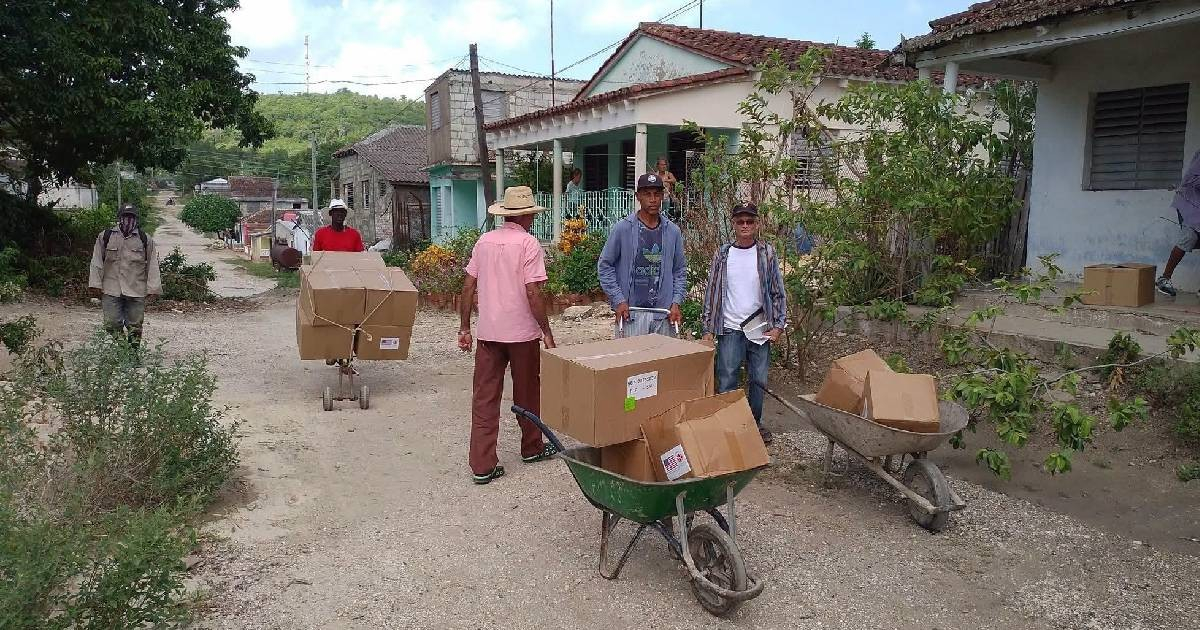
Volunteers from Cáritas Santa Clara are making progress in distributing U.S. humanitarian aid in rural communities of the northern part of the Cuban province of Villa Clara, delivering food packages and hygiene kits directly to the most vulnerable families in the area, according to posts from the organization on its social media.
The most recent event covered the locality of Lutgardita, located about 10 km from the municipal seat of Quemado de Güines, as well as the communities of Carahatas and the hamlets of La Esperanza and El Conde.
In total, about 45 modules were delivered in that area, according to the report from volunteer Víctor Manuel Fariña Machín.
Volunteer Ray Miguel described the day as intense: "It was a hard day of work with the delivery of the aid kits from the U.S. The vulnerable individuals were very grateful for the excellent quality and presence of each product delivered. The volunteers were satisfied with the work accomplished."
At Rancho Veloz, Deacon Pedro Antonio García Felipe —known as Toñy— recounted scenes of deep gratitude in each home visited: "In every home where we delivered aid, we found tears in the eyes of suffering people, but we also found gratitude to God, to the donors, to the volunteers, and there was no shortage of hugs as a sign that we are all brothers."
In the presence of the beneficiaries, the boxes were opened to verify the optimal condition of the products and confirm the quantities, as reported by the Press Office of the Diocese of Santa Clara.
The food modules contain rice, beans, brown sugar, oil, pasta, sardines, and tuna —calculated to meet the basic needs of a family for over 10 days—, while the hygiene kits include soap, toothpaste and toothbrushes, water purification tablets, sanitary pads, containers, and rechargeable lamps.
The prioritized beneficiaries are elderly individuals living alone, persons with disabilities or bedridden, pregnant or breastfeeding women, families with children under five years at risk, and single mothers with young children.
The distribution is carried out without the involvement of the Cuban regime, through volunteers from Caritas, nuns from the Daughters of Our Lady of Mount Calvary, and the parish priest Andy Acosta.
The first shipment destined for the Diocese of Santa Clara —700 food modules and 700 hygiene kits— landed at Abel Santamaría Airport on September 10 and was transferred to the church La Purísima Concepción in Quemado de Güines, where it was stored before distribution began two days later.
Last Saturday, the U.S. mission chief Mike Hammer visited Villa Clara to personally oversee the delivery and went directly to the homes of vulnerable families.
In parallel to his visit, profiles linked to the government circulated images of alleged spoiled beans, attributing them to the shipment from the U.S., an accusation that Cáritas Santa Clara publicly denied with photographs and testimonies that confirm the products arrived in perfect condition.
This operation is part of a package of 100 million dollars announced by the U.S. for Cuba in 2026, of which 60 million is channeled through the Catholic Church and 40 million through independent non-governmental organizations, in a mechanism specifically designed to prevent resources from falling into the hands of the regime.
"This mission entrusted to the Church in Cuba through its charitable arm, Cáritas, leaves us with the satisfaction of seeing the faces and words of gratitude when the modules are received by those in greatest need," stated the Press Office of the Diocese of Santa Clara.
Related videos:
Filed under: