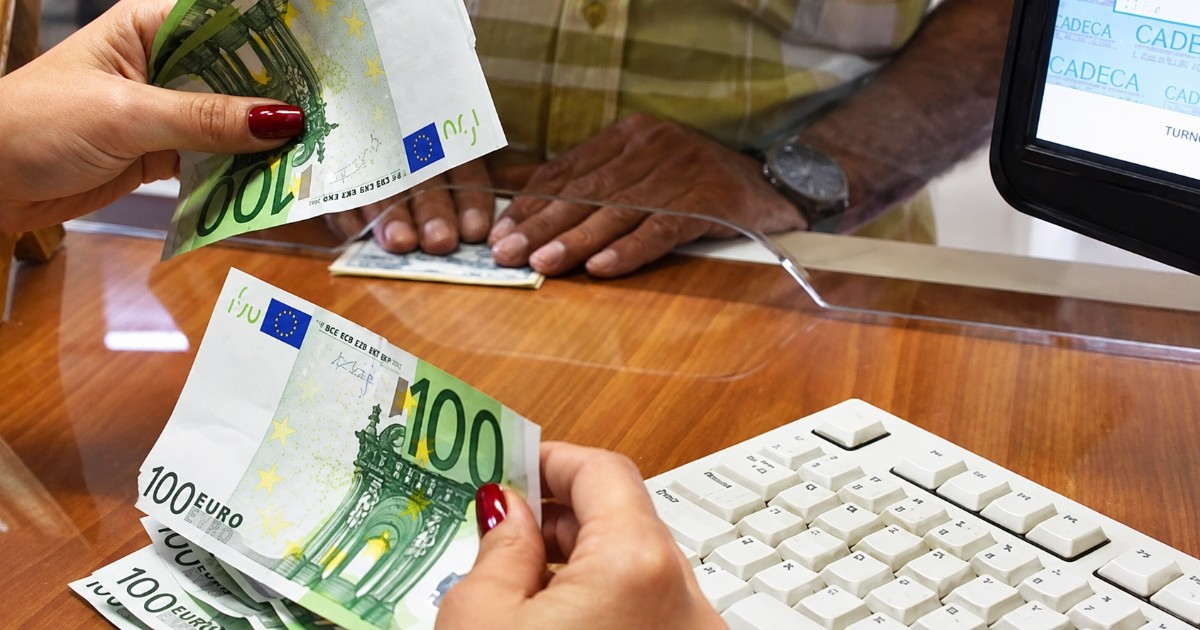
The first private currency exchange in Cuba is now operating in Santa Clara, but its significance goes far beyond just adding another location for currency exchange: the operations it conducts are providing data to the Central Bank of Cuba (BCC) to support the official exchange rate of Segment III, primarily aimed at individuals and non-state economic actors.
The information was revealed by Ian Pedro Carbonell Karell, director of the payment system of the BCC, during an appearance on the Mesa Redonda reported this Tuesday by Cubadebate.
Carbonell confirmed that the entity operates in Santa Clara as part of a pilot program and that it began operations after meeting the requirements established by the Central Bank.
The official added that the authorization was granted after complying with the regulations established by the BCC for this type of activity, which, as he explained, aim to ensure safe operations and protect the interests of consumers.
He also stated, albeit without providing specific details, that the currency exchange could have a positive impact on the operations and daily life of the area where it is located.
But the most significant aspect of his explanation was the use that the BCC is making of the information generated by the establishment.
According to the official, transactions of the private house "do not respond to postings on social media or to intentions to buy or sell, but rather to actual, settled, and confirmed exchange operations," data that allows for "a better foundation" of the official rate currently being established by the Central Bank for Segment III.
In other words, the currency exchange does not solely function as an intermediary between buyers and sellers of foreign currencies: the transactions it already conducts are serving as a source of information to support the establishment of the official rate.
This role takes on particular importance in a Cuban market where for years there has been a wide gap between the official rates and the rates used in informal transactions.
However, the official explanation still leaves several essential elements unanswered in order to understand the true scope of the experiment.
The name of the exchange house was not disclosed, nor who its owners are. Its exact address was also not published, nor its hours of operation, which currencies it buys or sells, the rates it applies, any potential fees, limits per transaction, or whether any citizen can go directly to make a transaction.
Much less was explained what volume of foreign currency the establishment is moving nor what impact its operations will have within the methodology used by the Central Bank to determine the rate of Segment III.
The question is not new. When Prime Minister Manuel Marrero announced in July that the first private exchange house was ready to start operating, he also did not disclose its name, its owners, location, rates, or the exact opening date.
It is now known that it is already operating and is located in Santa Clara, but many of those questions remain unanswered officially.
The lack of details caught the attention even among the readers of Cubadebate.
«The most important thing, which is regarding the private exchange house, is just one paragraph; there is no address, no exchange rates, no website or presence on social media... nothing,» questioned a person in the comments.
Another reader asked directly: «Is it possible to inform where that exchange house is?», while another one demanded to know «the name of the owner of that private exchange house».
One of the most fundamental questions for potential customers also arose: «I didn’t understand anything because it doesn’t explain if they are going to sell USD».
Another asked who the service will really be aimed at: “The new exchange house, who will it serve: state and non-state economic actors or anyone who wants to exchange?”.
These are important questions because merely knowing that a currency exchange exists does not allow for an assessment of its impact.
To determine whether it can attract operations that are currently taking place outside the formal circuit, it is necessary to know, among other aspects, at what price it buys and sells foreign currency and whether it effectively has foreign currency available to meet the demand.
It is also unclear how exactly the Central Bank will utilize that data.
The statement that the operations will help to "better establish" the official rate does not clarify which methodology will be applied, how much weight the transactions of this entity will carry, or what other operations will be included in the calculation.
Beyond an isolated experience, the currency exchange in Santa Clara is part of a much broader opening of the Cuban financial system.
The BCC confirmed this week that the country plans to allow new banks and financial institutions with state, private, and foreign capital, while there are other applications to create similar exchange houses.
The reform also includes changes in credits, remittances, fintech, cryptocurrencies, and a future platform for currency auctions.
The launch of the pilot project coincides, moreover, with a time of profound monetary changes.
This Wednesday, the new 10,000 and 20,000 Cuban peso notes began to circulate, the highest denominations issued by the country so far.
Related videos:
Filed under: