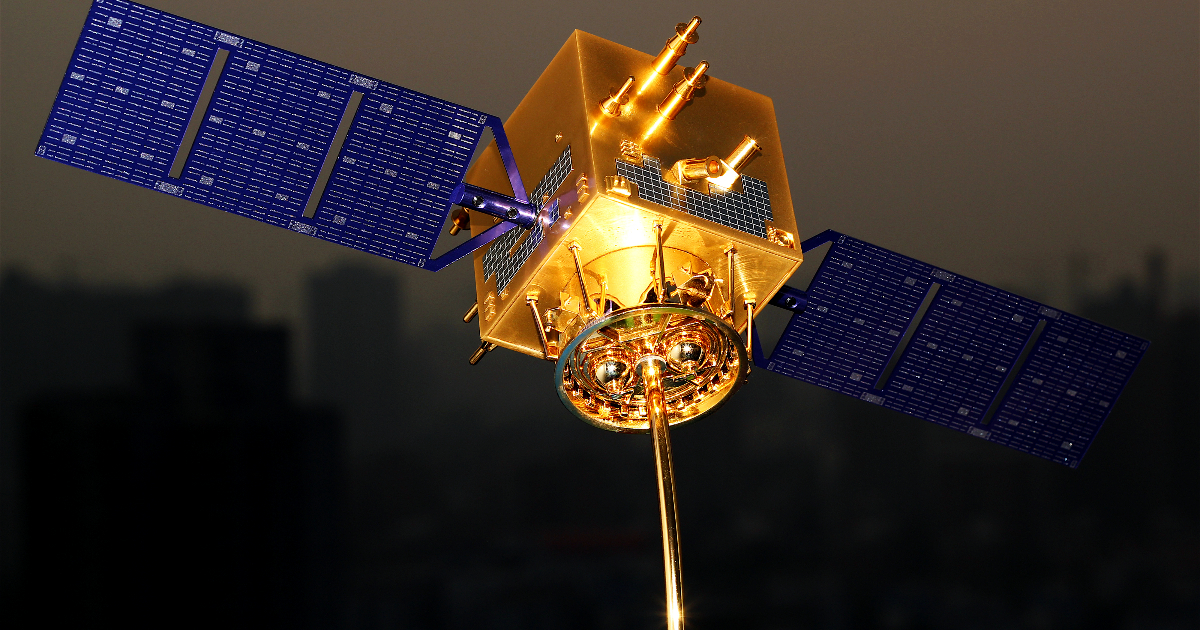
A Chinese military reconnaissance satellite, the Yaogan-50 (02), inexplicably disintegrated in orbit in early September, weeks after U.S. officials linked Chinese satellite images to the Iranian attack on July 17 that claimed the lives of three U.S. soldiers in Jordan.
The U.S. Space Force cataloged at least 43 fragments generated by the disintegration of the device by September 4. The debris orbits at altitudes between 600 and 1,100 kilometers, where atmospheric drag is so weak that the remnants could remain in orbit for decades, posing a persistent collision risk for other satellites.
The cause of the collapse has not been officially confirmed; hypotheses point to a propulsion failure, a battery anomaly, or a collision with another object. There is no public evidence that the incident was the result of deliberate action, although the timing coinciding with revelations about its alleged use in the conflict has fueled speculation.
According to a report from the Wall Street Journal, prior to the attack on July 17, Iran obtained high-resolution satellite imagery of the Muwaffaq Salti airbase in northeastern Jordan from Chinese entities.
Those images would have allowed Tehran to identify the residential area where the soldiers slept, which was struck by ballistic missiles in one of three separate attacks on the facility within 24 hours.
Three soldiers died —including private Isabella Gonzales and sergeant Angel S. Rampersad— and four were injured. This was the first death of American soldiers since the ceasefire in April, highlighting Iran's growing capability to strike heavily defended installations.
Jim Lamson, former CIA analyst specializing in the Iranian military arsenal, explained that high-resolution Chinese images allowed Iran to "select the most impactful targets in a timely manner" and assess the effectiveness of each attack.
Lamson warned that the range of Chinese technology available to Iran—satellite imagery, navigation services, and components for drones and missiles—"is starting to appear quite substantial" in terms of enhancing its long-range offensive capabilities.
The Trump administration had sanctioned three Chinese companies in May —MizarVision, Earth Eye, and Chang Guang Satellite Technology— for providing images that, according to the State Department, "pose a threat to U.S. personnel and their allies."
Despite these prior warnings, Iran's accuracy improved significantly during the summer. Russia has also shared intelligence with Iran regarding the location of U.S. ships and aircraft in the region.
The finding complicates the summit between President Donald Trump and Chinese leader Xi Jinping, scheduled for September 24. Secretary of State Marco Rubio, when asked whether China was providing target information to Iran, avoided answering directly and stated, "Nothing China has done has changed the course of the conflict in any way."
The spokesperson for the Chinese Embassy in Washington, Liu Chang, rejected the allegations and asserted that Beijing's cooperation with Iran "is in accordance with international law."
The U.S. Senate approved new sanctions against Russia and Iran in August with a vote of 86 in favor and 11 against, signaling the growing bipartisan pressure in Washington against the allies of the Iranian regime.
Related videos:
Filed under: