The Cuban announcer Laritza Camacho described on a scene she witnessed from her balcony in Havana: a woman was running desperately through La Normal Park, in the Cerro municipality, chasing a man who had just snatched her belongings.
It happened on Thursday, shortly after 6:00 am, when the neighborhood had been without electricity for nearly 30 hours. The scene, witnessed and recounted by the actress, became the starting point for a complaint that resonated throughout the country.
“‘Show your ID, you must have children just like me.’ The woman was devastated, following the man's trail in hopes of recovering her documents,” Camacho recounted.
The neighbors, peering out from their balconies after a sleepless night, quickly pointed out what everyone already knew: “This is what blackout leads to,” one remarked. Another was more straightforward: “So much police presence at night for the posters or the kettles, and now there’s none; and in the early morning, there’s still none.”
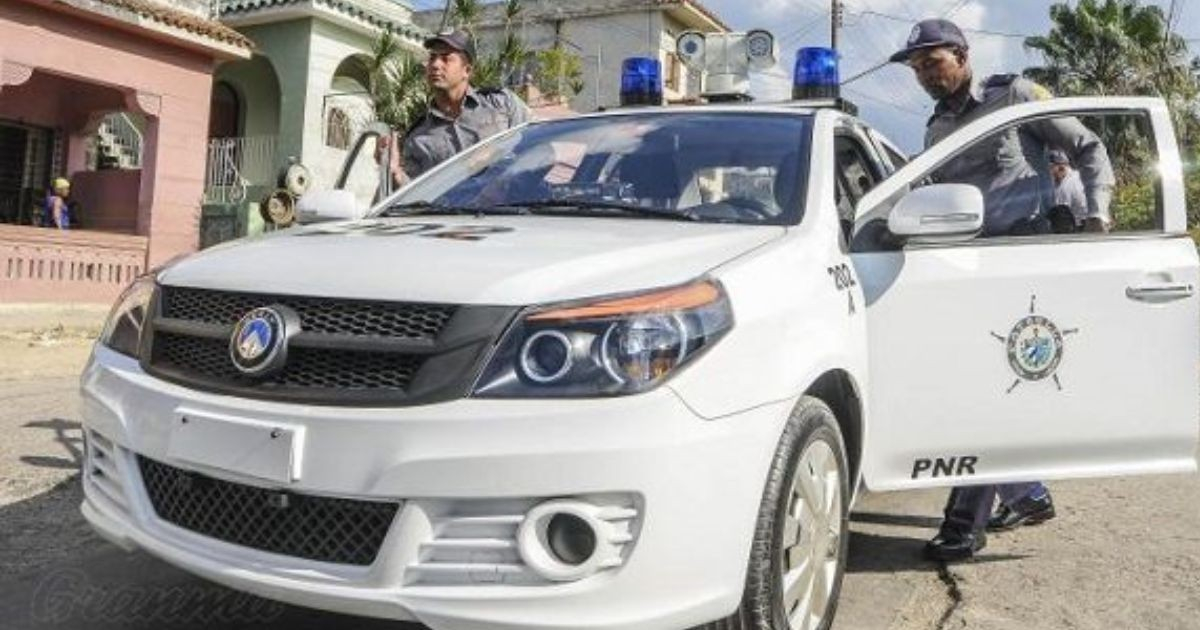
The television host specifies that La Normal park is just a few meters away from a police station and that between 6:00 PM and midnight, it is common to have between 12 and 20 officers in the area. However, their presence does not translate into safety for the residents.
According to him, the uniformed officers focus on checking the documents and belongings of working men returning home, but they do not intervene in the open consumption of "the chemical" - synthetic cannabinoids - in the park, where two or three people can often be seen out of their minds. They also do not take action regarding an illegally raised pipe behind the bus stop that constantly wastes water.
"The police are looking for posters against... Is what I'm describing not a poster in itself that screams DOWN with all its might? Sometimes you don't need to look for graffiti to realize it," wrote Camacho.
The speaker concluded her testimony with a reflection that encapsulates the sentiments of many Cubans: "The current has vanished once again. This time it seems determined not to return, like all those who decide and can leave these lands, these parks, this city, this country...".
The comments on the post confirmed that the phenomenon is not limited to the Cerro. A local resident revealed that the police who "travel in packs" are actually "young military service prevention officers dressed in police uniforms, because hardly anyone from the east is willing to be police anymore." Another user specified that La Normal playground "is a den for several addicts to the chemical and they even spend the night there."
From Santa Clara, a resident of the central area described an equally alarming situation: "The robberies have increased not only in frequency but also in violence. We spend the day alarmed and the night in fear." According to her, no patrols have been seen for a long time. Only in front of government stores do military youths stand guard at night, while the rest of the streets remain in "absolute darkness and neglect."
A user from Holguín reported that the use of chemicals has become commonplace next to a primary school, with delegates and sector leaders failing to take action: "The government only cares about politics."
Insecurity is rising in Cuba, with crimes continuing to increase and a population that feels unprotected due to the lack of an effective response from the police forces, which focus their efforts on controlling dissent rather than fighting crime.
According to the Cuban Citizen Audit Observatory, 2,833 verified crimes were recorded in 2025, a 115% increase compared to the previous year, with thefts being the dominant category at 1,536 cases. Havana was the third most affected province, with 398 cases.
Meanwhile, the State continues to prioritize political repression for its survival, disregarding the safety of the people.
The independent legal organization Cubalex documented an average of over 10 human rights violations events each day during the first half of 2026, in a period characterized by a significant rise in social protests and an expansion of state repression against citizens without ties to opposing organizations.
Between January 1 and June 30, Cubalex documented 1,894 events involving human rights violations, compared to the 1,279 recorded during the second half of 2025.
Related videos:
Filed under: