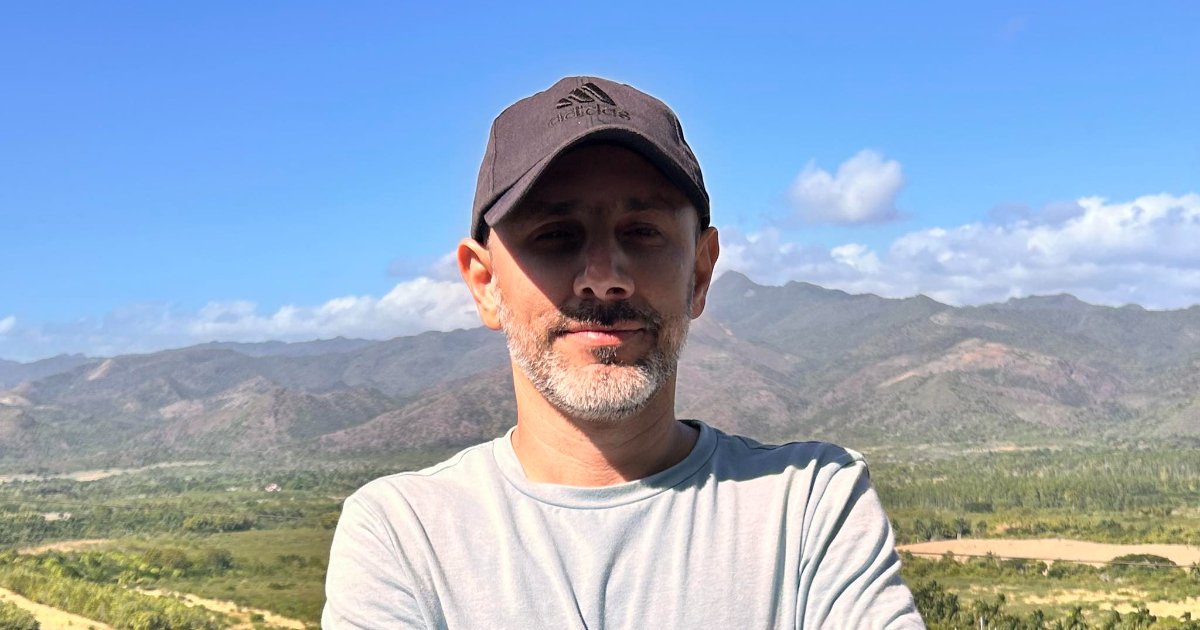
The independent journalist Henry Constantin will remain in preventive detention in Camagüey while facing an investigation for alleged disobedience, in a process in which his defense claims they have not yet been able to consult the file or file an appeal against the measure.
The Hour of Cuba reported this Monday that the habeas corpus petition in favor of its director was finally submitted on September 21, around 9:40 a.m., to the Provincial People's Court of Camagüey.
The presentation of the resource occurred after several days of efforts by the defense, which still does not have access to the case file.
According to the outlet, this situation prevents the lawyer from understanding how the charges are substantiated and from filing the appropriate appeals.
This Monday, the legal representative first went to Villa María Luisa, where she managed to interview the instructor identified as Juan Pablo.
The official informed him that pre-trial detention had already been approved and that the file would be sent to the Provincial Prosecutor's Office, located on República Street in the city of Camagüey.
The lawyer then traveled to the Prosecutor's Office with the intention of reviewing the case and understanding the basis of the accusation, but, according to La Hora de Cuba, she also did not find any officials available there who could grant her access to the file.
The defense also questions whether Constantin's absence from a summons can, by itself, support a charge of disobedience.
The medium cited Article 72, section f) of the Criminal Procedure Law, which states that in the event of an unjustified failure to appear at a summons, a fine of up to one hundred quotas may be imposed, and if it is a second summons, the individual will be brought in and charged with the corresponding offense.
The Hour of Cuba argues that, based on this provision, the charge of disobedience attributed to the journalist would not be justified by the failure to respond to an initial citation.
However, the defense has not been able to verify what reasoning the authorities used because they still do not have the case file.
Constantin has been in confinement since September 16, and the difficulties in obtaining information about his situation began almost immediately.
On September 17th, after hiring a criminal lawyer to take on her representation, she sent a colleague to Villa María Luisa, in the Garrido neighborhood, around 2:30 p.m., to find out the situation of the journalist.
Upon arrival, they informed him that the instructor Juan Pablo had already left because he lives in Nuevitas, a municipality different from the city of Camagüey.
On that same day, the journalist Alejandra García, partner of Constantin, attended a previously scheduled meeting with the instructor, but she was also unable to find him.
Another officer then explained that the investigation was related to Constantin's decision not to appear at the scheduled time for a summons on September 9 at the Office of Identification, Immigration, and Foreign Affairs.
In light of the situation, La Hora de Cuba reiterated its demand for judicial proceedings to be conducted transparently and without obstacles that hinder the exercise of fundamental rights.
The media also maintains its demand for the release of Henry Constantin and the cessation of what it considers a persecution against those practicing independent journalism in Cuba.
The case also provoked a reaction from the Inter American Press Association (IAPA), which condemned the detention of Constantin and reminded that the journalist serves as the regional vice president for Cuba of its Commission on Freedom of the Press and Information.
The president of the organization, Pierre Manigault, called for his release and stated: “The detention of Henry Constantín represents a new and serious episode of harassment against independent press in Cuba. An accusation of ‘disobedience’ cannot be turned into a tool to intimidate and silence a journalist. The Cuban authorities must release him and put an end to this persecution.”
On her part, Martha Ramos, president of the Press Freedom and Information Commission of the SIP, stated: “The summonses, detentions, surveillance, and house arrests against Constantín are part of a pattern of pressure aimed at hindering his journalistic work. The SIP calls for the immediate cessation of the harassment and guarantees so that he can practice his profession without retaliation.”
The current trial against Constantin comes after several episodes of pressure and detentions throughout 2026.
In July, for example, the authorities summoned him and warned that he would be arrested if he traveled to Havana, amidst an operation to prevent activists and journalists from attending a reception for the United States Independence Day.
But months earlier, Constantin had reported his third arrest in just 12 days.
On that occasion, he was detained alongside Alejandra García by State Security agents and released hours later.
That episode was preceded by a second arrest in less than a week, which took place on January 20 in Camagüey, when he was intercepted in front of his daughter's house and held for approximately an hour.
Just a few days earlier, he had been released after being held for 44 hours, isolated and without communication in Havana, during which time family and colleagues had no information about his whereabouts.
Related videos:
Filed under: