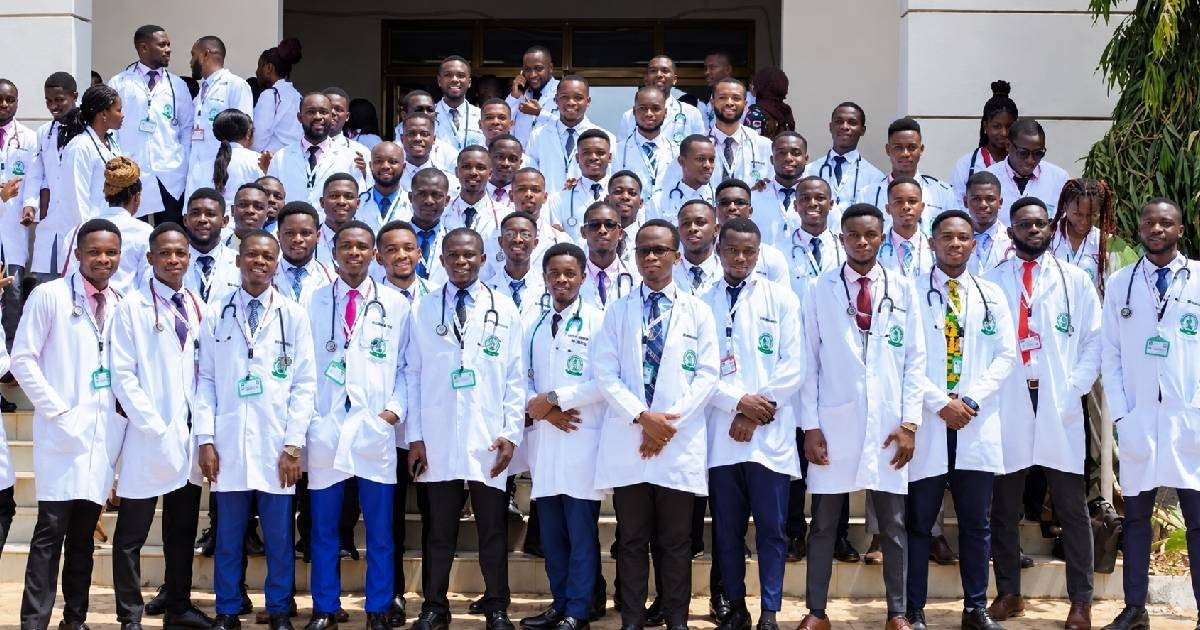
A group of Ghanaian doctors who completed their studies in Cuba on July 22, 2026, has been stranded on the island for almost two months, unable to return to their country due to an ongoing series of delays.
Raphael Oteng Boakye, president of the Ghanaian Graduates Association in Cuba, presented the situation in statements to the Citi News Digest program, reported by Citi Newsroom, and demanded the direct intervention of President John Dramani Mahama to order their immediate repatriation.
"Our immediate demand is that the president intervenes and orders that we be brought home as soon as possible, because we know it is possible," declared Oteng Boakye.
The originally planned return date was August 28, but later possible departure dates were considered for September 3 or 4, the 7th, the 9th, and subsequently the 15th or 17th of the same month, none of which were finalized.
"Until now, we haven't heard anything concrete about a definitive date to leave this country for our homeland," stated the group's spokesperson.
The delay could affect the integration of graduates into Ghana's healthcare system: before sitting for the medical licensing exam, they must complete six months of supervised clinical practice, a requirement they cannot begin while they remain in Cuba.
"We are eager to return home as soon as possible to complete our internships and eventually take the licensing exam," stated Oteng Boakye.
The uncertainty about the return is compounded by serious economic and administrative problems that have accumulated over months. The graduates report six months of unpaid stipends. According to Oteng Boakye, they were informed that funds corresponding to four of those months had been provided, but the money had not yet been paid to them: "We still have not received those four months of stipends, and very little or nothing is being done to ensure that we receive them before we leave."
Oteng Boakye also stated that students have gone five years without receiving the annual allocation of $360 for books.
Living conditions have also worsened: their student ID cards expired on August 31, their health insurance has lapsed, and they are experiencing issues with the supply of electricity and water in their homes, amidst the crisis of services affecting Cuba.
The group has held meetings with the Ghana Scholarship Authority and with the Ghanaian diplomatic mission in Havana, but has not obtained any concrete commitments.
“They always tell us the same stories over and over. Right now, we don’t know what to believe,” lamented Oteng Boakye.
This situation is not new. In September 2025, the Ghanaian National Students Union in Cuba had already reported that its members had gone 17 months without receiving stipends and five years without receiving the allocation for books, describing extremely precarious living conditions, surviving on bread and water and walking kilometers to get to classes.
The Ghana-Cuba scholarship program, primarily financed by the GNPC Foundation and the Ghana Scholarship Authority, was created to address the shortage of doctors in rural areas of the country. In 2024, the GNPC Foundation reported that 151 doctors trained in Cuba had returned to Ghana.
The stranded graduates are asking the government for three things: to facilitate their immediate return, to settle all pending stipends and allocations, and to cover the cost of their first attempt at the medical licensing exam.
"We are going through enormous psychological stress and we would greatly appreciate it if we could be taken out of this country as soon as possible," concluded Oteng Boakye.
Related videos:
Filed under: