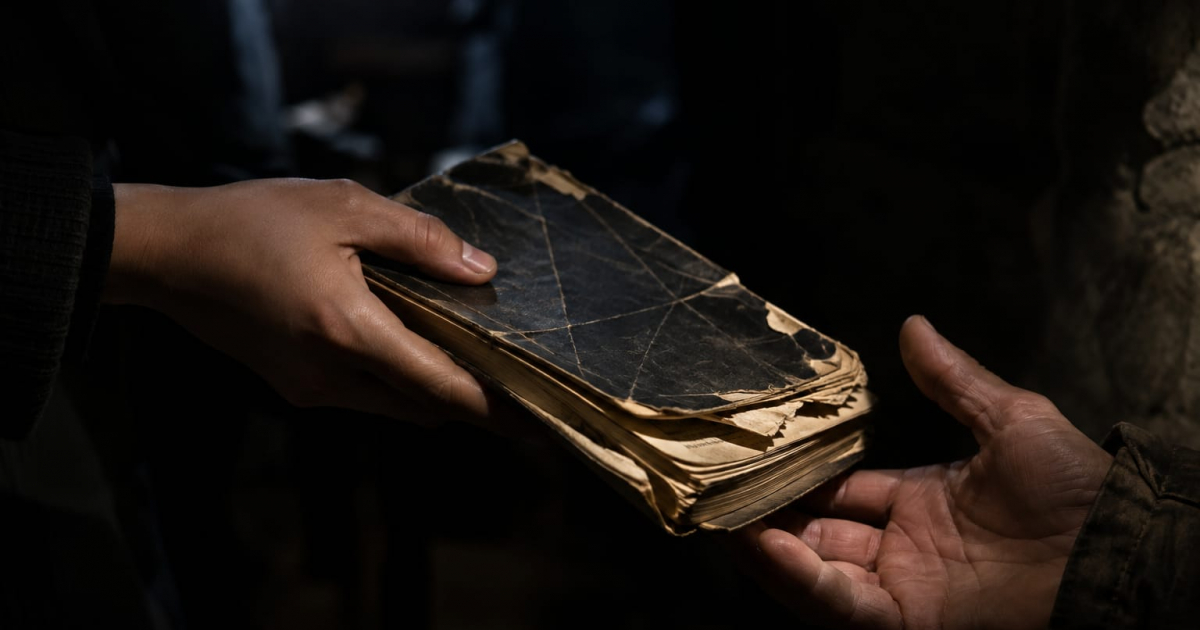
Between imposed silence and absolute disappearance, there has always been a space. A book may be removed from a university program and continue to be passed from hand to hand in the grant. An author may stop being mentioned in state media and remain read, in dim light, in the room of a house. A photograph might be excluded from a history book and be preserved for decades at the bottom of a family drawer.
In Cuba, the attempt to erase names, works, and events is not new. Those of us who studied Philology or Arts in the nineties know well what this entails. In the classrooms, we were not taught about Mario Vargas Llosa, Jorge Luis Borges was skipped over, the significance of Jorge Mañach was silenced, and the specter of the Padilla case loomed as a cautionary tale about what should not be named. For the official academy, they simply did not exist. However, the memory of a country has never relied solely on what those in power decide to print.
There has always been an underground network, a conspiracy of affection and curiosity. We learned from the great outcasts because a classmate would whisper to us, "Here, read this; they won’t give it to you in class." We filled in the gaps of the official narrative thanks to the book brought in a suitcase, the worn copies that circulated from house to house, the teacher who mentioned a name outside the syllabus, or the clandestine conversations during coffee breaks.
We were participating, unknowingly, in an "informal resistance to erasure." It was neither a political organization nor a calculated strategy. These were small, almost invisible acts: saving a poem, typing out a novel, preserving a banned magazine, or telling someone else, "This happened." Everyday practices through which Cuban society was salvaging everything that the official doctrine attempted to leave out.
This dynamic has been a constant for decades. When the regime sought to prohibit productions, censor plays, or remove content from the "Paquete Semanal", people found ways to continue watching them, passing them via USB drives or sharing them from one TV to another. There is a natural paradox in censorship: what the State prohibits often becomes the object of greatest desire. What is attempted to be concealed seeks its own ways to surface.
Power has always operated through selection: it decides what is shown, what is omitted, what is repeated, and what is simply left unnamed. Erasure does not always require an arrest; sometimes it is enough to produce amnesia, to ensure that new generations grow up unaware that a certain writer existed or that a certain event took place.
But communication is never one-way. The State can control the printing press, the television channel, or the official website, but it can never control what society does with the truth that is hidden from it.
Today, technology has only amplified that old Cuban custom of sharing what is forbidden. What used to take us months in the nineties—lending a physical book, ensuring it didn’t get damaged, and passing it to another reader—now happens in seconds through a screenshot, a PDF document, or a video shared on social media. Exile, online communities, and connected citizenship have turned memory into a distributed archive that no law or decree can confiscate.
Perhaps the regime can decide who appears today in a newspaper or in a state library. But Cuban society has been showing for over sixty years that it knows how to preserve what power tried to take away from it. From the book that traveled from hand to hand to the publication that now circulates from screen to screen, the lesson remains the same: erasure has never been an inevitable fate, because memory does not ask for permission to stay alive.
Related videos:
Filed under:
Opinion article: Las declaraciones y opiniones expresadas en este artículo son de exclusiva responsabilidad de su autor y no representan necesariamente el punto de vista de CiberCuba.