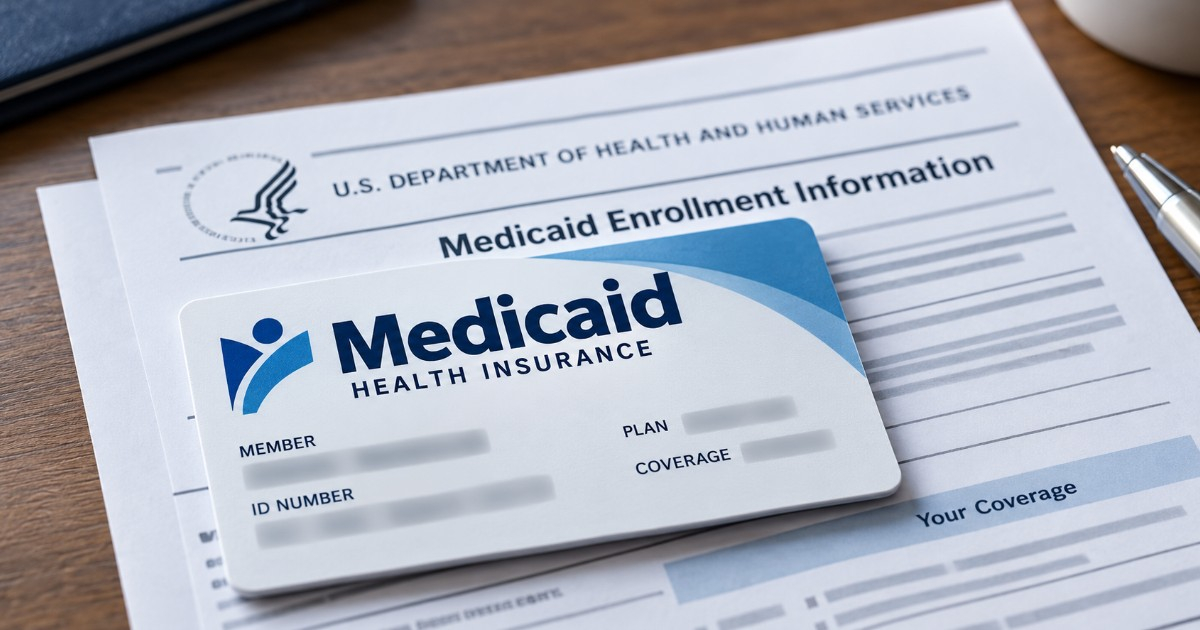
More than 9,000 immigrants in Illinois could lose their full Medicaid coverage or experience changes in their benefits starting on October 1, when new federal eligibility requirements take effect that reduce the immigration categories eligible for the program.
The changes stem from federal law H.R. 1 and were explained this Tuesday by Telemundo Chicago, which gathered warnings from activists and health experts about the impact the measure could have on immigrant families and community clinics that provide free or low-cost care.
Among the individuals who may lose full coverage are certain refugees, asylum seekers, humanitarian parole beneficiaries, and victims of human trafficking, unless they also have another immigration status or category that remains eligible under the new legislation.
Emergency coverage will remain available for some individuals who no longer meet the requirements for full Medicaid.
The Illinois Department of Health and Family Services (HFS) confirmed that the new eligibility definition for immigrant populations will take effect on October 1, 2026 and that September 30 will be the last day of full federal medical coverage for non-citizens who are excluded by the new law.
Cubans are among the exceptions, although the protection does not automatically apply to everyone born in Cuba.
According to the official HFS guide, those classified as “Cuban/Haitian entrants” (Cubans and Haitians with special entry status) will continue to be eligible for full Medicaid, a specific immigration category established by federal legislation.
Certain legal permanent residents, migrants from the Freely Associated States (COFA), individuals under 19 years old, pregnant women, and beneficiaries of certain state programs also maintain eligibility.
Therefore, being Cuban alone does not guarantee exemption: the person must fall into that classification or meet the requirements of another category that continues to have access to Medicaid.
Additionally, the Centers for Medicare and Medicaid Services (CMS) support this distinction. Starting October 1, federal funding for full Medicaid benefits will be limited, with certain exceptions, to U.S. citizens, eligible lawful permanent residents, Cubans and Haitians with special entry status, and COFA migrants.
CMS also clarifies that the term Cuban-Haitian is a category used to determine access to certain federal benefits and does not necessarily indicate an independent immigration status.
The regulation also maintains exceptions to the usual five-year waiting period for some legal permanent residents.
Among those who may be exempt are refugees and asylees who later adjusted their status to permanent residents, as well as Cubans and Haitians with special entry status, trafficking victims, and other categories covered by the law.
In contrast, the HFS warns that some refugees, asylees, and parole beneficiaries who have not obtained another status that remains covered will lose access to federally funded full Medicaid.
Telemundo Chicago showcased the case of Eugene Cuta, an immigrant from Romania whose family received a notice indicating that they might lose coverage after a review of their immigration status.
Cuta suffered a stroke over 15 years ago, resulting in partial paralysis, loss of speech, and currently lives in a facility where he requires 24-hour care.
His partner, Teresita Morales, a Puerto Rican resident of Chicago and also with a disability, said she would not be able to manage his care alone if Medicaid stops covering it.
"I don't know what else I can do, except pray," expressed Morales.
Community organizations warned that the loss of coverage could shift some of the demand towards free clinics and community health centers.
Edith Ávila from the Illinois Coalition for Immigrant and Refugee Rights (ICIRR) pointed out that free centers may face longer wait times and that some individuals affected may not even know how to access them if they do not have contact with organizations that can guide them.
Illinois has begun sending notifications to potentially affected individuals. If the state cannot immediately verify the updated immigration status of a beneficiary, they will have 90 days to submit the required documentation.
The HFS has recommended that beneficiaries update their address, phone number, email, and immigration status in the state system to prevent someone who still meets the requirements from losing coverage due to outdated information.
The changes are part of a broader federal reform that will also modify other components of Medicaid. Starting in January 2027, certain adults will be subject to new work, study, or volunteer requirements and will need to renew their coverage every six months instead of once a year.
The modification comes amid growing uncertainty among immigrant communities regarding access to public benefits.
This month, an immigration attorney clarified that Cubans applying for residency under the Cuban Adjustment Act do not automatically lose their case for having received Medicaid or other public assistance, although those benefits may be considered in other immigration evaluations depending on the specific process.
Related videos:
Filed under: