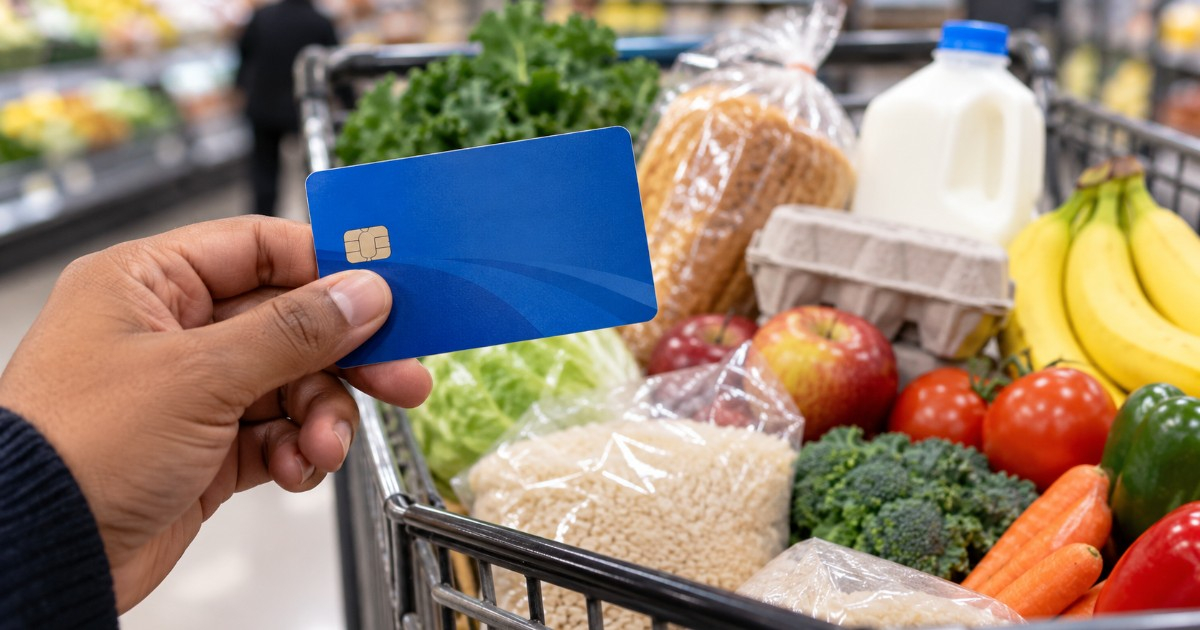
The Supplemental Nutrition Assistance Program (SNAP), popularly known as Food Stamps, unveiled this Thursday the maximum amounts for fiscal year 2027, effective from October 1, 2026, to September 30, 2027. The update was established by the United States Department of Agriculture (USDA) through the annual adjustment to the cost of living outlined in the Food and Nutrition Act.
The new monthly caps for the 48 contiguous states and Washington D.C. are as follows:
- 1 person: $306 (was $298)
- 2 people: $562 (previously $546)
- 3 people: $808 (previously $785)
- 4 people: $1,023 (previously $994)
- 5 people: $1,217 (previously $1,183)
- 6 people: $1,463 (previously $1,421)
- 7 people: $1,616 (previously $1,571)
- 8 people: $1,841 (previously $1,789)
For households of nine to 17 people, an additional $225 is added for each extra member, while households of 18 or more members have a maximum of $3,887. The minimum monthly benefit for eligible households of one or two people increases from $24 to $25.
These figures pertain exclusively to the contiguous 48 states and Washington D.C. Alaska, Hawaii, Guam, and the Virgin Islands have different benefit tables.
What these amounts mean —and what they do not
It is important to clarify that these are maximum benefits: not all families receive these amounts. The actual SNAP amount that corresponds to each household depends, among other factors, on their net income, the number of members, and the applicable deductions.
For that reason, the increase in the limits does not mean that all beneficiaries will receive the maximum amount or that the increase will be the same for everyone.
It does not mean that all payments arrive on October 1. In Florida, benefits are distributed during the first 28 calendar days of each month, according to the eighth and ninth digits of the beneficiary's case number. Funds are deposited once a day and should be available before 6:00 a.m.
SNAP in Florida: who manages the program and how benefits are received
In Florida, the program is managed by the Department of Children and Families (DCF) through its Office of Economic Self-Sufficiency. Benefits are provided via the Electronic Benefits Transfer (EBT) card, into which the approved amount is deposited monthly for each case.
The increase coincides with cuts and new requirements in SNAP
The increase in maximum amounts comes as the program undergoes significant changes stemming from the "One Big Beautiful Bill," signed by President Donald Trump on July 4, 2025.
The Congressional Budget Office (CBO) estimates that the provisions of the law related to SNAP will reduce federal spending on the program by approximately $187 billion through 2034. The legislation also expanded the work requirements up to age 64 and extended them to certain parents and caregivers whose child is 14 years old or older. Individuals subject to these requirements must generally document at least 80 hours per month of work, training, or other authorized activities unless they are exempt.
The most recent data collected by the Center on Budget and Policy Priorities (CBPP) based on figures from the USDA and state agencies show that national participation in SNAP fell by more than 5 million people, nearly 13%, between July 2025 and June 2026. The center notes that the decline accelerated after the law was passed, although it acknowledges that the reduction had begun earlier in some states and that other factors may also be at play.
In Florida, state data collected by the CBPP shows a decrease of 647,822 participants, equivalent to 22%, between July 2025 and July 2026. CiberCuba had previously reported on the decline of Food Stamps beneficiaries in the state.
Additionally, starting from the fiscal year 2027, which began on October 1, the federal government's share of certain state administrative costs for SNAP will decrease from 50% to 25%. As a result, states will need to cover 75% of those administrative costs, with certain exceptions allowed by the program's regulations.
Related videos:
Filed under: