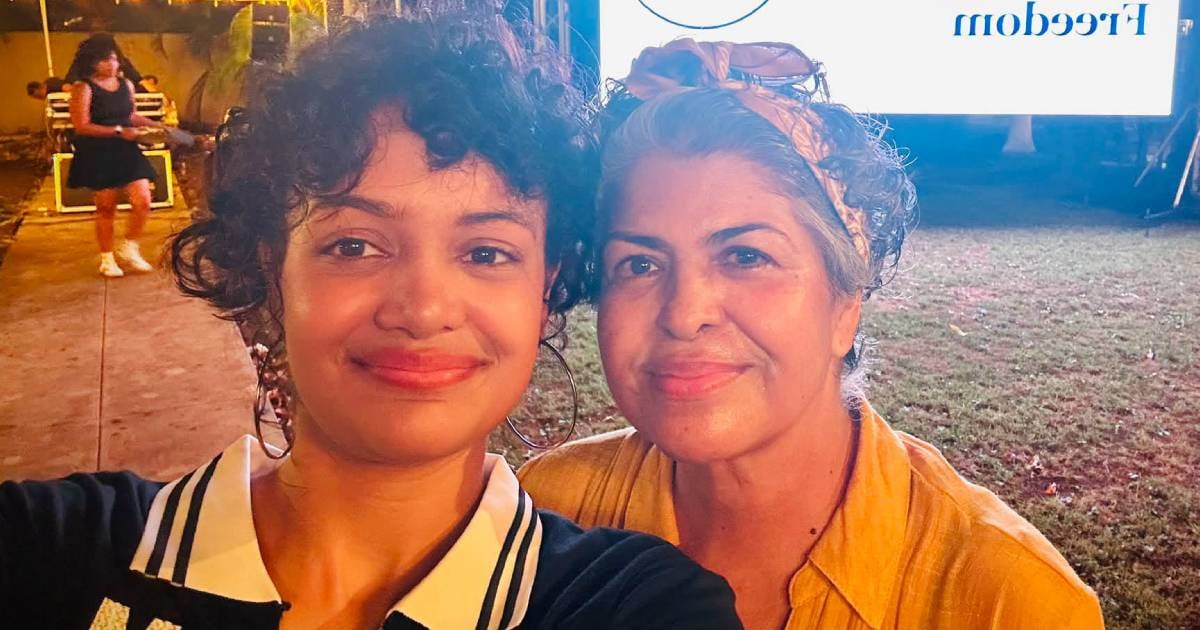
The Cuban police publicly defended the legal arguments used against Anna Sofía Benítez Silvente, known as Anna Bensi, and her mother, Caridad Silvente, regarding the unjust trial both are facing in Havana for posting on social media a video featuring an agent from the Ministry of the Interior.
In a post shared on Facebook, the institution's account stated that Bensi is facing criminal proceedings "for violating legal boundaries" and not simply for "posting a video".
Social media is not a lawless territory. The ease of posting does not exempt one from responsibility for what is shared, the publication stated.
The police claimed that Article 393 of the Cuban Penal Code protects privacy and one's image, and stated that disclosing images of others without consent, when there is an intention to harm them, may constitute a crime.
According to the institutional version, the use of social media is also a significant element in the implementation of the regulation.
The publication presented the case of Bensi as an example of what it called "digital responsibility" and stated that obtaining, reproducing, or transmitting personal or family information of others without their consent and with the intent to harm them constitutes punishable behavior.
What the official account omits is an obvious contradiction: in this case, the "application of the law" is rigorously invoked against a person who has systematically criticized the regime, while profiles linked to the state apparatus routinely publish images of citizens without their consent.
The same happens in official television spaces, where figures like Humberto López have publicly exposed individuals pointed out by the authorities.
The question becomes unavoidable: if disseminating images without consent can constitute a crime, why does that standard not seem to apply in the same way when the exposure comes from media or official spokespeople?
The police report had already addressed the case in a previous post, in which it provided a more detailed explanation about the difference between recording a person and subsequently sharing those images.
"Recording is one thing, and publishing or distributing that recording without the consent of the person featured in it is something very different," he pointed out.
In that message, the Police argued that freedom of expression and the right to information "are not absolute" and maintained that the image is part of personal and family privacy.
"The act of recording is not judged, but the non-consensual dissemination of the image is," stated the publication, which questioned the portrayal of the process as simply a trial against a person "for recording an official."
The institution also emphasized that the ongoing case is the result of a complaint filed by the person who claims to have been affected, and not merely an official action by the authorities.
In that same publication, the Police also defended that the precautionary measures imposed on mother and daughter—among them, house arrest and a prohibition on leaving the country—do not equate to a conviction, but are provisional while the judicial process is ongoing.
The version released by the institution contrasts with the stance held by Bensi and his defense, who have questioned whether the publication of the video constitutes a crime.
The case was initially closed after the defense attorney, Roberto Ortega Ortiz, argued that the criminal charge required a direct complaint from the person deemed affected.
Subsequently, the MININT non-commissioned officer Yoel Leodán Rabaza Ramos personally filed a complaint, and the process was reactivated.
The trial against Bensi and her mother has been scheduled for this Thursday, after the hearing initially set for September 17 was postponed.
Both are accused of "acts against personal and family privacy" after recording and publishing the visit of the MININT agent, who had come to their home to deliver a summons from State Security.
According to Bensi's explanation, Rabaza claims that he felt offended by the comments generated after the video was published and demanded that mother and daughter record a public apology.
The young woman also stated that the plaintiff's attorney is requesting two years of restricted freedom for each of them.
Just a few days before the hearing, the content creator reiterated that she did not intend to stop her publications and defended her decision to document the actions of state agents.
"I am not going to be silent," he declared in a recent interview, where he stated that he would re-record and publish the video that initiated the process.
She also stated that she and her mother arrive at the trial in "unequal conditions".
The Cuban nun Sor Nadieska Almeida also called to support the mother and daughter during the trial and publicly expressed her backing for both of them.
The process will be presided over by Zamira Marrero Morgado, president of the Municipal People's Tribunal of Havana del Este.
According to information released by activists, Marrero had previously rejected a request from the defense to annul the trial, based on the argument that the alleged facts would not constitute a crime.
But the most significant aspect is that the judge has also been pointed out for her involvement in cases related to the protests of July 11, 2021.
Related videos:
Filed under: