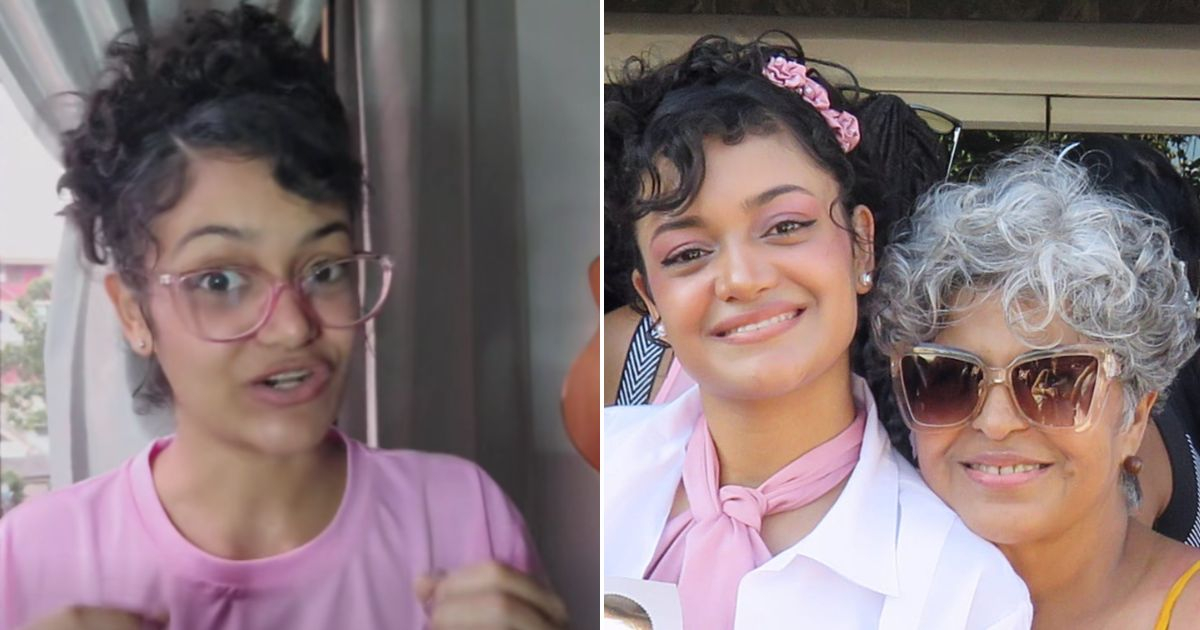
The Cuban Filmmakers' Assembly (ACC) made a collective statement this weekend in defense of Anna Sofía Benítez Silvente —known as Anna Bensi— and her mother, Caridad Silvente, who were sentenced on October 1 by the Havana East Court to two years of restricted freedom for sharing a video of a MININT agent on social media.
The text, signed by eleven representatives of the Cuban audiovisual sector, including Fernando Pérez, Ernesto Daranas, Luis Alberto García, Belkis Vega, and Kiki Álvarez, opens with a strong statement: "Filming the pain, the uncertainty, the agony of a country has become a crime."
The statement, published on social media, describes the case as part of a pattern of sustained repression rather than an isolated incident.
The ACC denounces the contradiction between the Cuban state's practice of publicly exposing dissenters—through official media—and the criminalization of similar actions by citizens: "Double standards have become an official hallmark. They are skilled at applying the law according to their interests and interpretations, but clumsy or blind when it comes to respecting citizens' constitutional right to express their feelings about reality publicly and peacefully."
The case originated on March 10, 2026, in the Alamar neighborhood of Havana, when MININT noncommissioned officer Yoel Leodán Rabaza Ramos went to the home of both women to deliver a summons from State Security.
Caridad Silvente recorded the meeting, and the images circulated on social media, leading to months of harassment and institutional threats, house arrest since March 25, and a ban on leaving the country.
The court found them guilty of the crime of "acts against personal and family privacy," as defined in Article 393 of the Cuban Penal Code, which penalizes the disclosure of content that affects another person's image or personal data, with enhanced penalties when the dissemination occurs through social media.
During the trial, Anna Bensi stated, "we are not criminals", and before the hearing, she had warned that she did not expect a fair process.
The sentence generated a wide wave of solidarity. The United States Embassy in Cuba published the message "Thinking differently is not a crime" on the same day of the trial, and the Assistant Secretary of State for Western Hemisphere Affairs, Juan Pablo Segura, classified the sentence as cowardly.
The case has also reached international media outlets such as NBC, DW, El País, and ABC, generating global outrage.
The ACC, which in March 2026 had already rejected the systematic repression against critical thinking in Cuba, states in its declaration that the authorities "fear words and images, especially if they reveal the breakdown of a system, the nightmare behind the dream."
The text concludes by identifying the real culprits and drawing a clear line between victims and perpetrators: "The wounds of a nation cannot be healed with silence or repression."
Related videos:
Filed under: