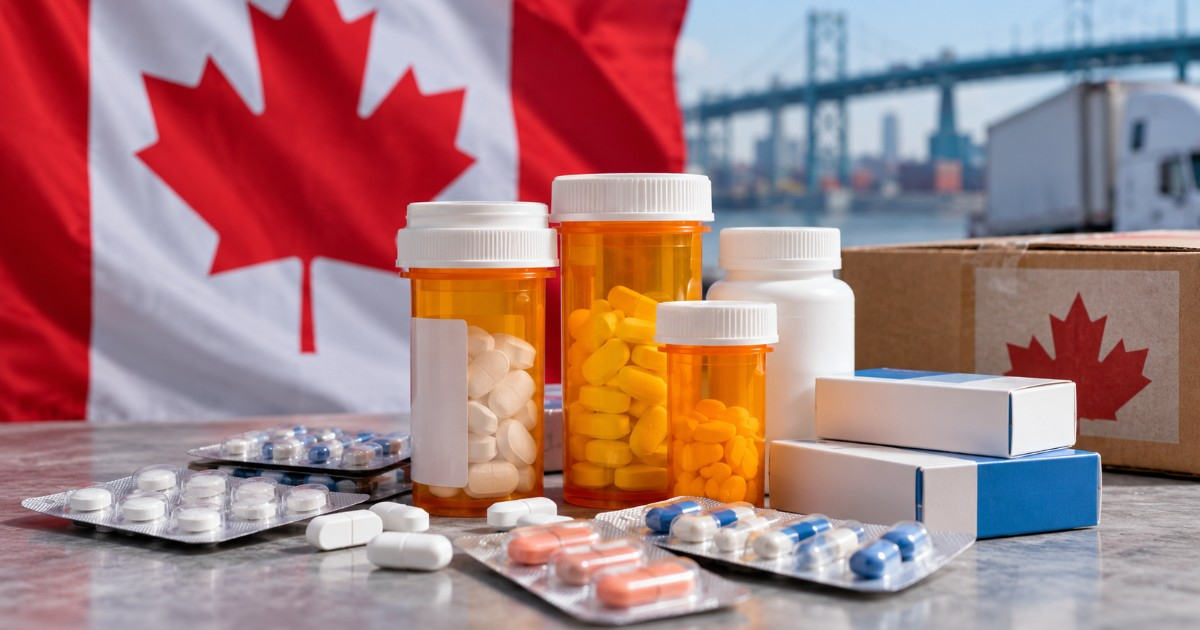
Residents of Florida who receive prescription medications from pharmacies in Canada may face delays, extra costs, or interruptions in their shipments starting October 22. On that day, a critical phase of a regulation from the U.S. Customs and Border Protection (CBP) will take effect, tightening requirements for certain goods sent via international mail.
The measure does not explicitly prohibit the purchase of all Canadian medications, but pharmacies catering to American patients warn that the new requirements for documentation, customs processing, and financial guarantees could make a large portion of personal shipments that have been arriving by mail unfeasible.
The Associated Press (AP) reported this Thursday, October 8, that concern has reached Congress: three Republican legislators from Florida and more than 70 Democrats have called for explanations or changes to protect those who rely on medications purchased abroad at lower prices.
What exactly changes on October 22nd?
The change comes from a CBP regulation published in the Federal Register on June 24, 2026, which indefinitely suspends the customs exemption known as de minimis for international mail shipments of goods valued up to 800 dollars and establishes new entry procedures.
The regulation began to be implemented gradually: its general effective date was July 24, but October 22 is the compliance date for two provisions regarding goods subject to requirements from other federal agencies and certain tariff categories. Medications represent a particularly sensitive case because their importation is subject to controls by the Food and Drug Administration (FDA).
The new processing may require identifying the importer, providing electronic data on the goods, and having a customs guarantee (bond) for clearance. CBP has also launched an experimental simplified electronic declaration route, called Entry Type 13, which allows for the processing of certain shipments up to $2,500, including some subject to controls by other agencies, if they meet their conditions. This alternative does not eliminate the requirements of the FDA nor does it guarantee the entry of any medication.
Therefore, this is not an automatic ban on all medicines coming from Canada. The practical risk is that pharmacies or their logistics operators may not be able to handle the necessary procedures, or that these may drive up the costs of each order.
Why it particularly concerns patients in Florida
Buying medications outside of the United States has become an alternative for people who cannot find affordable prices at their local pharmacies. According to a 2020 study cited by AP, approximately 2.3 million Americans were purchasing medications abroad. That figure does not apply solely to Florida or exclusively to Canada.
The economic difference can be considerable. Ken Hunter, director of the organization Campaign for Personal Prescription Importation, presented AP with a comparison for Eliquis, a prescription anticoagulant: 180 tablets of 5 milligrams for three months cost around 565 dollars through a Canadian mail-order pharmacy, compared to prices of approximately 1,017 and 1,029 dollars at two commercial options in the United States. These prices are illustrative of that comparison, not guaranteed rates for all patients.
The Republican representatives from Florida Aaron Bean, Gus Bilirakis, and Scott Franklin wrote to the federal administration last month to express their concerns about the effects on their constituents. Unlike those living near the border with Canada, Florida residents cannot easily travel to that country to obtain their medications if postal shipping is interrupted.
The Canadian International Pharmacy Association (CIPA), representing the sector, warns that without changes in the implementation of the regulation, the usual procedures used for sending personal prescriptions may cease to be operational starting October 22. This is an industry assessment and not an official order declaring all packages prohibited.
Is it legal to request prescription medication at a Canadian pharmacy?
The legal situation was already restrictive before this change. The FDA explains in its personal importation policy that, in most circumstances, importing foreign prescription medications for personal use is not permitted if those products do not have the appropriate authorization in the United States.
The agency exercises its discretion in limited situations, such as specific treatments for serious diseases without effective alternatives available in the country, under conditions that may include a prescription or medical supervision and quantities that generally do not exceed a supply of three months. These criteria do not constitute a general authorization to receive any medication by mail for 90 days.
It is also important to distinguish individual orders from a different project: Florida received an initial authorization from the FDA for a state program to import certain medications from Canada in January 2024. This program is subject to additional requirements and does not equate to allowing unrestricted personal purchases. The FDA has published extensions of the authorization as its implementation continues.
What has the White House responded?
The Trump administration defends the tightening of postal controls as part of a strategy to collect applicable tariffs, enhance package oversight, and combat the entry of illegal goods, including illicit drugs.
In statements collected by AP, White House spokesperson Allison Schuster stated that the president remains committed to reducing the cost of medications and highlighted agreements with pharmaceutical companies as part of that effort. The administration has also promoted the platform TrumpRx, whose operation was previously explained by CiberCuba.
However, the discounts available in the United States do not necessarily include all treatments purchased through Canadian pharmacies. Legislators who have called for a review of the procedure are concerned that a general customs provision could end up increasing the costs of care for patients requiring ongoing treatments.
What to do if you receive medications from Canada by mail
Those who depend on a periodic supply must consult as soon as possible with the pharmacy that handles the shipments regarding whether it will continue to operate after October 22, what delivery conditions are expected, and what will happen to orders that do not pass customs checks.
It is also advisable to contact the prescribing physician and the insurance company, when applicable, to review legal alternatives at U.S. pharmacies, authorized generic equivalents, assistance programs, and savings options. It is not recommended to discontinue, reduce, or replace medication on your own out of fear that a package may arrive late.
The rule is set to be applied under the current conditions, but the Government may still modify its implementation. For now, what is confirmed is the change in customs procedure on October 22; the final extent of disruptions and price increases will depend on how it is implemented and the ability of companies to adapt.
Related videos:
Filed under: