A new binding decision from the Board of Immigration Appeals (BIA) establishes that citizens of the European Union are "presumptively ineligible" for discretionary asylum in the United States.
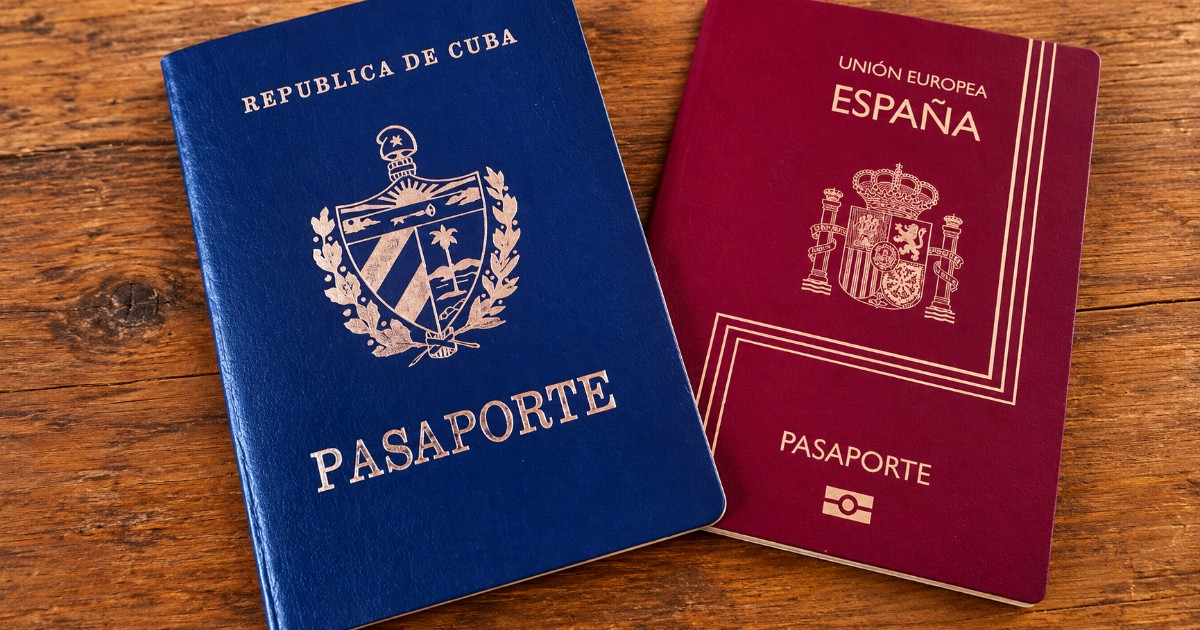
The ruling directly impacts Cubans who have obtained Spanish nationality and have pending protection applications in the United States.
The precedent, identified as Matter of B-S-A-N-, 30 I&N Dec. 145 (BIA 2026), was published on October 9 in Volume 30 of the Executive Office for Immigration Review (EOIR) Decisions Register of the Department of Justice. As a precedential decision, it compels all immigration judges in the country to apply it.
The central rule is clear: judges must generally deny asylum requests submitted by nationals of "highly developed and democratic countries that broadly respect and protect human rights," except in extraordinary circumstances related to national security or foreign policy.
Este fallo de la BIA es solo uno de los múltiples cambios que afectan a quienes buscan protección en Estados Unidos. Sigue toda la actualidad migratoria en nuestra sección de
The list of affected countries, noted in footnote number five of the decision, includes the 27 EU Member States —among them Spain, Italy, Germany, and Portugal— as well as the United Kingdom, Switzerland, Norway, Iceland, Canada, Australia, New Zealand, Japan, South Korea, Andorra, Monaco, San Marino, and Liechtenstein.
The argument of the BIA is that European citizens can legally reside indefinitely in any member state, which eliminates the need for international protection.
"Citizens of the European Union are reportedly ineligible for discretionary asylum grants in the United States because they have the right to reside legally indefinitely in any EU member state," the text states.
The case that set the precedent involves a defendant identified only by the initials B-S-A-N-, who holds dual French and Gabonese citizenship.
The BIA reiterated that anyone with dual nationality must demonstrate a well-founded fear of persecution and lack of protection in each of their countries of citizenship. Since such fear did not exist concerning France, asylum was denied.
Why it affects Cubans with Spanish passports
The Historical Memory Law and the subsequent Democratic Memory Law —known as the Grandchildren's Law— have enabled over 100,000 Cubans to obtain Spanish nationality. Some of these Cuban-Spanish citizens reside in South Florida with pending asylum applications, including cases with form I-220A.
Considering this new precedent, the Department of Homeland Security may argue that these applicants are "presumptively ineligible" for discretionary asylum, that they must demonstrate persecution also in Spain, and that —if all forms of protection are denied— they could be deported.
It is essential to clarify that this is a presumption, not an absolute prohibition. The decision applies to those who hold Spanish citizenship, not to temporary residents or individuals with mere family ties in Spain. Furthermore, this presumption can be challenged if the applicant demonstrates extraordinary circumstances.
A pattern of systematic hardening
This ruling is the third in an offensive by the BIA that has intensified in recent weeks. On September 29, the precedent Matter of G-R-B- established that judges can deny asylum applications without a hearing or prior motion from the Department of Homeland Security.
Days later, the Matter of M-R-I- precedent determined that traveling to Cuba with advance travel authorization implies abandonment of asylum.
The three precedents are binding for all immigration judges in the country and create a radically more adverse scenario for Cuban applicants.
Those with pending asylum and a Spanish passport should consult an immigration lawyer to check if they declared their dual nationality in the I-589 form, assess the specific impact on their case, and explore alternatives such as the Cuban Adjustment Act, if they are eligible for that route.
Related videos:
Filed under: