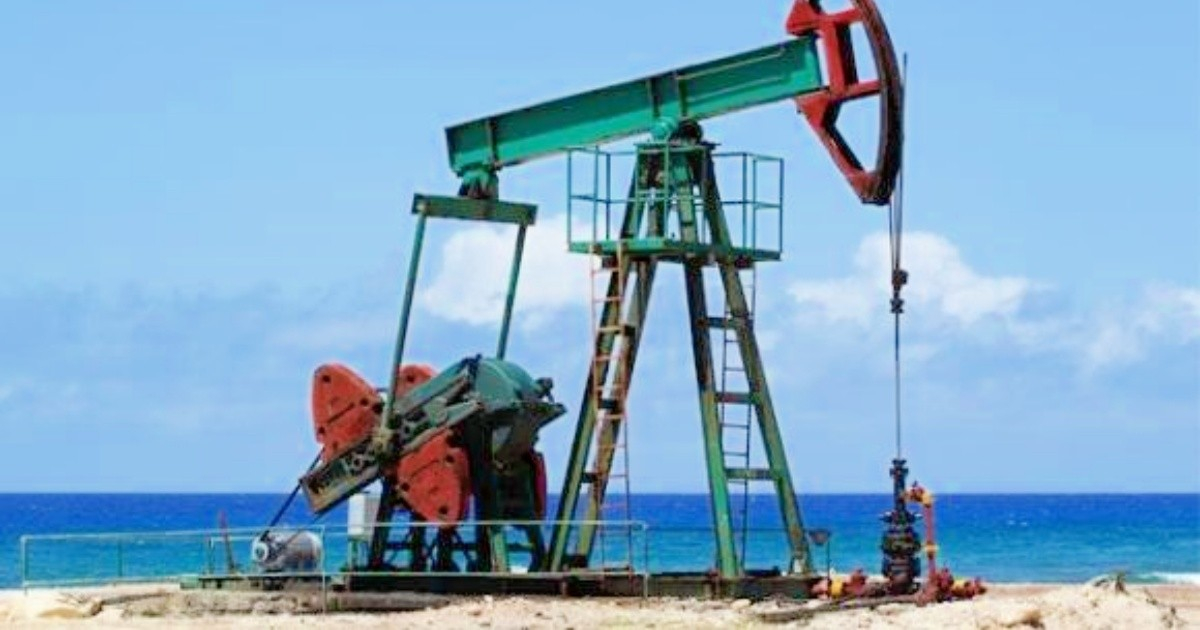
The Council of Ministers of Cuba approved the , a regulation that establishes the detailed legal framework for all oil activities on the island, from exploration to the marketing of crude oil, gas, and their derivatives.
Signed by Prime Minister Manuel Marrero Cruz on September 29, 2026, the decree was published this Monday in the .
The regulation complements Decree-Law 135 "On Oil and Gas," approved by the Council of State on September 3, 2026, which established the foundations of the sector's legal framework. According to the text itself, the decree "aims to establish regulations on oil and gas that complement the provisions set forth by Decree-Law 135."
Its scope is broad: it includes the exploration, extraction, refining, transportation, storage, and marketing of oil, gas, and their derived products, both in onshore areas and in the continental shelf and exclusive economic zone of Cuba.
The decree applies to "natural and legal persons, both national and foreign, who engage in oil activities under the provisions of the Decree-Law," including state entities, Cuban private companies, and foreign investors who obtain the necessary authorizations.
Among the most notable aspects of the regulation are the following:
- Central Mining and Oil Registry of Permits and Licenses: It establishes the registration procedures, with a maximum period of 30 working days to authorize or deny applications and seven working days to verify submission requirements. The National Office of Mineral Resources is responsible for managing the registry and supervising exploration and exploitation activities for oil and gas.
- Shared Production Contracts and Oil Concessions: regulates their granting, procedures, and tax treatment, key aspects for attracting foreign investment to the sector.
- Assessment and accreditation of entities: defines the requirements that companies interested in operating in exploration and exploitation must meet.
- Flaring and gas burning: incorporates specific regulations regarding these practices, as well as the temporary or permanent closure of wells and fields.
- Insurance, international relations, and violations: it also covers the insurance regime for petroleum activities, connections with international organizations and associations, and the applicable sanctions.
The implementation of the decree will be supplemented by manuals and regulations from the Ministry of Energy and Mines, the National Office of Mineral Resources, and the National Office of Standardization, in addition to recognized international standards for the industry.
The regulation repeals six previous resolutions, four from the Minister of Energy and Mines and two from the Director of the National Office of Mineral Resources, related to the exploration, exploitation, and regulation of oil activities.
The Decree 184 arrives at a time of acute energy crisis. National production from the Unión Cuba-Petróleo (CUPET) amounts to about 40,000 barrels per day, compared to an estimated domestic demand of between 90,000 and 110,000 barrels per day, leaving the country barely covering one third of its consumption with its own resources. The interruption of Venezuelan supplies since the end of 2025 and the suspension of Mexican shipments at the beginning of 2026 have exacerbated this external dependence, making attracting investment to the sector a priority for the regime.
Related videos:
Filed under: