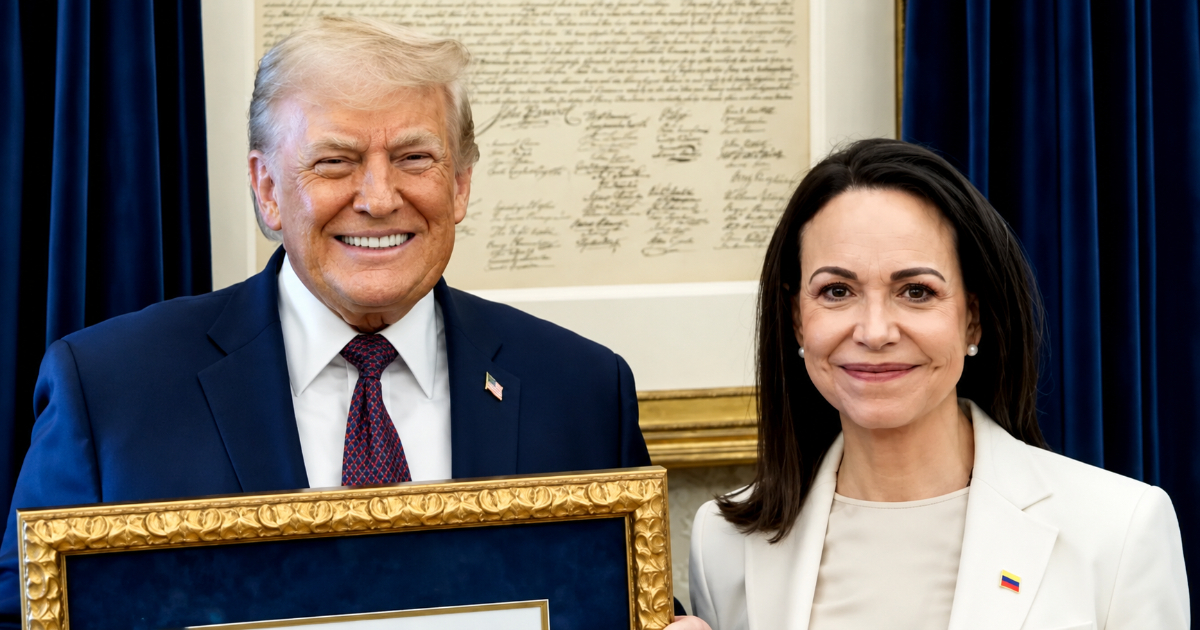
María Corina Machado, Nobel Peace Prize winner 2025 and leading figure of the Venezuelan opposition, denounced that Washington has excluded her from the political negotiations taking place this week in Caracas between the government of Delcy Rodríguez and a sector of the opposition, in an interview published this Thursday by The New York Times.
The leader, who has been in exile in Panama since secretly leaving Venezuela in December 2025, stated that the Trump administration has kept her out of the process while proceeding with other interlocutors.
The Department of State rejected the accusation and maintained that Machado's party, Vente Venezuela, did receive an invitation to participate in the process. "María Corina has every right to enter her country whenever she wishes," the institution declared, according to the agency EFE.
The underlying tension lies in the difference between the party's institutional participation and Machado's personal inclusion at the negotiation table.
The opposition figure has been excluded from the mechanism since its inception because she does not belong to the National Assembly of 2015, the institutional format that Washington chose as the framework for dialogue.
The third round of conversations began on October 14 with Jorge Rodríguez leading the Chavista delegation and Dinorah Figuera representing the opposition connected to that Assembly.
The process has yielded tangible results: the second round, held in September, concluded with the release of 39 political prisoners, and the U.S. lifted sanctions against Jorge Rodríguez on the same day this new phase began.
In the interview with the Times, Machado publicly criticized for the first time Alejandro Betancourt, the Venezuelan businessman who struck a lucrative deal with the Trump administration to control approximately 21% of the country's oil reserves through his company NABEP.
The opposition figure described him as responsible for "obscene corruption" and stated that she would not consider him a viable business partner if he were to come to power.
He also referred to him as "one of the main architects of the suffering endured by our people," in reference to the Venezuelan electrical collapse.
According to an independent energy auditor quoted in the New York Times report, Betancourt allegedly amassed part of his fortune through no-bid contracts for power plants with purportedly inflated prices charged to Venezuelan state entities.
Trump presented the agreement with Betancourt last August as "the largest oil deal in history." Analysts and critics see this pact as a sign that Washington prioritizes economic interests over the democratic transition that Machado represents.
Machado has accumulated at least seven failed attempts to return to Venezuela, including blocked flights from Panama in September. Despite this, Secretary of State Marco Rubio has repeatedly stated that the ultimate goal of U.S. policy is a democratic transition in the country.
The opposition leader promised in the interview that she would return to Venezuela "sooner than you think" to mobilize her supporters ahead of future elections.
Related videos:
Filed under: