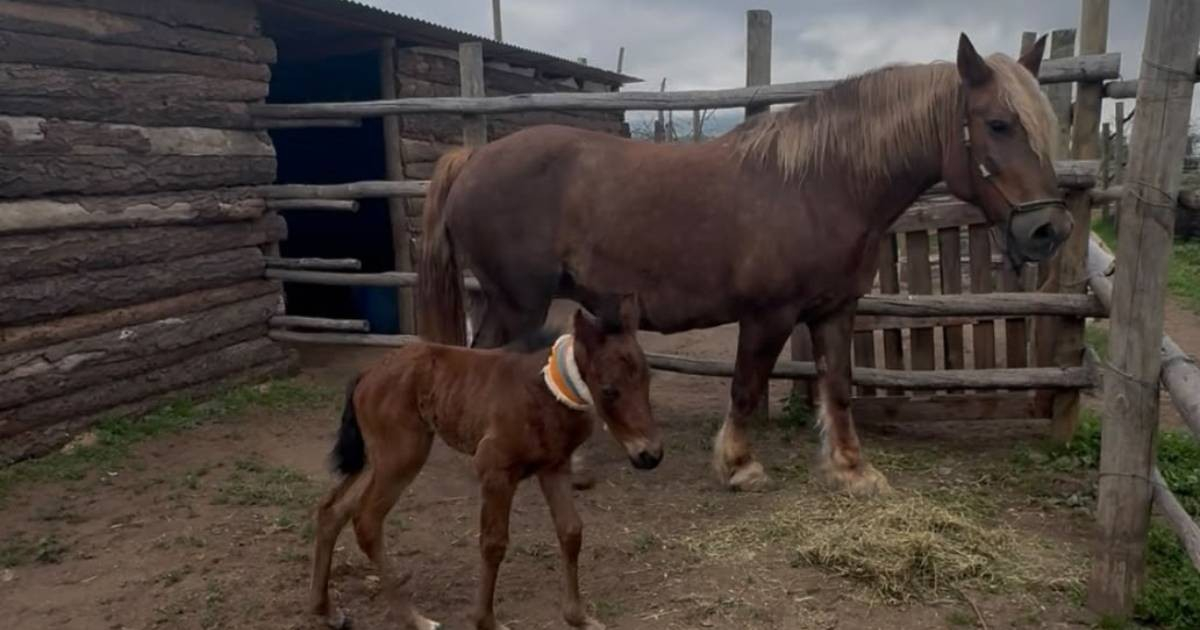
Two Cuban scientists who began their careers on the island and have been established in Chile for over two decades made history in that country by leading the team that achieved the first successful cloning of a horse.
They are Fidel Ovidio Castro Reboredo and Lleretny Rodríguez Álvarez, researchers from the Faculty of Veterinary Sciences at the University of Concepción and founders of the biotechnology company Vi-Embryos.
The result of their work was the birth of Capacidad 01, a filly cloned from a polo mare from Argentina, who entered the world on September 26 in the Chilean region of O'Higgins.
The achievement was recognized by the University of Concepción, and its protagonists shared details of the research in an interview published this Thursday by the newspaper El País.
From attempting to clone rabbits in Cuba to making history in Chile
The two researchers began their scientific careers in Cuba, where they attempted to clone rabbits but did not achieve the expected results.
Those experiments took place after the cloning of the sheep Dolly sparked global interest in the possibilities of biotechnology.
Castro Reboredo, a doctor in Veterinary Sciences and a native of Havana, worked during his youth at the Center for Genetic Engineering and Biotechnology of Cuba. Rodríguez Álvarez, born in Pinar del Río, also began her scientific career on the island.
They established themselves in Chile 22 years ago, where they continued their research and began to reap results.
In 2008, they succeeded in cloning Victoria, a cow that became the first animal born through this technique in Chilean territory.
However, the specimen died just three months later due to pulmonary and digestive complications.
The new project required approximately two years of work and the collaboration of Vi-Embryos with the Los Abedules Equine Reproduction Center.
Eight embryos and one successful birth
The journey to the birth of Capacidad 01 was marked by numerous difficulties.
The researchers transferred eight embryos, of which five achieved pregnancies, but only one went to term.
The filly was born at 3:10 AM on September 26, after 346 days of gestation, at a veterinary clinic in San Fernando.
The recipient mare, named Pauly, successfully carried the pregnancy and gave birth to a foal that, according to specialists, displayed healthy behavior from its very first hours.
Rodríguez Álvarez explained that transferring cloning techniques from one species to another turned out to be much more complicated than expected.
Although the team had accumulated experience with cattle and other animals, the reproductive particularities of horses necessitated the development of specific procedures to retrieve and handle the eggs, produce embryos, and ensure their implantation.
For his part, Castro Reboredo was responsible for establishing and controlling the quality of the cellular lines used to reproduce the genetic information of the original specimen.
According to the University of Concepción, the success of this procedure will allow the provision of equine cloning services in Chile, which until now required interested breeders to seek services in other countries, such as Argentina or Brazil.
Why is it important to clone a horse?
Capacidad 01 is a genetic copy of Capacidad, a polo mare that participated in important competitions in Argentina and was chosen for her athletic qualities.
Cloning allows for the preservation of nearly the same nuclear genetic information of the original animal, something particularly valuable for breeders interested in maintaining the characteristics of exceptional specimens.
However, having the same genetics does not mean that both animals will have identical athletic performance.
Castro explained that, similar to identical twins, factors such as upbringing, environment, and training can lead to significant differences between an individual and its clone.
Researchers believe that technology could also create opportunities for the Chilean horse industry, both in the conservation of high-value animals and in the development of new breeding lines.
The University of Concepción announced that the team plans to expand its capacity and produce between 10 and 12 clones during 2027.
Related videos:
Filed under: