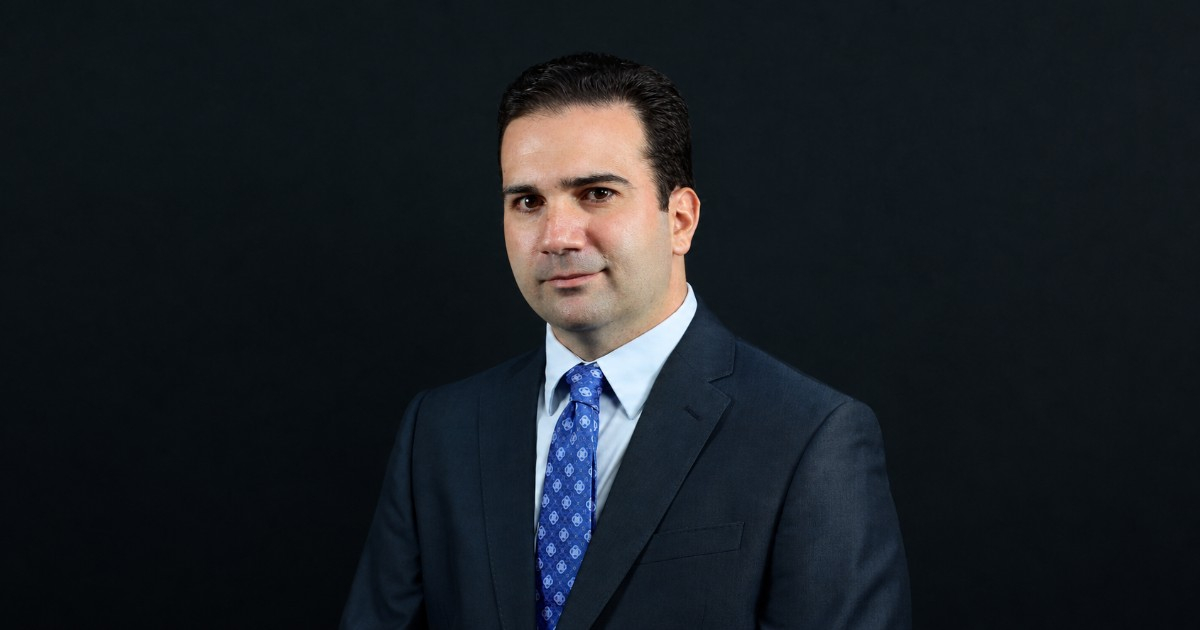
The Florida International University (FIU) in Miami honored the Cuban-American scholar Daniel I. Pedreira with the Excellence Award for Faculty in Publishing and the Arts 2026 for his book The Disappeared of Castroism: Cuba since 1959, a research study that documents over 600 cases of missing persons in the Island since the triumph of the Revolution.
The Institute of Cuban Historical Memory against Totalitarianism reported this Saturday on the recognition that honors Pedreira's work in the historical documentation of the victims of enforced disappearances under the Cuban regime.
The organization described the book as “a groundbreaking work for historical analysis and the study of the regime's victims” and emphasized the significance of the recognition granted by the American university.
"A well-deserved academic achievement that highlights the importance of keeping historical memory alive and conducting thorough research," stated the Institute in its publication.
The award is part of the academic celebrations at FIU, which this year recognized the contributions of its professors in various areas, including research, teaching, publications, and artistic creation.
The institution reported on Friday about the recognition ceremonies for its faculty, held over five days, although that general communication did not individually detail the award received by Pedreira.
Published in 2025 by Alexandria Library Publishing House, The Missing of Castroism: Cuba since 1959 brings together cases of individuals whose whereabouts remain unknown and examines disappearances from a historical and political perspective.
According to El Nuevo Herald, the work reconstructs the stories of more than 614 victims through testimonies from family members, prior investigations, historical documentation, and records gathered by organizations dedicated to preserving the memory of repression in Cuba.
The research is not limited to listing names. It also studies the circumstances of the disappearances, the lack of answers for numerous families, and the relationship between these events and the political control mechanisms established after 1959.
In an interview published in July 2025, Pedreira explained that one of his main objectives was to contribute to the pursuit of justice by documenting cases.
The scholar stated that Cuban authorities have historically denied the existence of politically motivated disappearances, while family members and independent organizations have sought to clarify what happened to their loved ones.
Her research aims to preserve those testimonies and facilitate access to the collected information for international institutions and human rights entities.
To develop the book, Pedreira drew on materials gathered by organizations such as Archivo Cuba, the Institute of Cuban Historical Memory Against Totalitarianism, and the Association of Relatives of Missing Cubans (AFACUDE), as well as research and witness statements.
The author has pointed out the difficulties involved in reconstructing these stories without access to the official archives of the Cuban state, a limitation that makes it hard to determine the circumstances of many disappearances and establish accountability.
The work also examines this phenomenon in relation to experiences of political repression in other countries governed by authoritarian or totalitarian regimes, including cases from Eastern Europe, the former Soviet Union, and Latin America.
Pedreira is a professor in the Department of Politics and International Relations at FIU, where he teaches subjects related to comparative politics, Latin American politics, Cuba, and the U.S. political system.
Born in Miami, he earned a doctorate and a master's degree in Political Science from FIU, as well as a master's degree in Peace Operations from George Mason University and a bachelor's degree in International Studies from the University of Miami.
Before joining her current academic position, she taught at Miami Dade College, the University of Miami, and Jacksonville University.
His career includes experience in the government sector and in civil society organizations. Between 2007 and 2013, he worked as an assistant to Congresswoman Ileana Ros-Lehtinen and later collaborated with the Center for a Free Cuba.
He also presides over the PEN Club of Cuban Writers in Exile, an organization affiliated with PEN International, dedicated to the promotion of literature and the defense of freedom of expression.
Among his previous publications are The Last Constituent: The Political Development of Emilio "Millo" Ochoa, from 2013, and An Instrument of Peace: The Full-Circled Life of Ambassador Guillermo Belt Ramírez, from 2019.
His updated academic curriculum in 2025 includes the book on the missing as part of his research on Cuban history and politics.
The recognition of Pedreira occurs in the context of efforts by independent organizations to document the victims of political repression in Cuba over more than six decades.
In April 2026, the Archivo Cuba project presented a report that attributes at least 8,267 deaths and disappearances to the Cuban regime since 1959, and identifies Raúl Castro as a central figure in the repressive structure.
The investigation includes reports of extrajudicial killings, deaths in custody, disappearances, and other incidents of political violence. These are estimates compiled by the organization, not figures officially recognized by the Cuban authorities.
The importance of identifying victims and preserving their stories was also addressed in a opinion article published in April about the repression and human cost of the Cuban regime, which advocated for the necessity of documenting the events and preventing the names of the victims from fading from collective memory.
Related videos:
Filed under: