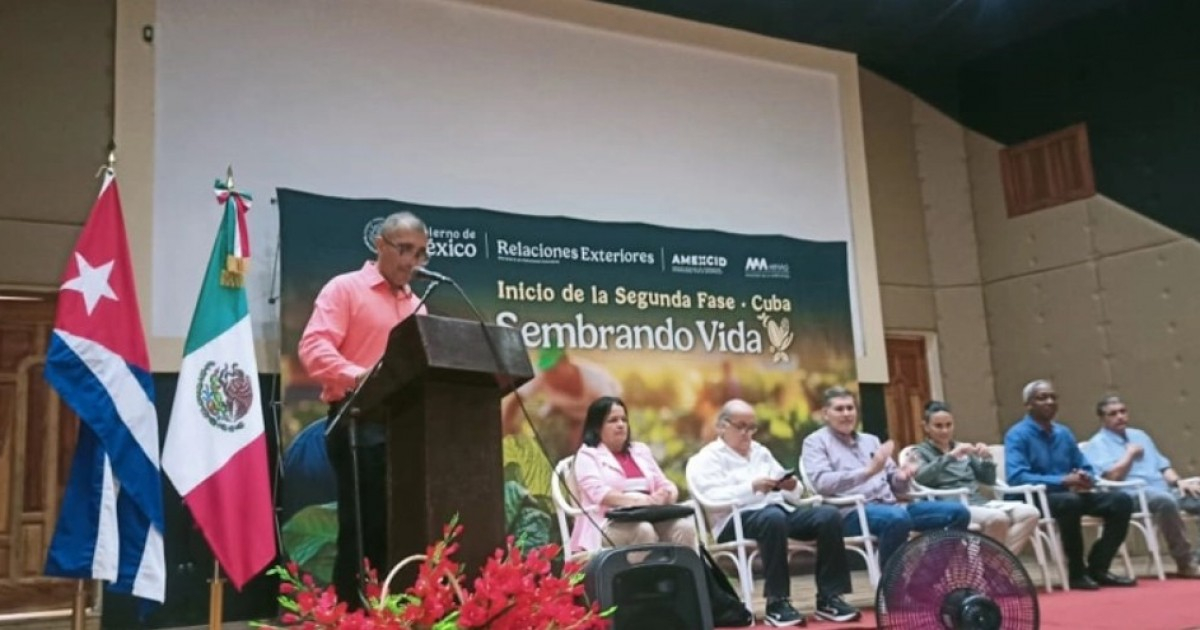
The second phase of the agricultural cooperation program Sembrando Vida has officially arrived in the province of Holguín, where it aims to benefit 1,500 producers and their families residing in the municipalities of Calixto García, Báguanos, and Cacocum.
The initiative is sponsored by the Mexican Agency for International Development Cooperation (AMEXCID) and includes the provision of supplies, quality seeds, modern machinery, agricultural technology, and technical training for the selected farmers.
At the inaugural ceremony of the project, the executive director of AMEXCID, Alejandra del Moral Vela, clarified the scope of the support: "We are not here to give you anything for free; we are here to strengthen what you have learned over generations."
According to the report from Radio Angulo, Del Moral Vela emphasized that the program is not limited to theoretical support but involves concrete transfers of productive resources to bolster local agriculture.
On behalf of the farming sector, producer Nubia Santiesteban Díaz highlighted the impact of the initiative to enhance women's participation in agricultural work and increase crop yields.
The event was presided over by the first deputy minister of the Ministry of Agriculture, Rodolfo Rodríguez Expósito; the ambassador of Mexico to Cuba, Miguel Díaz Reynoso; and the first secretary of the Communist Party in the province, Joel Queipo Ruíz.
The launch in Holguín is taking place in stages alongside other provinces: Ciego de Ávila held its inaugural event the previous Tuesday, and Las Tunas did so on the same Wednesday, both also with 1,500 producers expected as recipients.
In total, the second phase of Sembrando Vida covers eight Cuban provinces, according to the agency Prensa Latina, and is funded with 588 million Mexican pesos—more than 34 million dollars—formalized in a donation contract between Bancomext, the Secretariat of Foreign Relations, AMEXCID, and the Bank of Wellbeing, according to an official document confirmed last May.
The program arrives at a time of severe agricultural crisis in Cuba: rice production fell from 304,000 tons in 2018 to 111,000 in 2025, covering less than 20% of national demand, while the country imports between 70% and 80% of the food it consumes.
The first phase of Sembrando Vida in Cuba began in 2023 in Artemisa and Mayabeque, with around 5,000 registered beneficiaries across 22 municipalities, 31 support technicians, and the inauguration of two nurseries featuring solar irrigation systems.
Mexico has maintained an active policy of cooperation with the Cuban regime under President Claudia Sheinbaum, which included the delivery of over 3,100 tons of humanitarian aid since February 2026, despite the suspension of crude oil shipments in January of that year.
Related videos:
Filed under: